
Best Pokies in South Australia for 2026: A Curated List

Best Pokies in South Australia for 2026 – A Curated List
Before any list makes sense, one thing needs saying plainly: no online casino games — pokies, roulette, blackjack, live dealer tables — can be legally offered to anyone living in Australia. The Interactive Gambling Act 2001 makes that an operator’s problem, not a player’s crime. Nobody’s coming after a resident of Adelaide for spinning a reel on an offshore site in the evening. But the reverse is also true — there’s no domestic licence a site can hold to make this legal, and no register where you could look one up even if you wanted to check. So when this section talks about pokies “available in South Australia,” it means available the way offshore sites have always been available here: technically, not domestically, and entirely at the player’s own discretion.
With that out of the way, the actual point of this section: which games are worth the time, and why.
I spent years watching game selection get built for casino floors and, later, for online lobbies. The instinct in both places is identical — put the flashiest thing up front, bury the math in a help screen nobody opens. The list below tries to do the opposite. Every entry gets judged on what actually happens when the reels stop: return percentage where it’s known, volatility profile, hit frequency, and whether the bonus mechanics do anything real or just look busy.
Before spinning the reels at any pokies site in South Australia, it helps to check how each operator handles licensing, bonuses, payout speed and minimum deposits, since these details shape the real playing experience.
License: international iGaming licence – jurisdiction not named in the source · Bonus: 100% up to A$1,000 + 100 free spins, 35x wagering · Payout speed: PayID 1-24 hours · Min. deposit: A$30 (PayID from A$10) Operates under an international iGaming licence and offers a solid welcome package combining a matched bonus with free spins under a 35x wagering condition. PayID withdrawals are processed quickly, within a day, and the minimum deposit is accessible, especially via PayID.
License: Curacao – Antillephone N.V. (Versus Odds B.V.) · Bonus: up to EUR 2,000 across 5 deposits + 200 free spins · Min. deposit: EUR 20 Licensed in Curacao under Antillephone N.V., this casino spreads its welcome bonus across five deposits alongside a generous free spins allowance, with a low minimum deposit requirement.
License: Curacao eGaming OGL/2023/174/0082 (Dama N.V.) · Bonus: up to A$10,000 + 500 free spins across 4 deposits · Min. deposit: A$15 Holds a Curacao eGaming licence and stands out with a large multi-deposit welcome bonus paired with a substantial number of free spins, backed by a low minimum deposit threshold.
Bonus: up to A$7,500 + 550 free spins across 10 deposits, 50x wagering · Payout speed: crypto under 1 hour, PayID 1-3 business days · Min. deposit: A$20 (A$30 to qualify for the bonus) Spreads a sizeable welcome bonus and free spins package across ten deposits under a 50x wagering requirement, with fast crypto payouts and PayID withdrawals processed within a few business days.
Bonus: 100% up to A$750 + 200 free spins, 35x wagering · Payout speed: crypto 30-120 minutes, fiat 24-72 hours · Min. deposit: A$30 Provides a matched welcome bonus with free spins under a 35x wagering rule, and supports quick crypto payouts alongside standard fiat withdrawal times.
License: Curacao Gaming Control Board OGL/2023/176/0095 (Hollycorn N.V.) · Bonus: up to A$11,000 + 300 free spins (code NEO100) Licensed by the Curacao Gaming Control Board, it offers one of the larger bonus amounts on this list plus free spins, redeemable via a specific promo code.
License: Curacao Gaming Control Board (TechSolutions Group N.V.) · Bonus: 100% up to A$250 + 100 free spins (1st deposit) Regulated by the Curacao Gaming Control Board, this operator keeps its first-deposit bonus straightforward, pairing a modest match bonus with free spins.
License: Curacao Gaming Authority (Jumpman Gaming Ltd) · Bonus: up to A$6,600 + up to 250 free spins across 4 deposits Licensed by the Curacao Gaming Authority, it offers a multi-deposit bonus structure with a meaningful free spins component spread across four deposits.
License: Curacao OGL/2024/1335/0780 · Bonus: up to A$1,000 + 150 free spins, wager-free · Min. deposit: EUR 20 Operates under a Curacao licence and offers a wager-free bonus combined with free spins, making it notable for players who prefer fewer conditions attached to their bonus funds.
License: Curacao eGaming (Hollycorn N.V., since 2017) · Bonus: 225% up to A$1,540 + 600 free spins across 4 deposits, 20x wagering · Min. deposit: A$20-30 (depends on the offer) Licensed by Curacao eGaming and operating since 2017, it offers a high-percentage bonus spread across four deposits with a large number of free spins under a 20x wagering requirement.
What "best" actually measures
"Best pokies" gets thrown around as a marketing phrase. Strip the marketing and it collapses to three numbers.
RTP — return to player — is the long-term theoretical measure of how much a game gives back over a very large number of spins. Not a promise for any single session, not a guarantee for any single player. A theoretical average that only means anything at scale. Anything below 96% isn’t worth a seat.
Volatility — sometimes called variance — describes how a pokie tends to pay, not how much. Low volatility means frequent, smaller wins; the balance moves in small steps, up and down, rarely swinging hard either way. High volatility is the opposite philosophy entirely: an all-or-nothing approach where long dry stretches get interrupted by wins big enough to matter. Neither is "better." They’re different tools for different bankrolls and different patience levels.
Hit frequency sits underneath both and rarely gets mentioned outside technical documentation. It’s simply how often a spin returns anything at all. A balanced pokie lands somewhere between 25% and 35% — roughly one spin in three to one in four pays something back, even if it’s less than the stake. Games well outside that range aren’t broken, but they’re playing a different game than the one the lobby thumbnail suggests.
Those three numbers, read together, tell you more about a pokie than any amount of promotional copy.
The curated list
The entries below represent a spread across volatility profiles and mechanics, not a single "best of the best" ranking. What suits a player chasing long sessions with steady small returns is not what suits a player with a fixed budget looking for one big swing.
1. Merge Up — 97.25% RTP
The highest confirmed return in this list, and worth leading with for that reason alone. Merge Up runs on a mechanic where matching symbols combine and upgrade rather than simply pay and disappear — a puzzle-adjacent structure sitting on top of standard reel mechanics. What that structure buys the player is a hit frequency that feels generous without the payouts being trivial. It reads as balanced rather than showy, which is exactly what a 97%+ return usually looks like in practice — the number isn’t hiding anywhere; it’s just spread across a lot of small, satisfying merges rather than one dramatic jackpot screen.
2. Snoop Dogg Dollars — 97.00% RTP
Licensed personality pokies usually trade math for branding — the name does the selling, the RTP quietly slips to 94% or lower, and nobody notices until they’ve played a few hundred spins. Snoop Dogg Dollars doesn’t make that trade. A 97.00% return sitting under celebrity branding is unusual enough that it deserves the attention on its own math, separate from the theme. Worth treating as the exception that proves the rule about branded titles generally underperforming.
3. A Pragmatic Play 1000 series title
Pragmatic Play’s 1000 series is built around multiplier ceilings up to 1,000×, which puts these titles firmly in high-volatility territory by design — the entire structure exists to let one spin dwarf the last fifty. That’s not a flaw, it’s the pitch: long stretches of nothing much, interrupted by the occasional spin that changes the session entirely. Anyone drawn to the "all-or-nothing" end of the volatility scale should start here rather than with a low-volatility title and expect it to somehow deliver the same thrill — it won’t, and that’s by construction, not bad luck.
4. A progressive jackpot pokie
Progressive jackpots work on a mechanic that’s genuinely different from a fixed-prize pokie: a portion of every wager across a linked network feeds a top prize that keeps climbing until someone hits it, then resets. According to one widely cited industry rundown of pokie mechanics, this is precisely what separates a progressive from a standard game — the jackpot isn’t fixed at all, it’s a running total that grows as long as nobody claims it. The trade-off is usually a lower base RTP to fund that growing pool, so these suit a player treating the jackpot chase as its own separate bet, not part of a steady-return strategy.
5. A Hold & Win title
Hold & Win mechanics — sometimes just called the hold feature — lock certain symbols in place across a set number of re-spins, letting a grid slowly fill rather than resetting completely each round. It’s a structure that rewards patience within a single bonus round rather than across a whole session, and it tends to sit closer to the high-volatility end simply because the payout is deferred until the hold sequence finishes rather than distributed evenly spin to spin.
6. A Megaways title
Megaways isn’t a game, it’s a reel structure — the number of symbols per reel changes on every spin, which means the number of ways to win changes too, sometimes dramatically. What that buys the player is variance built into the reel mechanics themselves, independent of whatever bonus round sits on top. Two spins on the same Megaways title can feel like two different games entirely, purely because the grid reshuffled its own size.
Reading volatility like it actually matters
Most lobbies sort by "popular" or "new," which tells a player nothing about how the game behaves once money is on the line. Sorting by volatility instead is the more honest filter, and it splits roughly into three working categories.
Low volatility pokies offer frequent but smaller wins. The balance moves gently, losses come in small increments, and a session can run a long time on a modest stake without much drama either direction. This is the category for anyone who wants the reels to keep turning more than they want a specific number to appear on screen.
High‑volatility risk
Playing high‑volatility pokies can lead to long dry spells and large bankroll swings; ensure you set strict deposit limits before you start.
Medium volatility — the balanced middle ground — is where that 25%–35% hit frequency tends to live. Enough action to keep a session feeling alive, enough restraint that the bankroll doesn’t evaporate in ten spins.
High volatility flips the whole premise: an all-or-nothing approach, long dry stretches, and the massive wins that make screenshots. It suits a fixed, smaller stake set aside specifically for the chance of a large multiplier landing — not a stake meant to last an evening.
None of this is guesswork once a player knows to look for it. Reputable operators run RNG-based games through audited providers, and that audit trail is exactly what makes stated RTP and volatility figures worth trusting in the first place. A game with no visible provider, no audit history, and no stated RTP isn’t a mystery worth solving — it’s one worth skipping.
Bonus mechanics worth understanding before they’re bought
Feature Buy — sometimes called bonus buy — lets a player skip straight to a bonus round for an upfront cost rather than waiting for it to trigger naturally. One industry source pegs the typical cost at around 100 times the base bet, with the trade-off being a modest RTP bump — something in the 0.5% to 1.5% range on that same source’s figures. Whether that trade is worth it depends entirely on the size of the bankroll set aside for it; paying 100× a bet to buy one bonus round is a different kind of decision than spinning toward one gradually, and it should be treated as its own separate stake, not an extension of the base game’s budget.
Feature‑Buy cost
Buying a bonus round typically costs around 100× the base bet and only nudges RTP by about 0.5‑1.5%, so treat it as a separate stake.
Turbo play speeds up the animation between spins — nothing more, nothing less. It doesn’t change RTP or volatility, it just compresses the time between outcomes, which matters mostly for how quickly a session’s bankroll gets tested. Worth knowing it exists, worth being deliberate about turning it on.
Side bets sit alongside the main wager and usually target a specific outcome — a particular symbol combination, a bonus trigger — independent of the base game’s result. They add a second layer of variance on top of whatever volatility the base pokie already carries, which is worth remembering before stacking one onto an already high-volatility title.
Wager-Free Spins are, according to one 2026 trend report, gaining ground as an alternative to the traditional bonus-spin structure — spins awarded with no wagering requirement attached at all, meaning whatever they win converts straight to withdrawable balance rather than getting locked behind a multiplier first. That’s a meaningfully different offer from a standard spins bonus, and worth checking for specifically rather than assuming every "free spins" banner works the same way.
Wagering requirements
A wagering multiplier above 35× is effectively a trap – most players will never clear the bonus.
That last point connects to something worth stating plainly, because it’s where most players actually lose value without noticing: wagering requirements. A good requirement sits between 30× and 35× — meaning the bonus amount needs to be wagered that many times before it converts to withdrawable funds. Anything at 50× or higher isn’t a generous bonus with fine print, it’s a number designed to rarely get cleared. Reading that figure before accepting any bonus tied to a pokie session matters more than the size of the bonus itself.
How progressive jackpots actually grow
Worth a closer look than the marketing usually gives it. A progressive jackpot pokie increases its own top prize over time simply because players keep spinning — a mechanic, according to one industry overview of how these games are structured, that separates them entirely from a standard fixed-prize title. Every wager across the linked pool contributes a fraction to that growing total, which is why the number climbs visibly on the game screen between hits and resets sharply the moment someone lands it.
The practical read: the displayed jackpot figure is real-time and accurate, but it’s also the reason the base game underneath it usually runs a lower standard RTP. That funding has to come from somewhere, and it comes out of the base return. Treating the jackpot chase as a separate, smaller stake — rather than folding it into a session meant to also deliver steady base-game returns — keeps expectations honest.



The providers behind the numbers
RTP and volatility figures mean something only because a small number of providers build the engines running underneath the theme and the branding, and their reputations track record on the technical side more than the visual one.
BGaming is generally credited with pioneering Provably Fair technology — a verification method that lets a player independently confirm a spin’s outcome wasn’t altered after the fact, rather than simply trusting a stated audit certificate. It’s a meaningfully different kind of transparency from the RNG-and-audit model most providers use, because it puts the proof in the player’s hands rather than a third party’s report.
Evolution Gaming works a different corner of the catalogue entirely — live dealer games, now built out with augmented-reality hosts layered into the broadcast. Not pokies in the reel-based sense, but relevant to any player deciding where their session time goes across a lobby that mixes reels and live tables.
NetEnt has pushed into omnichannel gaming — syncing a player’s progress across online and physical terminals, so a session started on one screen carries its state to another. Still an emerging feature rather than a catalogue-wide standard, but worth watching for anyone who splits time between devices.
None of these providers guarantee a good session on any single spin — nothing does, that’s what RTP being a long-term measure actually means. What they guarantee is that the number printed on the game’s info screen reflects something audited rather than invented, which is the entire foundation the list above rests on.
Provably Fair
A technology that lets players independently verify that each spin outcome was not altered after the fact, offering transparency beyond traditional RNG audits.
A note on access and Progressive Web Apps
Software variety across offshore-friendly sites is genuinely wide — providers, catalogues, and interface quality differ more than most players expect walking in. One piece of that access has changed meaningfully going into 2026: Progressive Web App technology now lets a player add a casino’s site directly to a phone’s home screen without downloading anything through an app store. It behaves like an app once it’s there — icon, full-screen launch, no browser chrome — but it’s still just the website, which sidesteps the app-store restrictions that have always kept real-money casino apps out of official stores in this market. Worth knowing this exists before assuming a smooth mobile experience requires a download that was never actually available.
Playing with limits already in place
Every pokie on this list, regardless of RTP or volatility, is still a game of chance sitting inside a session that a player controls the edges of, not the outcome of. Deposit limits, reality checks, and self-exclusion tools exist specifically for that boundary — set before a session starts, not adjusted mid-way through one because the reels are behaving a particular way. A high-volatility title especially rewards having that boundary fixed in advance, since the entire appeal of the category is a long dry stretch that ends, eventually, in something large. Knowing in advance how long that dry stretch is allowed to run matters more than knowing the multiplier ceiling on the game being played.



None of that is a caveat tacked onto the end of a games list. It’s the same kind of number as RTP and volatility — a figure that determines what a session actually looks like once it’s underway, and one worth setting before the first spin rather than somewhere in the middle of it.
Online Casino Pokies in South Australia – Payment Methods & High‑Limit Options
The games matter, but the payment rail decides whether a win actually reaches you. I’ve watched operators optimise the front end of a site while the cashier page still runs on infrastructure from a decade ago — three-day withdrawals dressed up as "processing time." That gap between marketing and banking is where most complaints originate.
What actually moves money fast
PayID is the piece of infrastructure worth understanding before anything else. It links a mobile number or email address directly to an Australian bank account, which means a casino doesn’t need your BSB and account number typed out every time — it needs the identifier, and the bank does the matching. For withdrawals, that matching step is the difference between a payout landing same-day and one stuck in manual review.
PayID speed
Using PayID (with Osko) typically delivers same‑day withdrawals, even on weekends, dramatically faster than legacy bank transfers.
Osko sits underneath a lot of PayID transfers, and it settles in real-time, 24 hours a day. No batch processing, no "next business day" — the transfer clears whether it’s sent at 2pm on a Tuesday or 3am on a Sunday. For anyone who’s waited out a standard bank transfer over a long weekend, the difference is obvious the first time you use it.
Since July 2025, Australian banks have run Confirmation of Payee alongside PayID. When you enter a casino’s PayID details, the service cross-checks the account name before the transfer goes through. It’s a small friction point — a few extra seconds — but it exists to stop money landing in the wrong account, including fraudulent ones set up to intercept payouts. Operators that support it are running current infrastructure, not something patched together years ago.
The 15-minute benchmark
Sites built around digital ID verification — rather than manual document review — process over 90% of payments in under 15 minutes. That’s the number to hold operators to. Anything built on older KYC workflows, where a human checks a scanned passport before a withdrawal is approved, will struggle to get near it regardless of what the front page promises.
"Instant Payout" gets printed on a lot of banking pages. What it should mean is exactly that — the funds clear inside minutes, verified through automated ID protocols, not "instant" as a synonym for "faster than we used to be."
High-limit play
For anyone staking beyond casual amounts, the payment method matters even more, since standard transfer caps can turn a big win into a multi-day withdrawal split across several transactions. PayID and Osko-backed transfers tend to handle larger sums without that fragmentation, provided the operator’s own limits are set to match. It’s worth checking a site’s stated withdrawal ceiling before depositing heavily — a casino advertising "high-limit pokies" but capping payouts at a modest daily figure isn’t really offering what the phrase implies.


Support when a payment stalls
Even with same-day settlement, transfers occasionally sit in a queue — flagged for review, delayed by the bank’s own systems, or caught by a Confirmation of Payee mismatch. This is where live support stops being a nice-to-have. 24/7 live chat with a response time under two minutes is the standard now; anything slower means a stuck withdrawal turns into a stuck evening.
Self-exclusion tools sit in the same account settings as banking preferences on most platforms, and they’re worth setting up before you need them, not after. A deposit limit or a self-exclusion period takes effect immediately once activated — the same real-time infrastructure that moves your winnings out can also lock the account down when you ask it to.
None of this replaces checking the games themselves. But a 97% RTP pokie means very little if the operator behind it takes four days to release a withdrawal.
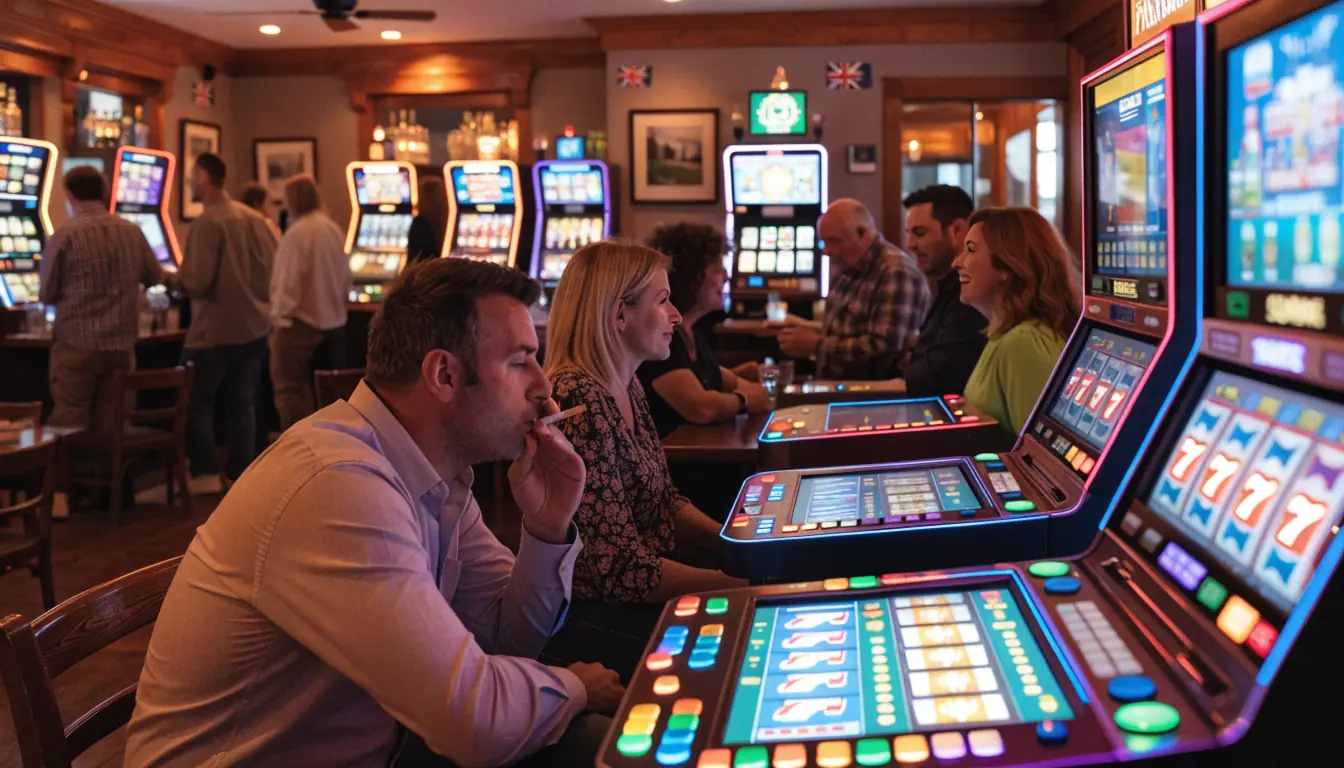

Understanding Pokies Payout Percentages in South Australia
RTP gets thrown around in every game description, and it’s worth being precise about what it actually says. It’s a long-term theoretical measure — how much a game returns over many spins, not a promise about any single session. A 97% RTP doesn’t mean you get 97 cents back on your next dollar. It means the math evens out over a volume of spins no individual player will ever personally reach.
That’s the number, not the pitch.
Still, it’s the one filter worth applying before anything else — before theme, before bonus features, before how the reels look. Anything under 96% should be off the table. Below that line, the house edge is doing more work than the game is, and no amount of "special features" changes that ratio.
Volatility explains how a pokie tends to pay along the way, but RTP tells you whether the game is worth playing at all.