Best Pokies in New South Wales NSW: 2026 Guide
 Available in AU
Pokies Landscape in New South Wales: Market Size and Player Impact
Every venue with a pokies floor in New South Wales sits inside a machine that’s bigger than the room it’s in. Before getting into which clubs run around the clock or how cashless play is rolling out, it’s worth stepping back and looking at what the numbers actually say about the size of this thing — because the scale is easy to state and hard to picture.
Electronic gaming machines, which almost everyone here just calls pokies, aren’t unique to NSW. They run in every Australian state, in the Australian Capital Territory, and in the Northern Territory. That matters for context: NSW isn’t an island with its own gambling economy. It’s one part of a national network of machines that behaves in broadly similar ways everywhere, with state-level rules layered on top. When people talk about "the best pokies in New South Wales" for 2026, they’re really asking about a local slice of a national industry — and the national numbers are the only reliable way to size that slice, because venue-by-venue turnover isn’t something operators publish.
Choosing where to play pokies in NSW comes down to real details like licensing, deposit requirements and how fast you can get paid out — here’s a rundown of what each operator brings to the table.
License: international iGaming licence – jurisdiction not named in the source · Bonus: 100% up to A$1,000 + 100 free spins, 35x wagering · Payout speed: PayID 1-24 hours · Min. deposit: A$30 (PayID from A$10) Holds an international iGaming licence and pairs a sizeable welcome bonus with 35x wagering, backed by fast PayID withdrawals within 1-24 hours and a low entry deposit.
License: Curacao – Antillephone N.V. (Versus Odds B.V.) · Bonus: up to EUR 2,000 across 5 deposits + 200 free spins · Min. deposit: EUR 20 Licensed in Curacao under Antillephone N.V., this operator spreads a generous welcome package across five deposits with a modest minimum deposit requirement.
License: Curacao eGaming OGL/2023/174/0082 (Dama N.V.) · Bonus: up to A$10,000 + 500 free spins across 4 deposits · Min. deposit: A$15 Operating under a Curacao eGaming licence via Dama N.V., it offers a large welcome bonus spread over four deposits with an accessible minimum deposit.
Bonus: up to A$7,500 + 550 free spins across 10 deposits, 50x wagering · Payout speed: crypto under 1 hour, PayID 1-3 business days · Min. deposit: A$20 (A$30 to qualify for the bonus) A substantial welcome bonus across ten deposits with 50x wagering is matched by quick crypto payouts under an hour, though PayID withdrawals take a few business days.
Bonus: 100% up to A$750 + 200 free spins, 35x wagering · Payout speed: crypto 30-120 minutes, fiat 24-72 hours · Min. deposit: A$30 Offers a solid welcome bonus with 35x wagering and reasonably fast payouts, with crypto processed within a couple of hours and fiat within a few days.
License: Curacao Gaming Control Board OGL/2023/176/0095 (Hollycorn N.V.) · Bonus: up to A$11,000 + 300 free spins (code NEO100) Licensed by the Curacao Gaming Control Board through Hollycorn N.V., it stands out with a large bonus offer redeemable via a specific promo code.
License: Curacao Gaming Control Board (TechSolutions Group N.V.) · Bonus: 100% up to A$250 + 100 free spins (1st deposit) Licensed by the Curacao Gaming Control Board via TechSolutions Group N.V., this operator keeps things straightforward with a first-deposit match bonus.
License: Curacao Gaming Authority (Jumpman Gaming Ltd) · Bonus: up to A$6,600 + up to 250 free spins across 4 deposits Under a Curacao Gaming Authority licence held by Jumpman Gaming Ltd, it provides a strong bonus package spread across four deposits.
License: Curacao OGL/2024/1335/0780 · Bonus: up to A$1,000 + 150 free spins, wager-free · Min. deposit: EUR 20 Licensed in Curacao, this operator offers a wager-free bonus structure, which is a notable point of difference for players wary of wagering requirements.
License: Curacao eGaming (Hollycorn N.V., since 2017) · Bonus: 225% up to A$1,540 + 600 free spins across 4 deposits, 20x wagering · Min. deposit: A$20-30 (depends on the offer) A long-standing Curacao eGaming licence holder since 2017 (Hollycorn N.V.), offering a high-percentage bonus across four deposits with relatively low wagering requirements.
The turnover figure everyone quotes and what it actually covers
In the 2020–2021 financial year, Australians placed bets worth almost AUD 150 billion on electronic gaming machines. That’s turnover — the total amount wagered, not the amount lost. It’s a figure that gets thrown around a lot because it sounds dramatic, but it needs unpacking. Turnover on pokies isn’t like turnover on, say, a horse race bet, where you stake once and the bet resolves. A single AUD 20 note fed into a machine can generate hundreds of dollars in "turnover" over an hour, because every spin counts as a new wager even when the credits being staked are just the same money cycling through the machine, topped up by small wins along the way.
I spent enough time around venue floors to know that this distinction confuses almost everyone outside the industry, and more than a few people inside it prefer that confusion to stick around. When a venue manager tells you the machines "turned over" a certain amount for the month, that number is not what walked out the door in losses. It’s the sum of every spin’s stake, recycled money included. Understanding that gap is the first thing anyone comparing pokies venues should get straight, because it’s the number most likely to be quoted at you without context.

What players actually lost
The number that matters more for anyone thinking about their own risk is the loss figure, not the turnover figure. In FY 2020–2021, the total player loss from electronic gaming machines across Australia was about AUD 12 billion. That’s the net cost to punters — money wagered minus money paid back out, aggregated across the country.
Per person, that loss worked out to AUD 608 for the year, calculated across the whole population, not just people who play pokies. That per-capita figure is a blunt instrument — it spreads the loss across everyone, including people who’ve never touched a machine — but it’s still the most honest single number for grasping what this industry extracts on average, nationally, in a twelve-month period.
None of these figures are broken out specifically for NSW in the sources behind them; they’re national. That’s a genuine gap, and it’s better to say so than to imply a state-specific number that doesn’t actually exist in the record. What can be said is that NSW carries a large share of the country’s pokies activity simply by virtue of venue density — pubs, clubs and casinos across the state operate large numbers of machines, and the state has long been recognised as carrying one of the heaviest concentrations of gaming machines of any Australian jurisdiction. But a precise NSW-only turnover or loss figure isn’t something regulators publish in a form that lines up cleanly with the national data above, so it’s not repeated here as if it were.
No NSW‑specific turnover or loss data
The article makes clear that precise NSW‑only turnover or loss figures aren’t published, so readers should treat any state‑level estimates as approximations rather than official statistics.
Australia’s slice of the world’s machines — and a real disagreement about how big that slice is
Here’s where the numbers stop agreeing with each other, and it’s worth naming that plainly rather than picking a side.
One line of reporting puts Australia’s share of the world’s pub and club poker machines at 3%. Another puts it at roughly 18%. These aren’t close enough to call a rounding difference — they’re describing very different pictures of how concentrated pokies are in this country relative to the rest of the world. It’s possible the two figures are measuring different things: one might be counting all gaming machines globally, including casino-floor slots in jurisdictions like the US or Macau, while the other might be narrowing the count to pub-and-club-style machines specifically, a category where Australia is unusually saturated compared to countries that keep this style of machine confined to casinos. That would explain a gap this large. But that’s a plausible explanation, not a confirmed one — the sources themselves don’t reconcile it, and pretending one number is obviously right would be worse than just saying both exist and diverge sharply.
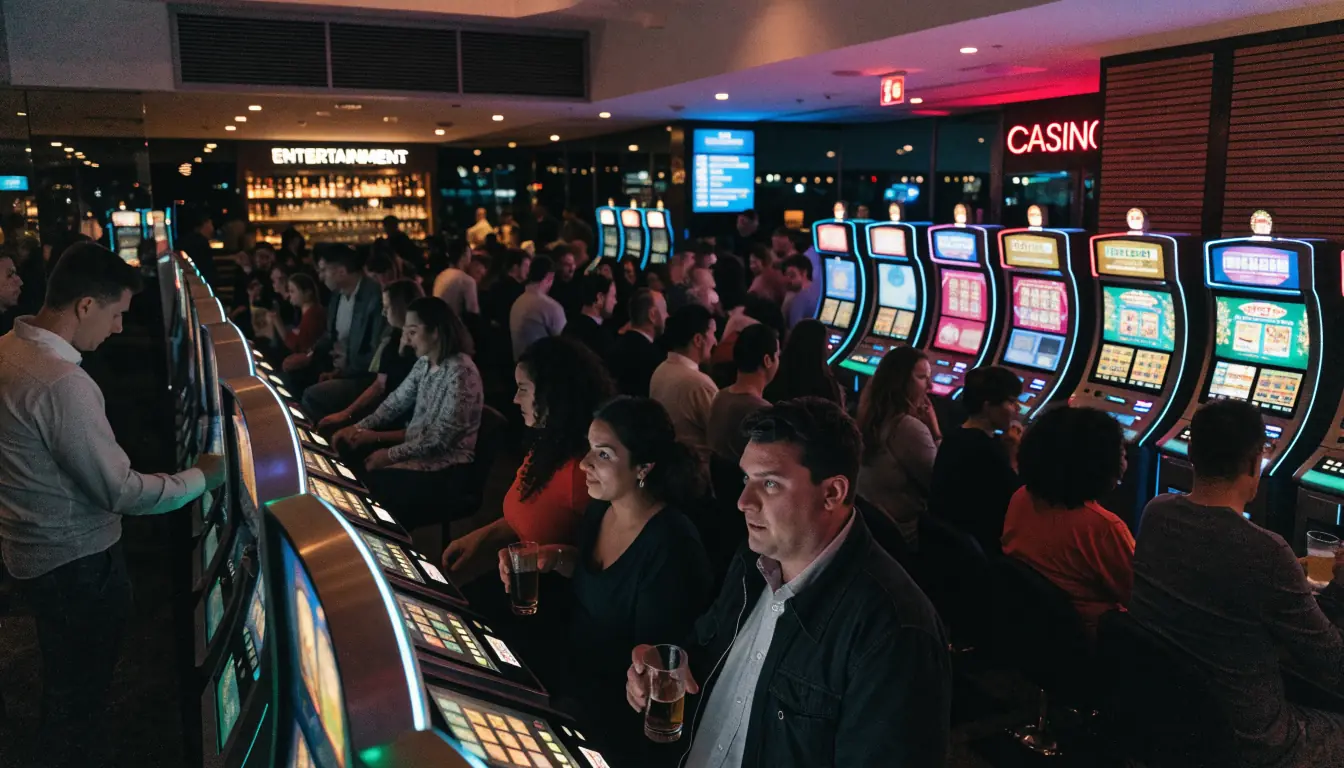
What’s not in dispute is the underlying reality both figures are trying to describe: pokies are everywhere in Australian pubs, clubs, and casinos, in a way that has no real equivalent in most other countries, where this kind of machine tends to be restricted to casino floors. Whether that adds up to 3% or 18% of the world’s total, the local saturation is the part that shows up when you walk into an ordinary suburban pub in NSW and find a bank of machines running next to the bar.
A newer figure worth flagging, not adopting
More recent reporting puts a much larger number on the table: pokies generated AUD 191.2 billion in gambling turnover in 2023, according to figures published by complyadvantage.com. That’s a single source, describing turnover — the same recycled-money metric discussed above — not losses, and it’s describing a different year and, going by the wording, likely a different scope than the FY2020–21 figures already covered. It shouldn’t be read as an update to the AUD 150 billion figure or averaged in with it, because the two aren’t measuring the same thing in the same period from the same source. It’s a separate data point from a separate report, and it’s presented here as exactly that — one source’s number for one year — rather than folded into the picture as if it were an agreed industry benchmark. If anything, the fact that a 2023 turnover estimate lands well above the FY2020–21 figure says something about the trajectory of the industry, but it’s not solid enough on its own to draw a trend line from two points that come from different sources measuring things slightly differently.
2023 turnover figure
The AUD 191.2 billion turnover cited for 2023 comes from a single source and covers a different year and scope than the FY 2020‑21 numbers, so it should be viewed as a separate data point rather than an update to the earlier figure.
Where the money goes once it’s lost
One structural fact that shapes how players in NSW should think about their own results: gamblers’ winnings in Australia are not taxed. Whatever you take home from a session, the tax office has no claim on it. That’s a genuine point in the player’s favour compared with jurisdictions that tax gambling winnings as income.
It’s also, not coincidentally, one of the facts the industry is happiest to have front and centre, because it sits well next to a loss column that’s a lot less comfortable to talk about. No tax on winnings doesn’t offset the AUD 608 average annual per-capita loss figure — it just means that on the rare occasion a player is genuinely ahead, the government isn’t the one taking a cut. The tax burden in this industry sits with the operators, not the players, and it’s structured at the state and machine-type level rather than at the punter’s end. That’s a different topic from what a player experiences sitting at a machine, and it’s worth keeping the two separate: taxation of operators is a business-and-policy question; taxation of winnings is what actually affects the person putting money into the machine, and on that second point, the answer for NSW players is simple. Zero.
Reading these figures like someone who’s seen the other side of the counter
A few things I’d flag for anyone trying to make sense of "pokies in NSW" as a market, rather than as a single machine in front of them on a Friday night.
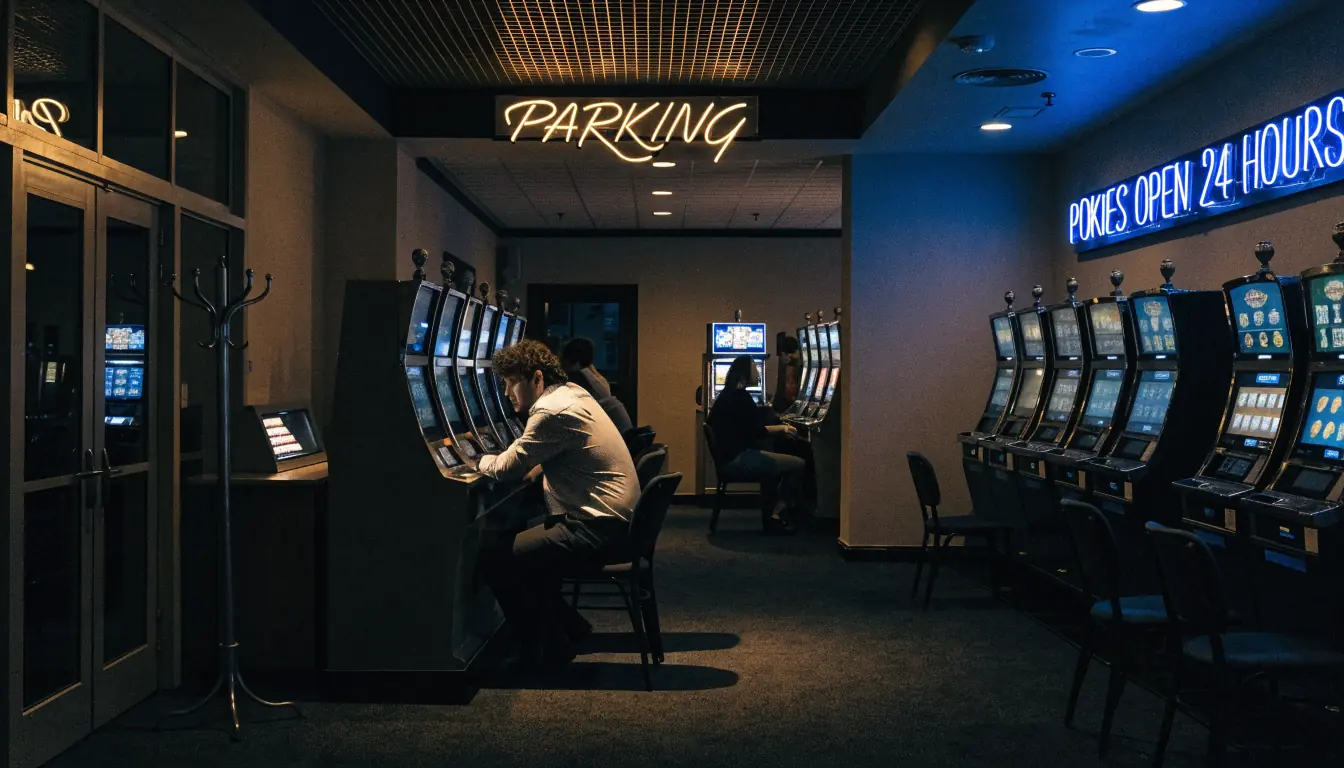
Turnover figures make the industry look bigger than the loss figures do, and that’s not an accident of reporting — it’s how the mechanics of the machine work. A number like AUD 150 billion in national turnover sounds like it describes wealth changing hands on a scale that dwarfs almost anything else in the gambling sector. It does, technically. But it’s inflated by the same money passing through the same machine dozens of times in a single sitting. The AUD 12 billion loss figure is the one that actually describes money leaving players’ pockets for good. Both are real, sourced numbers — they’re just answering different questions, and venues, quite reasonably from their own commercial point of view, tend to lead with the bigger one.
A national average loss figure tells you about the country, not about your night out. AUD 608 per person per year, spread across the entire population, is a policy-relevant number — the kind used in discussions about harm minimisation and industry scale. It’s not a prediction for any individual session on any individual machine, and treating it as one would be a misuse of what the figure is actually for. Some people lose far more than that in a single evening; a much larger number of people, including plenty who’ve never fed a note into a pokies machine, lose nothing at all, and their zero drags the average down for everyone.
Financial risk
Players can lose up to the national average of AUD 608 per person per year; this loss figure represents the real cost to punters, not the inflated turnover number.
The 3% vs 18% disagreement is a reminder that even well-established figures in this space don’t always agree, and no one source has cleaned it up. That’s not a reason to distrust every number floating around — it’s a reason to notice what a figure is actually measuring before repeating it as settled fact. I’ve sat in rooms where two people quoted two completely different numbers for the same thing, both lifted from what they’d consider a credible source, and neither was lying. They’d just picked up different counts, from different scopes, and neither had thought to check.
Why NSW specifically carries weight in this national picture
Even without a state-isolated turnover or loss figure to point to, there’s a reason NSW comes up constantly in any conversation about pokies in Australia: the state has one of the largest concentrations of gaming venues and machines in the country, spread across pubs, registered clubs, and casino floors. That density is precisely why questions like operating hours, cashless rollout timelines, and venue-level compliance — covered in the next part of this piece — carry more practical weight in NSW than they might in a smaller jurisdiction with fewer machines and less foot traffic through gaming rooms.
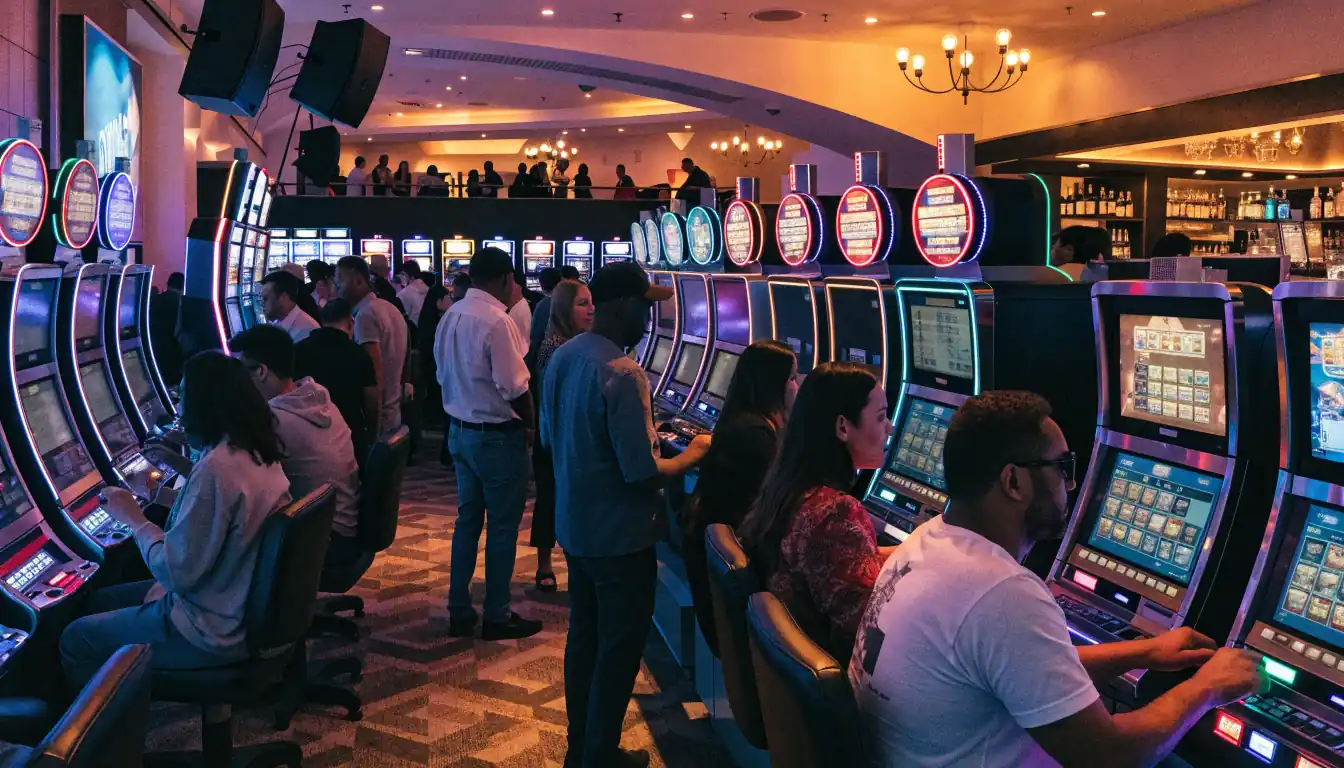
The scale described above — turnover in the tens of billions nationally, losses in the billions, a per-capita loss figure north of six hundred dollars a year — isn’t an abstract statistic sitting in a government report somewhere. It’s the aggregate result of exactly the kind of local, everyday activity that happens in NSW clubs and pubs on any given night: someone feeding notes into a machine after work, someone else topping up a session that’s already run longer than planned. The national figures are large because a huge number of small, ordinary sessions add up to them. NSW’s share of that activity is large because NSW’s share of the venues and machines generating it is large.
What these figures don’t tell you
It’s worth being honest about the limits of this data, because a market-size section that oversells its own precision does readers a disservice.
These figures don’t tell you which specific venues in NSW pay out more generously than others — that’s a payout-percentage question, and it’s handled separately, on its own narrower terms, later in this piece. They don’t tell you anything about the mechanics of how machines are regulated hour to hour, or how the shift to cashless, account-based play is changing venue operations — that’s a compliance and operations question, not a market-size one. And they don’t tell you anything about the legal status of online pokies or casino-style games in NSW, which sits under a completely different piece of legislation and carries its own set of rules entirely disconnected from the physical venue numbers discussed here.
NSW market weight
Despite lacking precise state numbers, NSW’s high concentration of pubs, clubs and casinos means it carries a disproportionate share of Australia’s overall pokies activity.
What this section is meant to do is give an honest sense of scale: how much money moves through pokies nationally, how much of that players actually lose, how murky the country’s share of global machine numbers turns out to be once you look past the headline percentage, and how none of that changes the basic tax position for anyone lucky enough to walk away ahead. That’s the backdrop. Everything else about pokies in NSW — where to find them running at 2am, how the cashless transition is unfolding, what the law says about playing online instead of walking into a club — sits on top of that backdrop, not inside it.
A short note on how these numbers get used
I’ve watched marketing teams pull the AUD 150 billion turnover figure into promotional copy without ever mentioning the AUD 12 billion loss figure sitting right next to it in the same report. Not because anyone’s hiding data — both numbers are public — but because one of them makes the industry look enormous and exciting, and the other makes it look like what it actually is for a meaningful share of the people playing: a net cost, year after year, that averages out to over six hundred dollars per Australian regardless of whether they’ve ever sat at a machine.

That’s not a reason to treat pokies venues in NSW as uniquely predatory compared with any other form of wagering — sports betting and lotteries carry their own loss profiles too, and none of them are taxed on the winner’s side either. It’s a reason to read "record turnover" headlines with a bit of scepticism about what word is doing the work in that sentence. Turnover is activity. Loss is cost. They’re not the same thing, and conflating them is how a AUD 12 billion national loss figure gets dressed up to look like a AUD 150 billion success story.
Small habit worth keeping. Ask which number you’re looking at.
24‑Hour Pokies in NSW: Cashless Transition and Compliance Requirements
Pubs and clubs across NSW keep their gaming floors lit around the clock. Nobody markets this as a feature — venues just don’t post closing times for the machines the way they do for the kitchen. Walk in at 3am and the room looks the same as it does at 3pm: same lights, same noise, same cash‑in slots waiting to be fed. That’s the part nobody puts on the website. "Open 24 hours" doesn’t mean staffed for your comfort — it means the floor never needs to reset.
What’s changing isn’t the hours. It’s what happens to the money once it goes into the machine.
The shift away from cash
For decades, a pokie was a cash‑in, cash‑out box. You fed notes, you cashed a ticket, nobody asked your name unless you hit a threshold that triggered paperwork. That anonymity was never advertised as a selling point either, but it was one.
Cashless transition timeline
The 2022 NSW Islington Report recommends that all pokies become fully cashless by the end of 2028. This is a recommendation, not yet a completed rollout, and it signals the regulatory direction for the next few years.
Regulators have been pushing the other direction. The 2022 NSW Islington Report recommended making all NSW pokies cashless by the end of 2028 — a recommendation, not yet a completed rollout, and worth stating as exactly that. Account‑based machines tie every dollar to an identity from the moment it’s loaded to the moment it’s withdrawn. Deposit, gameplay, and cash‑out all sit on the same ledger instead of three separate, forgettable moments.
Traceability is the whole point. Cash gave a player — or someone using a player as a front — three chances to disappear from the record: putting money in, playing just enough to look legitimate, and pulling a ticket that reads as "winnings" rather than "cash I walked in with." An account‑based system collapses those three moments into one continuous trail. There’s no ticket to sell, no anonymous cash‑out, no gap where the money’s origin quietly changes.
Compliance obligations scale with machine count
The rules a venue operates under depend on how many pokies sit on its floor, and the line is drawn at fifteen machines.
Up to 15 pokies:
- Register with AUSTRAC
- Keep identification records on players where required
- Submit suspicious matter reports when something doesn’t add up
More than 15 pokies:
- Appoint a compliance officer
- Conduct formal risk assessments
- Implement AML/CFT programs
- Perform customer due diligence
- Report any cash transaction over AUD 10,000
That threshold explains a lot about how the industry is shaped. A small suburban pub with a handful of machines carries a lighter compliance load than a licensed club with a full gaming room. It’s not that the smaller venue is trusted more — it’s that the obligation is proportionate to exposure. More machines, more cash movement, more surface area for something to go wrong.
What staff are actually watching for
Behind the counter, "keeping an eye on the floor" has specific meaning now. A few patterns get flagged every time, regardless of venue size:
- Large or repeated cash insertions followed by minimal play and an immediate cash‑out. Someone feeding a machine a heavy sum, pressing spin a handful of times, then cashing out isn’t gambling. It’s laundering with extra steps.
- Frequent small redemptions across different venues within a short window. One ticket here, another there, none of them individually large enough to raise a report — but the pattern across venues tells its own story.
- Refusing identification or switching between multiple player cards. A legitimate player doesn’t need to avoid being recognised by the system.
None of these require a compliance officer to be psychic. They’re pattern‑matching, and account‑based machines make the patterns visible in a way loose cash never did.
What this means for someone walking onto the floor
None of this changes how a spin plays out. It changes what happens around the spin.
24‑hour access stays exactly as available as it’s always been — the clock isn’t the part regulators are worried about. What’s shifting is the paper trail, or rather the digital one replacing it. A player who’s used to walking up, feeding notes, and cashing a ticket without a word to anyone will notice account‑based machines ask for more identity up front. That’s not a venue being difficult. It’s the same due‑diligence obligation that applies to a compliance officer at a 40‑machine club, scaled down to the moment someone taps a card at the terminal.
The honest way to read a "24‑hour cashless pokies" venue isn’t as a marketing claim. It’s two separate facts sitting next to each other: the floor doesn’t close, and the money on it is easier to trace than it used to be. One of those is about convenience. The other is about a regulatory direction that isn’t finished yet, running on a timeline that stretches out to 2028 by one report’s own account — not a deadline that’s already landed.
Compliance burden
When venues exceed 15 machines they must appoint a compliance officer and implement AML/CFT programs; failing to meet these requirements can lead to serious regulatory penalties.
Online Pokies & Crown Casinos in NSW: Legal Framework
People search for "Crown NSW casino pokies" expecting to find a website. There isn’t one, and there can’t be one — not because Crown lacks the ambition, but because the Interactive Gambling Act 2001 makes it an offence for any operator to offer real-money gambling online to Australian residents. That includes slots, roulette, blackjack, anything that looks like a casino floor rendered on a screen. Crown’s pokies exist at the tables in Sydney. They do not exist as an app, a browser tab or a "welcome bonus" landing page, whatever the search results suggest.
I’ve seen how these rules get read from the inside: the Act targets the operator, not the person pressing play. That distinction matters for how enforcement actually falls. A resident who ends up on an offshore site isn’t the one facing prosecution — the operator running it is, at least on paper. In practice, most of those operators sit outside Australian jurisdiction entirely, which is exactly why the law leans so hard on blocking and penalising the supply side rather than chasing individual players.
"No deposit bonus" is one of those phrases worth putting in quotes. It’s a marketing hook built for a product NSW residents cannot legally be offered in the first place. Any site dangling one at an Australian visitor is already outside the framework this section describes.
The penalties aren’t symbolic. An amendment to the Casino Control Act 1992 lets regulators fine NSW casino operators up to AUD 100 million for compliance failures — a figure aimed squarely at licensed, physical operators like Crown, not offshore websites the law can barely reach. Two different enforcement problems. One law tries to cover both.
Real money, real venue, real licence. Everything else is a search result.
Understanding NSW Pokies Payout Percentages
Every pokie has a payout percentage built into its programming — the share of all money wagered that the machine returns to players over its lifetime, not per session. Casinos publish nothing about how this figure is set on individual floors, and venues in NSW aren’t required to display it machine by machine. That’s the gap most players never notice until they’ve lost more than they expected.
The number gets misread constantly. A machine returning a high share of turnover over its full lifetime can still eat a session’s bankroll in twenty minutes — the percentage describes millions of spins, not the next ten. I’ve watched people chase a "good" machine because someone said it pays well, without understanding that the math only evens out over a timeframe no individual gambler ever plays.
No public register in NSW lets players check a specific machine’s figure before sitting down. What’s marketed as transparency rarely is.
Short version: the odds are fixed, the outcome per spin isn’t.
What law governs online gambling in Australia?
The Interactive Gambling Act 2001 makes it an offence for online operators to offer real-money gambling to Australian residents.
What are the red flags for pokies-related money laundering?
AUSTRAC’s 2024 guide flags large or repeated cash insertions followed by minimal play and immediate cash-out, frequent small redemptions across different venues in a short period, customers refusing identification or using multiple player cards, unusually high cash access, large deposits and cash transfers. Structuring — spreading smaller cash deposits across venues to avoid AML reporting thresholds — is another key indicator.
What security features must licensed casinos have?
Operators with more than 15 pokies must appoint a compliance officer, conduct risk assessments, implement AML/CFT programs, perform customer due diligence, and report cash transactions over AUD 10,000. Those with up to 15 machines must register with AUSTRAC, keep identification records, and submit suspicious matter reports.
Are gambling winnings taxed in Australia?
No — gamblers’ winnings in Australia are not taxed. Taxation applies to gambling operators instead, and it varies by state and by type of gambling service.
Created by the ”Casino Cities Guide” editorial team.