
Best Pokies in Tasmania: Where to Play in 2026
Top Pokies Available in Tasmania in 2026
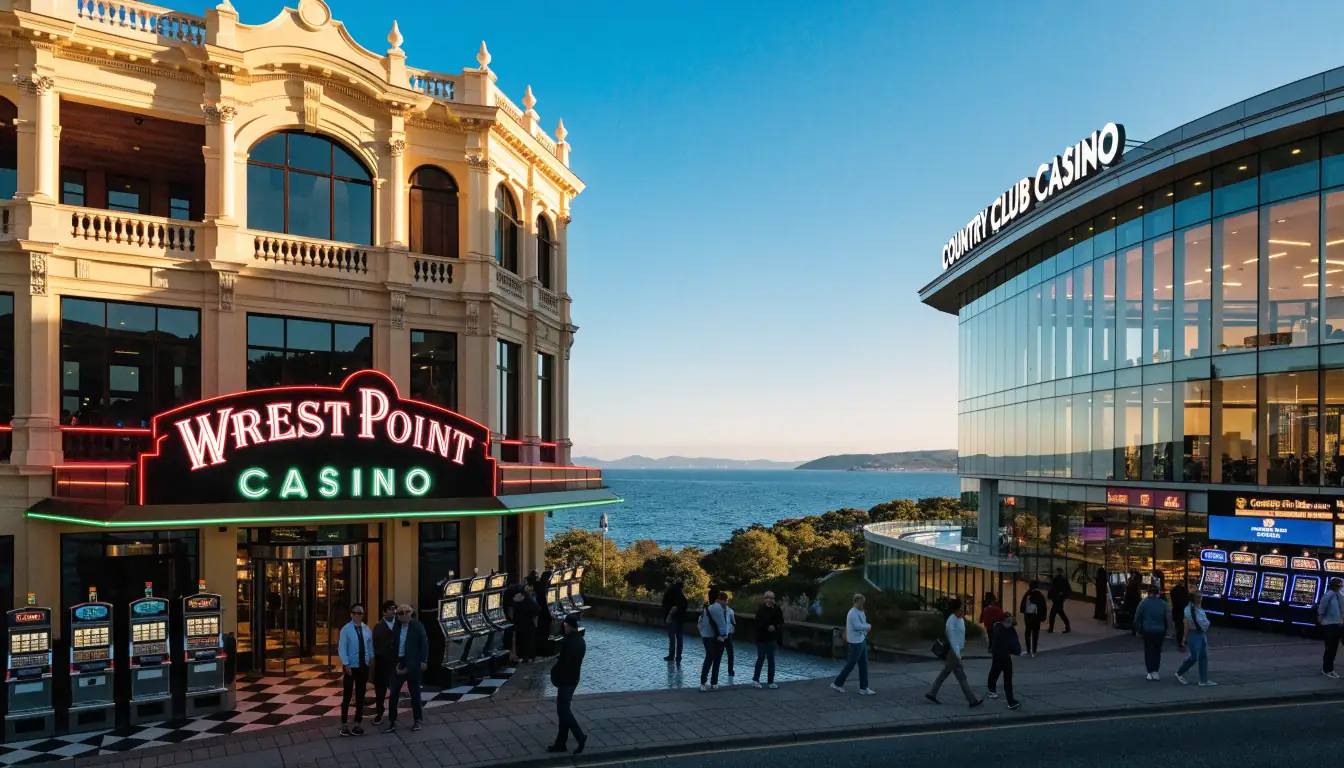
Tasmania sits in an odd spot in the Australian gambling map. It’s the only state where the two land-based casinos — Wrest Point in Hobart and Country Club in Launceston — were, for decades, run under a monopoly structure quite different from the free-for-all licensing seen in places like New South Wales. That history still shapes what you find on the floor: fewer venues, but a concentration of machines that would look familiar to anyone who’s played pokies interstate, plus a genuinely unusual option — a working pokies room on a ship that crosses the Bass Strait overnight.
I’ve spent time on both the casino floors and the ferry, and the differences between "playing pokies in Tasmania" and "playing pokies online" are bigger than most guides let on. This section is about the machines you can actually walk up to and put money into — not the online side, which runs under a completely different legal regime and gets its own treatment further down this page.
If you’re comparing pokies sites while browsing the web from Tasmania in 2026, it helps to check licensing, bonus terms and payout speed before signing up, so here’s a quick rundown of what each operator brings to the table.
License: international iGaming licence – jurisdiction not named in the source · Bonus: 100% up to A$1,000 + 100 free spins, 35x wagering · Payout speed: PayID 1-24 hours · Min. deposit: A$30 (PayID from A$10) Holds an international iGaming licence and offers a solid welcome package of 100% up to A$1,000 plus 100 free spins with 35x wagering. PayID withdrawals are processed within a day, and the minimum deposit is accessible from A$10 via PayID.
License: Curacao – Antillephone N.V. (Versus Odds B.V.) · Bonus: up to EUR 2,000 across 5 deposits + 200 free spins · Min. deposit: EUR 20 Licensed in Curacao under Antillephone N.V., this operator offers an extended welcome bonus of up to EUR 2,000 across five deposits plus 200 free spins, with a low minimum deposit of EUR 20.
License: Curacao eGaming OGL/2023/174/0082 (Dama N.V.) · Bonus: up to A$10,000 + 500 free spins across 4 deposits · Min. deposit: A$15 Operating under a Curacao eGaming licence via Dama N.V., this casino stands out with a large bonus of up to A$10,000 plus 500 free spins spread over four deposits, and a low A$15 minimum deposit.
Bonus: up to A$7,500 + 550 free spins across 10 deposits, 50x wagering · Payout speed: crypto under 1 hour, PayID 1-3 business days · Min. deposit: A$20 (A$30 to qualify for the bonus) This operator offers a generous multi-deposit bonus of up to A$7,500 plus 550 free spins across ten deposits with 50x wagering. Crypto withdrawals are notably fast, processed in under an hour, while PayID takes a few business days.
Bonus: 100% up to A$750 + 200 free spins, 35x wagering · Payout speed: crypto 30-120 minutes, fiat 24-72 hours · Min. deposit: A$30 Offers a 100% bonus up to A$750 plus 200 free spins with 35x wagering. Crypto payouts are quick, landing within a couple of hours, while fiat withdrawals take up to three days, with a A$30 minimum deposit.
License: Curacao Gaming Control Board OGL/2023/176/0095 (Hollycorn N.V.) · Bonus: up to A$11,000 + 300 free spins (code NEO100) Licensed under the Curacao Gaming Control Board via Hollycorn N.V., this casino offers one of the larger bonuses on this list, up to A$11,000 plus 300 free spins, unlocked with a bonus code.
License: Curacao Gaming Control Board (TechSolutions Group N.V.) · Bonus: 100% up to A$250 + 100 free spins (1st deposit) Licensed by the Curacao Gaming Control Board through TechSolutions Group N.V., this operator keeps things straightforward with a first-deposit bonus of 100% up to A$250 plus 100 free spins.
License: Curacao Gaming Authority (Jumpman Gaming Ltd) · Bonus: up to A$6,600 + up to 250 free spins across 4 deposits Operating under a Curacao Gaming Authority licence via Jumpman Gaming Ltd, this casino offers a multi-deposit bonus of up to A$6,600 plus up to 250 free spins spread across four deposits.
License: Curacao OGL/2024/1335/0780 · Bonus: up to A$1,000 + 150 free spins, wager-free · Min. deposit: EUR 20 Licensed in Curacao, this operator offers a wager-free bonus of up to A$1,000 plus 150 free spins, a notable perk for players wary of wagering requirements, with a EUR 20 minimum deposit.
License: Curacao eGaming (Hollycorn N.V., since 2017) · Bonus: 225% up to A$1,540 + 600 free spins across 4 deposits, 20x wagering · Min. deposit: A$20-30 (depends on the offer) Backed by a long-standing Curacao eGaming licence from Hollycorn N.V. dating back to 2017, this casino offers a hefty 225% bonus up to A$1,540 plus 600 free spins across four deposits with a relatively low 20x wagering requirement.
Where the machines actually are
There are three practical answers to "where do I find pokies in Tasmania": the two licensed casinos, the licensed clubs and hotels scattered across the state, and the Spirit of Tasmania ferries. Each has its own rhythm, its own crowd, and its own quirks in what’s on offer.
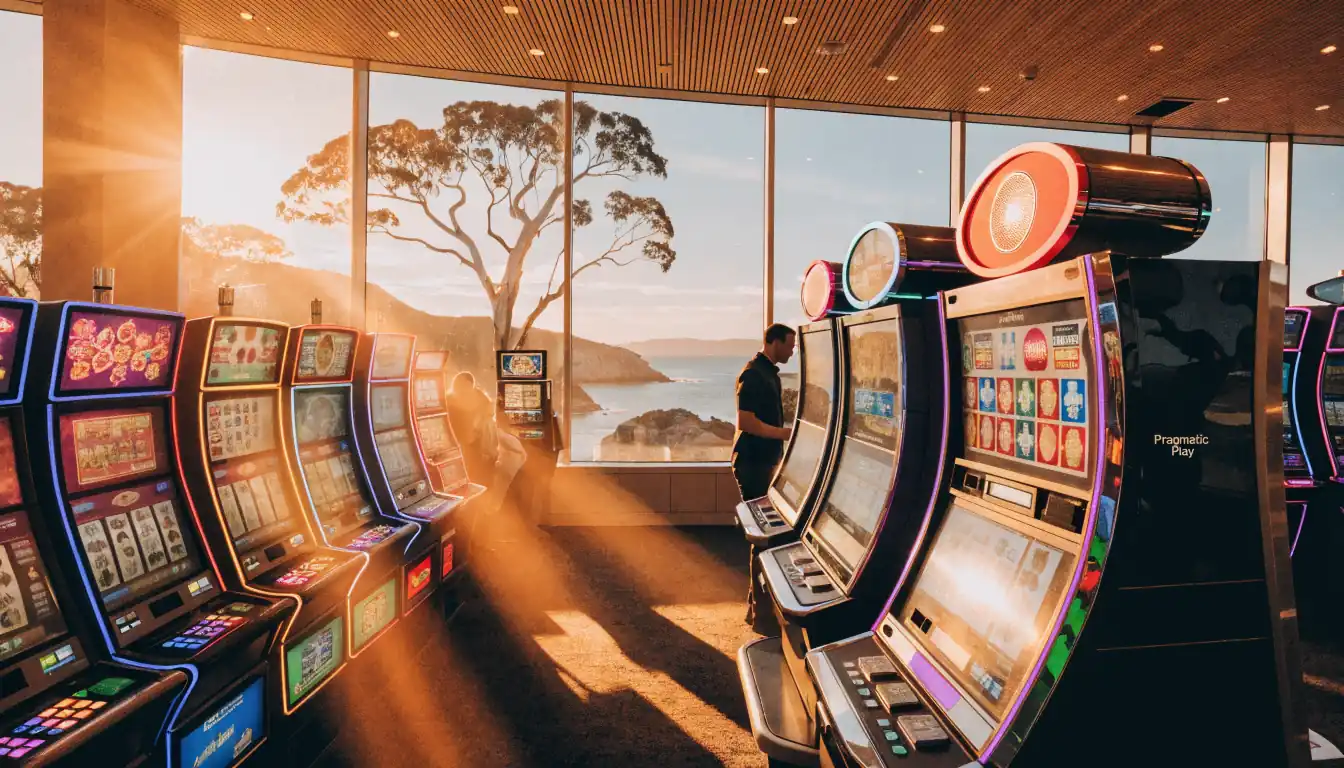
Wrest Point Casino, Hobart. This was Australia’s first legal casino, and it still carries that "first of its kind" weight in how it’s run — table games upstairs, a large pokies floor that mixes older reel-style cabinets with newer video pokies, and a layout clearly built for a mixed crowd: tourists staying at the attached hotel, locals in for a night out, and a fair number of people who just want forty minutes on a machine before dinner. The variety runs from traditional three-reel style machines that longtime players tend to gravitate toward, right through to modern multi-line video pokies with the bonus rounds and free-spin features that dominate current cabinet production.
Country Club Casino, Launceston. Smaller footprint than Wrest Point, same operator lineage, same general mix of game styles. If Hobart’s floor feels like a destination, Launceston’s feels more like a local’s venue that happens to also serve visitors. Machine selection skews slightly more conservative — more of the well-established titles, fewer of the newest cabinet releases — though that shifts over time as machines get rotated.
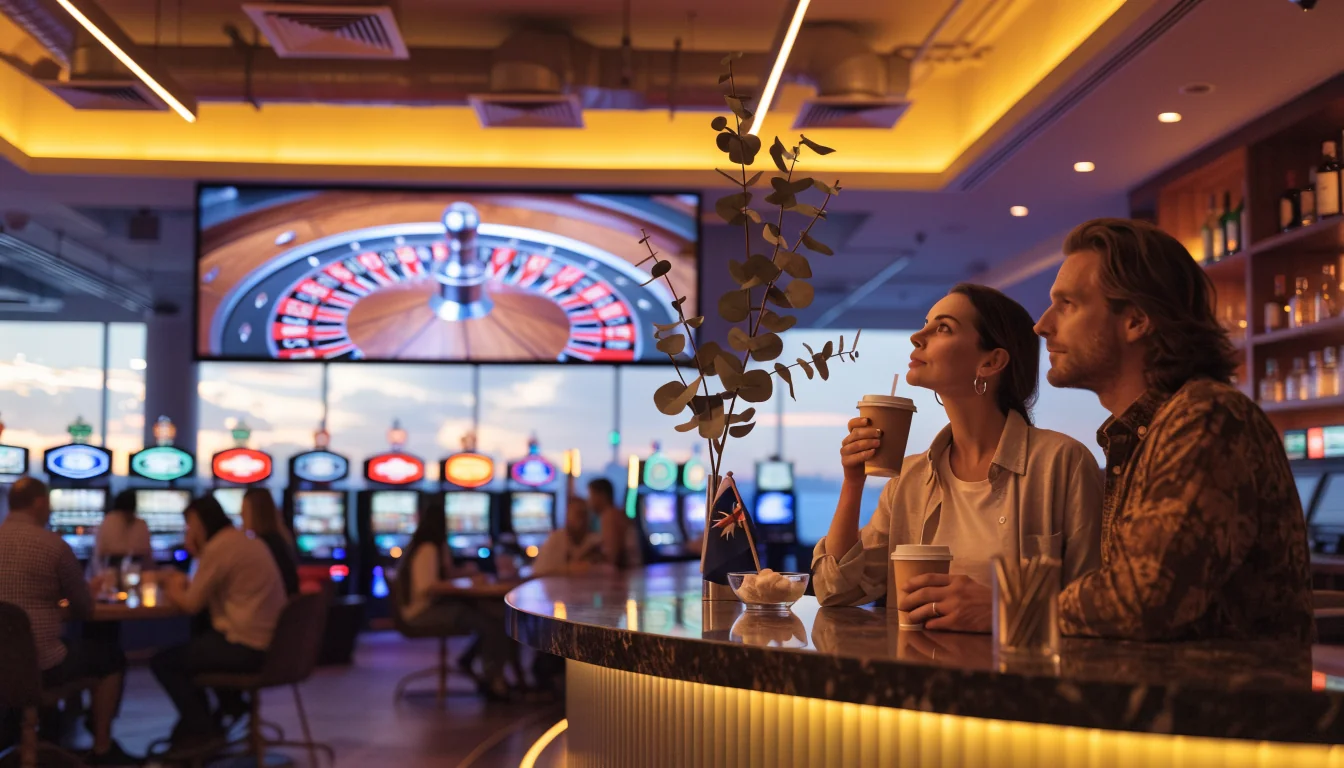
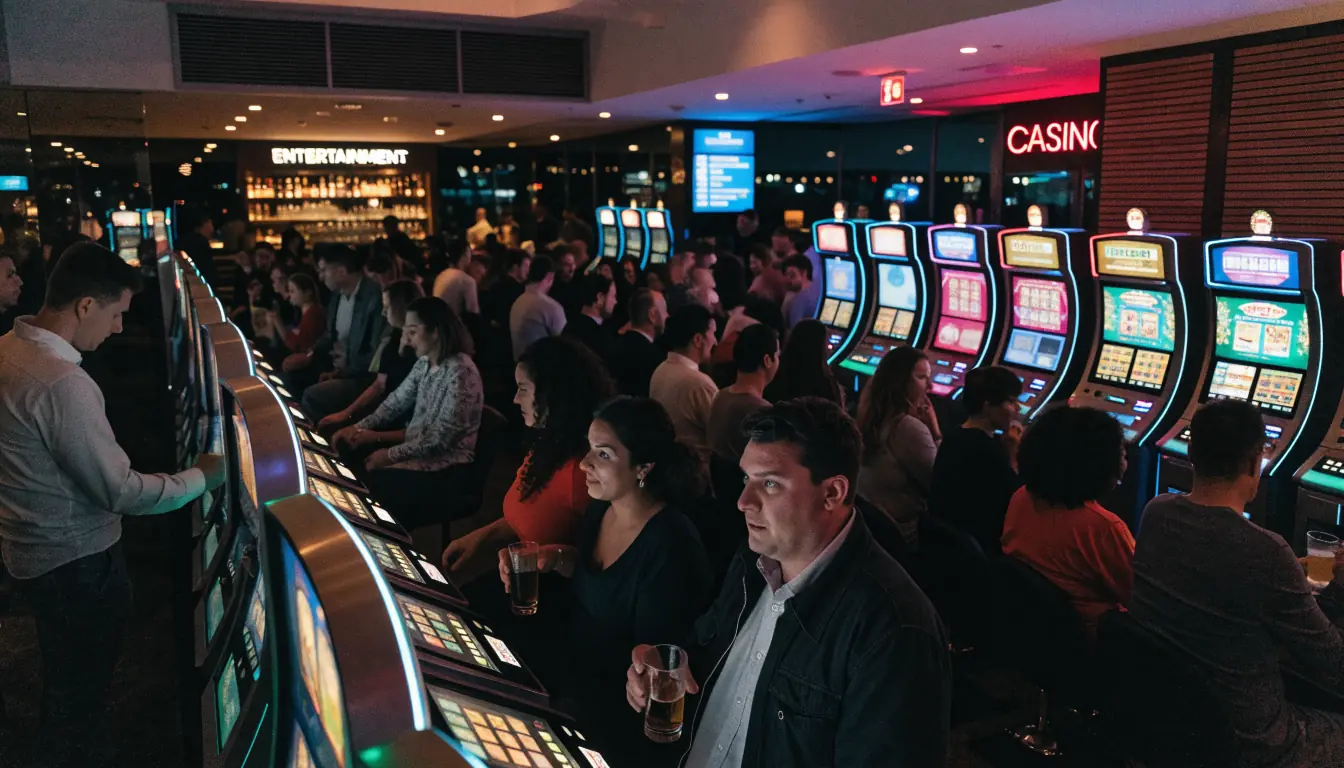
Clubs and hotels. Outside the two casinos, pokies in Tasmania live inside the state’s community club and hotel network — RSLs, sporting clubs, pubs with a gaming room out the back. This is where most Tasmanians who play pokies regularly actually play. The machines here are typically lower-denomination, community-style cabinets, the kind built for casual repeat play rather than high-roller sessions. The atmosphere is unmistakably local: raffle boards on the wall, a bistro attached, regulars who know the staff by name.
The Spirit of Tasmania. This one surprises people who haven’t done the Melbourne–Devonport crossing before. The ferries run a gaming lounge on board, open for the duration of the overnight sailing, with a bank of pokies alongside other gaming options. It’s a genuinely different experience from a casino floor — smaller room, sea motion, a captive audience for the length of the crossing — but the machines themselves are drawn from the same pool of suppliers as land-based venues. If you’re travelling the strait and want to pass the time between dinner and your cabin, it’s there. Just don’t expect casino-floor scale; it’s a lounge, not a hall.
What "top pokies" means once you’re standing in front of the machine
Rankings of "best pokies" are mostly marketing dressed up as advice. What actually matters when you sit down is a short list of concrete things: how the game pays, how volatile it is, whether the features are worth chasing, and whether the cabinet is the kind you can walk away from without feeling cheated by the clock. I’ll go through the titles that turn up most often across Tasmanian venues and cruise-ship lounges, with what’s actually verifiable about each — no invented percentages, no "typically pays out" language dressed up as fact.
A Megaways slot with cascading wins, rewarding patient play.
A “Book of” style game reskinned with a panda theme and expanding wilds.
Mythology‑themed slot with standard free‑spin and multiplier features.
Busy‑screen slot with stacked wilds and frequent small wins.
Urban‑themed slot focusing on bonus features rather than classic symbols.
Whimsical, lower‑volatility slot suited for relaxed sessions.
1. Wolf Energy Megaways
Part of the Megaways mechanic family that’s become a fixture on pokies floors over the last several years — the reel structure changes on every spin, which means the number of ways to win shifts constantly rather than sitting fixed at a set number. Wolf-themed cabinets have been a staple in Australian venues for a long time, and this one leans into that with a high-energy visual theme and stacked symbol runs designed to trigger cascading wins. It’s the kind of machine that rewards patience during a session rather than a single big spin — the Megaways engine is built for volume of outcomes, not one dramatic hit.
2. Book of Panda Megaways
A "Book of" title — the genre popularised by Egyptian-themed expanding symbol games — reskinned with a panda and East Asian motif, and bolted onto the same Megaways reel mechanic. Expect an expanding wild or symbol feature that’s the whole point of the "Book of" format: land the right symbol during a bonus trigger and it locks in place across the reels for the rest of that spin sequence. It’s a familiar format wearing a different costume, which is exactly why it does well on venue floors — players know the rhythm of a "Book of" game even before they’ve touched a specific title.
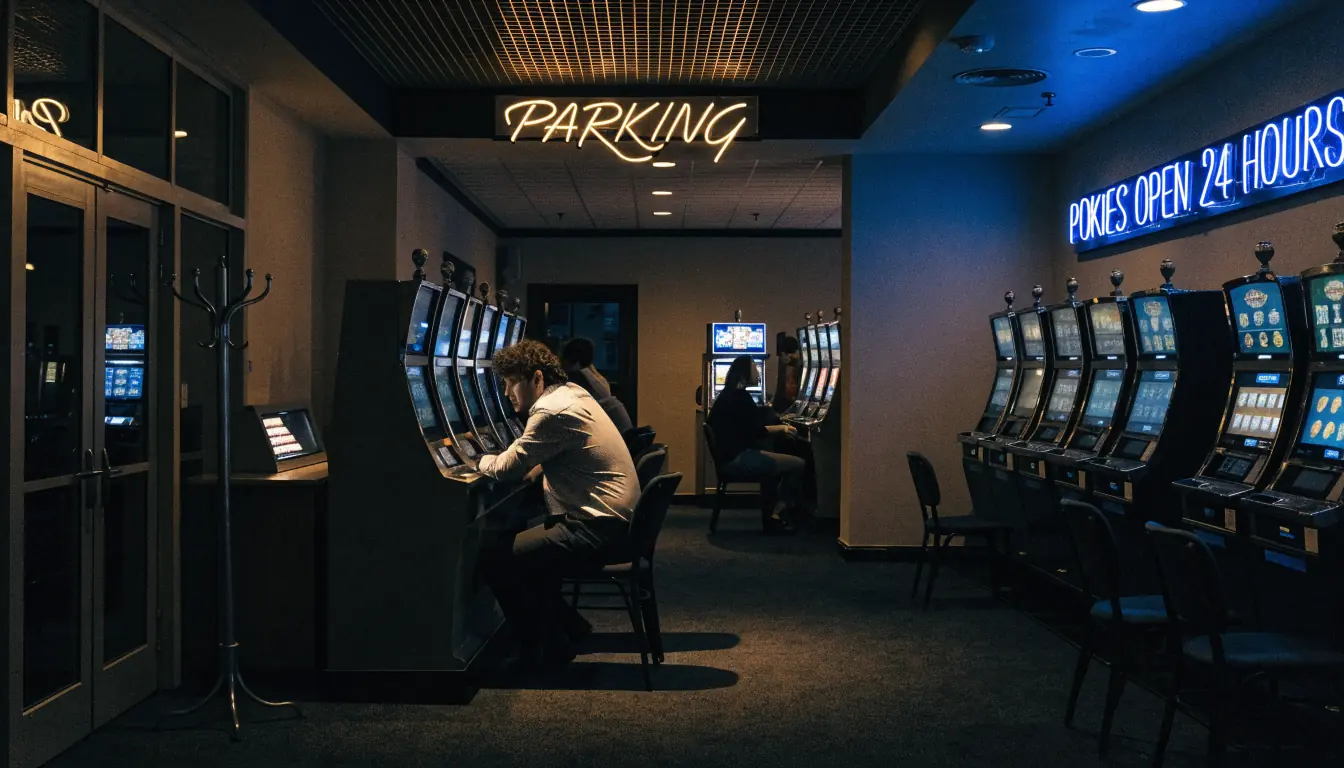
3. Bucks of Gods
Mythology-themed cabinet, sitting in that crowded "gods and antiquity" category that pokies floors lean on heavily. What separates one from another in this genre is usually the feature set rather than the theme — free-spin retriggers, multiplier stacking, that sort of thing — and Bucks of Gods follows the standard shape for the category rather than reinventing it. On a Tasmanian floor it tends to sit alongside half a dozen similarly themed cabinets, which tells you more about supplier catalogues than about the game itself.
4. Higher Nuts Buffalo
The buffalo-and-wildlife theme is one of the longest-running in pokies generally, and this entry continues that lineage. These machines are usually built around large symbol sets and stacked wilds, which is what gives them their visual identity — reels that look "full" compared to a leaner classic-style game. It’s a title that suits players who want a busy screen and frequent small hits rather than long dry stretches between action.
5. Rip Town
A grittier, urban-themed cabinet — a change of pace from the mythology and wildlife themes that dominate the rest of this list. Games in this style tend to lean on bonus features tied to the theme’s visual language rather than classic fruit-machine symbols, and Rip Town fits that pattern. Worth noting for players who get theme fatigue after the third Egyptian or Norse title in a row on the same floor.
6. Wonderful Krispel
A lighter, more whimsical cabinet compared to the action and mythology themes elsewhere on this list. Games with this kind of tone tend to be built for a more relaxed session — smaller, more frequent wins rather than chasing a rare big multiplier — which makes them a common choice for players easing into a session before moving to something higher-volatility later in the night.
Payout Claim
The article mentions an operator’s specific condition of paying out 500 on max stake for five scatter symbols – this should not be taken as a standard guarantee across all machines.
7. Texas Holdem
Not the card game itself but a pokies cabinet built around poker iconography — cards, chips, and casino table imagery reworked into a slot format. This crossover style has been common on Australian floors for years, aimed at players who enjoy the visual language of table poker without wanting to actually sit down and play a hand against other people.
8. Blazing Wilds Megaways
Another entry in the Megaways family, this one built around a classic "wilds and fire" theme — the kind of visual shorthand that signals a straightforward, feature-dense session rather than an elaborate bonus structure. Because it shares the Megaways reel engine with Wolf Energy Megaways and Book of Panda Megaways, players who like the mechanic but want a different skin tend to rotate between all three during a single visit.
None of these titles come with a published payout percentage I can point to as an established figure for the Tasmanian market — that’s a separate discussion, and it’s covered on its own further down this page rather than folded in here with invented numbers. What I can say, because one operator has published it as a term of their own promotion rather than a market standard, is that at least one machine circulating in this category pays out 500 on the max stake for landing five scatter symbols on the reels. That’s a specific operator’s specific condition, not a rule that applies across every cabinet with a similar theme — worth remembering before assuming any two "scatter" features behave the same way just because they share a name.

Cabinet types: classic reels versus video pokies
Walk any Tasmanian floor and you’ll notice a split that doesn’t map neatly onto "old" versus "new." Classic reel-style machines — three or five reels, simpler paylines, symbols that harken back to fruit-machine design — still get floor space, largely because a loyal segment of players specifically seeks them out. They’re simpler to read at a glance: fewer moving parts, fewer bonus screens interrupting play, a more direct relationship between spin and outcome.
Video pokies are the other half of the floor, and they’re where all eight titles above live. These run on digital reel simulations rather than physical reels, which is what allows for mechanics like Megaways, expanding symbols, and multi-stage bonus rounds that would be mechanically impossible on a physical reel machine. The tradeoff is complexity — a new player sitting down at a Megaways title for the first time often needs a minute just to understand what’s happening on screen before they can judge whether they’re winning or not.
Volatility is the practical distinction that matters more than "classic vs video" once you’ve picked a game. A low-volatility machine pays smaller amounts more often — good for a longer session on a fixed budget, less exciting if you’re chasing a big single hit. A high-volatility title, which is where a lot of the Megaways and expanding-wild games above tend to sit, pays less frequently but with bigger swings when it does. Neither is "better" — it’s a question of what kind of session you want, and it’s worth deciding that before sitting down rather than working it out three hours in.
Cashless play, using ticket‑in/ticket‑out systems or cards, is now standard in Tasmanian venues, replacing traditional coin‑hopper machines.
Accessibility on the floor
One thing that’s changed noticeably in the last several years, and that’s relevant regardless of which venue you’re in, is the move toward cashless play. Ticket-in/ticket-out systems and card-based play have become standard fixtures rather than novelties, replacing the old coin-hopper mechanics that used to define the physical experience of playing a pokie. It changes the texture of a session — no coin tray rattling, no counting out change — and it also changes recordkeeping, since a card-based system tracks play in a way loose coins never did.
Physical accessibility has improved too. Wheelchair-accessible machine positions, adjustable seating, and clearer signage are standard expectations at both Wrest Point and Country Club now, in line with the broader shift across Australian venues over the past decade. On the Spirit of Tasmania, the gaming lounge is built into the ship’s public deck layout, so accessibility there follows the ferry’s general accessibility standards rather than anything casino-specific.
It’s worth mentioning, separately from the land-based floor, that pokies-style play is not confined to a physical cabinet anymore in the broader sense — the games themselves, in digital form, can be accessed on devices like an iPad. That’s a different conversation from what’s legally available to Tasmanian residents online, though, and I’m deliberately not wading into that here — it’s the subject of its own section on this page, and the legal picture around it is different enough from the land-based floor that folding the two together would do a disservice to both.
Age verification and identification on the floor
Every venue covered here — Wrest Point, Country Club, the club and hotel network, and the Spirit of Tasmania’s gaming lounge — operates under the same baseline rule: the minimum legal gambling age in Australia is 18, no exceptions, no regional variation on that particular point. In practice this means identification checks at the door of both casinos, and staff at clubs and hotels are trained to card anyone whose age isn’t obviously well past that threshold. On the ferry, the gaming lounge follows the same rule as any Tasmanian venue — it doesn’t matter that you’re technically in international waters for part of the crossing; the operator runs it as an 18-plus space throughout.
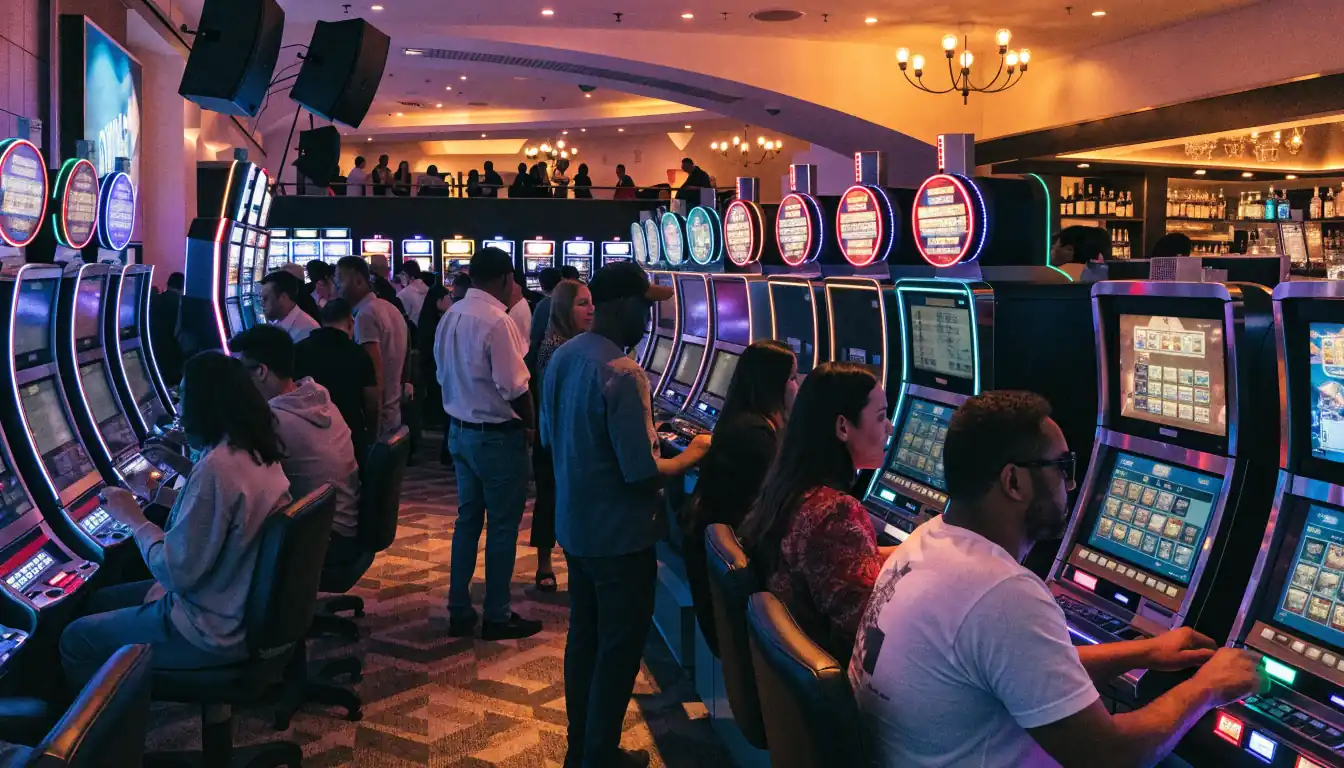
This isn’t a formality dressed up as caution. Venues that get this wrong face consequences from the state regulator, and the people running the floor know it. If you look under 25 and haven’t got ID on you, don’t expect a friendly wave-through — that’s not how any of these venues actually operate, whatever the stereotype about small-town casinos might suggest.
Regulation: why the land-based floor is a different world from your phone
This is the part that trips people up, so it’s worth being direct about it. Tasmania’s land-based pokies — in casinos, clubs, hotels, and on the ferry — sit under state-level gambling regulation, administered and enforced by Tasmanian regulators and law enforcement. That’s a fundamentally different structure from the one governing online gambling in Australia, which runs through federal law via the Interactive Gambling Act.
There is no single overarching statute or single regulator covering gambling in this country — that’s true at every level, not just the online/offline split. Regulation happens at both the state/territory level and the federal level simultaneously, and land-based casinos answer to state government regulators and law enforcement agencies entirely separate from the Australian Communications and Media Authority, which is the federal body enforcing the Interactive Gambling Act 2001 online. Walking into Wrest Point and sitting down at a machine has nothing to do with ACMA. Opening a gambling site on your phone has everything to do with it.
That distinction matters here specifically because it explains why the machines described in this section exist entirely legally, in the open, with license conditions displayed and staff on hand, while the online pokies landscape — covered in the next section — is a much narrower and murkier proposition for anyone in Tasmania. The physical floor isn’t operating in some grey area that mirrors the online restrictions. It’s a fully licensed, state-regulated activity that predates the online gambling debate by decades.
Cruise-ship pokies: a regulatory footnote worth knowing
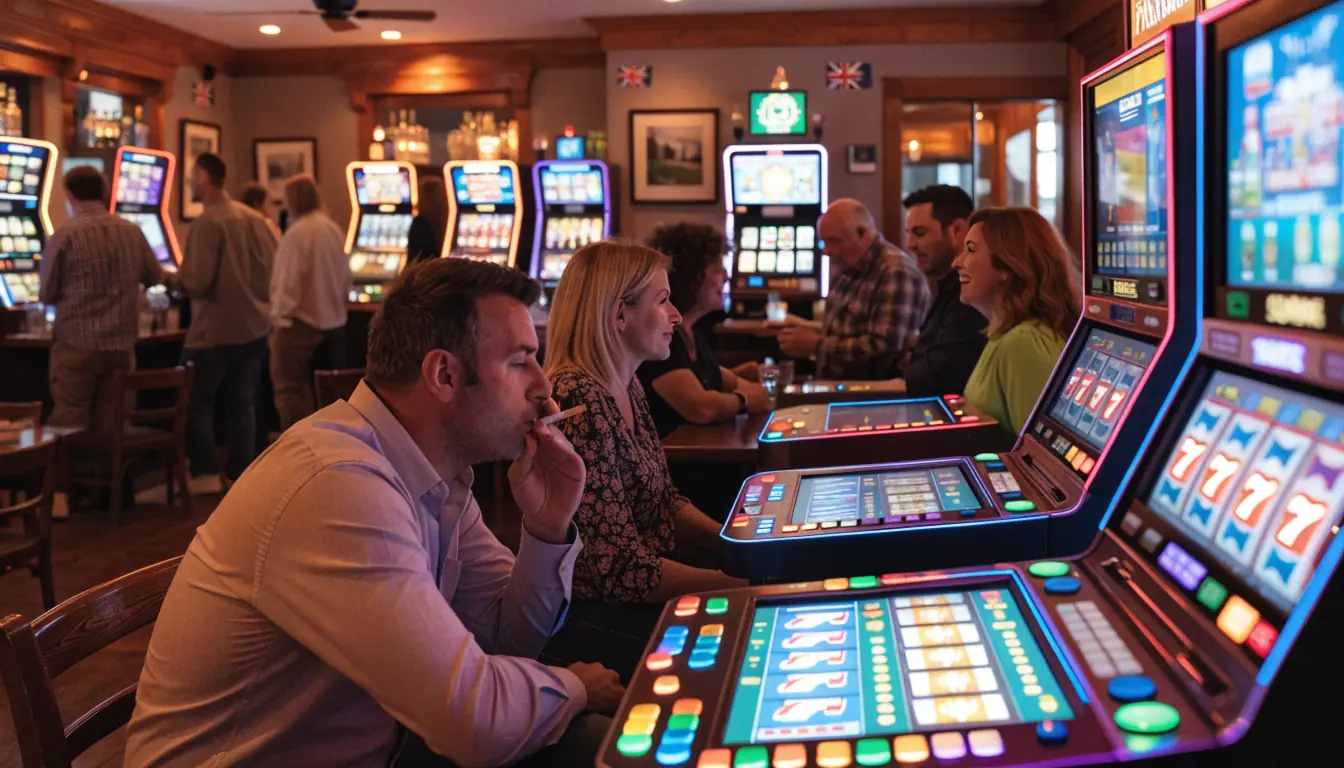
The Spirit of Tasmania’s gaming lounge deserves one more comment beyond "it exists and here’s what’s on it." Gaming rooms on ferries and cruise vessels typically operate under a combination of the vessel’s registration and the jurisdiction it’s licensed to offer gaming within — a detail that matters if you’ve ever wondered why the room only opens once the ship clears port and closes again before docking. That’s standard practice for maritime gaming generally, not something specific to this route, but it explains the schedule you’ll notice if you’ve made the crossing: the pokies aren’t available the moment you board, and they close down well before you’re back on dry land.
Hours: the "24-hour" question
A common search anyone doing due diligence on Tasmanian pokies runs into is whether venues operate around the clock. The honest answer is that this varies by venue type and by specific location, and it’s not something covered by a uniform statewide rule — casino floors, club gaming rooms, and hotel gaming areas each set their own hours within whatever licensing conditions apply to that specific premises. Some venues in the club and hotel network do run extended hours that stretch well into the early morning; others keep more conventional evening hours tied to their broader trading hours as a pub or club. There isn’t a published, verifiable figure here I can point to as an industry-wide standard for "24-hour" availability across the state, and I’d rather say that plainly than imply a consistency that doesn’t actually exist. If round-the-clock access to a machine is the specific thing you’re after, the reliable approach is checking directly with the venue rather than assuming a blanket rule applies.
What sets the land-based floor apart from everything else on this page
It’s worth stepping back and being clear about the shape of the whole picture, because the next two sections of this page are going to look quite different from what’s above.
Everything in this section — Wrest Point, Country Club, the club network, the Spirit of Tasmania — operates as licensed, physically present, state-regulated gambling. You walk in, you show ID if asked, you sit at a cabinet that’s been tested and certified under Tasmanian gaming law, and the money you put in and take out is handled by a licensed operator answerable to a state regulator. None of that requires the kind of legal hedging that the online conversation demands.
The moment the conversation shifts to online pokies — the subject of the next section — the legal ground changes completely. Federal law, not state law, takes over. The Interactive Gambling Act 2001 prohibits the provision of online casino-style games, pokies included, to Australians, and there’s no domestically licensed real-money online casino operator anywhere in this country for any state’s residents, Tasmania included. That’s not a gap in coverage — it’s the settled position: there’s no licence to obtain, because none exists to be granted.
Two Commonwealth sources describe this prohibition slightly differently by year — one attributes it to the Interactive Gambling Act 1997, another to the 2001 version — and rather than pick one silently, it’s worth flagging that the sources themselves don’t agree on which piece of legislation carries the original prohibition, even though the outcome they describe is the same either way: providing online casino games, including pokies, to Australian residents is against federal law, full stop.
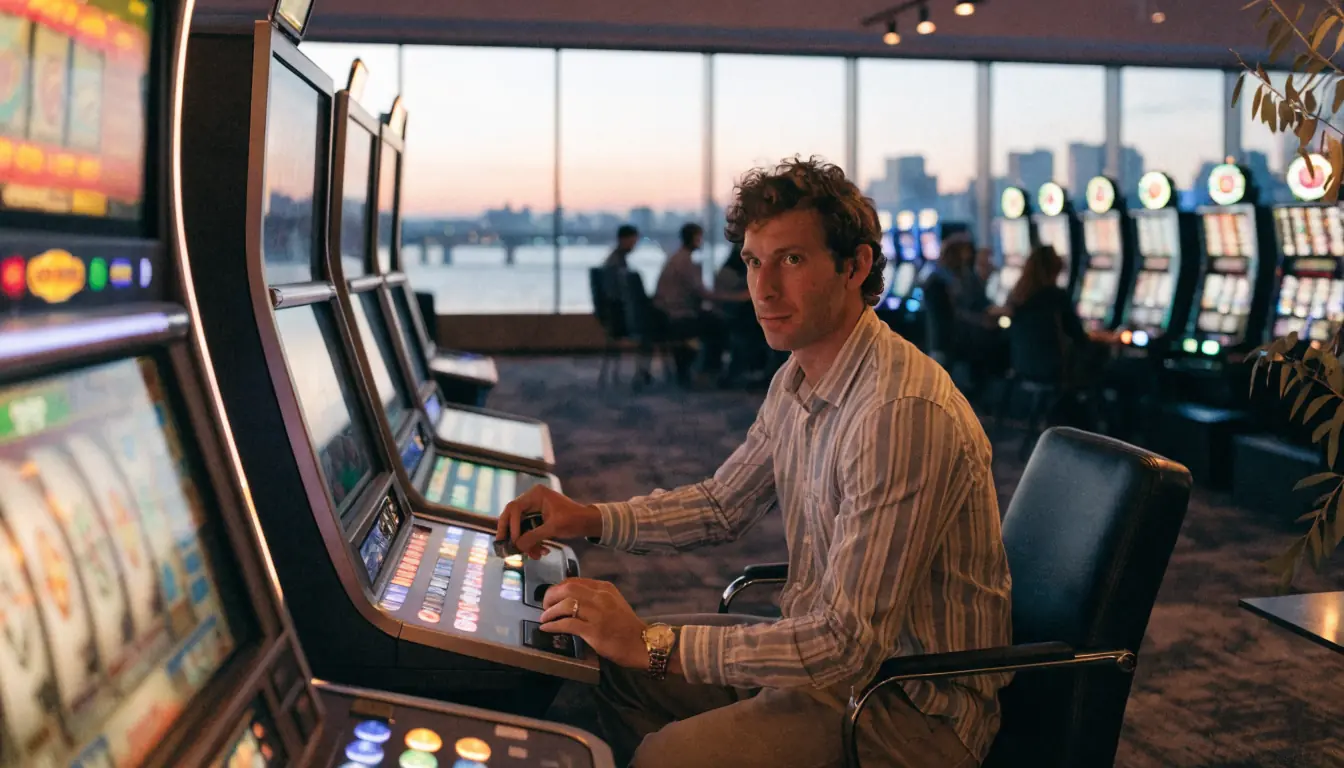
None of that touches what’s covered in this section. A machine on the floor at Wrest Point or in the lounge on the Spirit of Tasmania is playing by an entirely different rulebook than anything running through a browser or an app. Conflating the two is the single most common mistake in how this topic gets written about — and it’s exactly the mistake this page is structured to avoid, by keeping the land-based floor here, and the online landscape in its own space next.
Online Casino Pokies Options for Tasmanian Players
Search "online pokies Tasmania real money" often enough and the picture that forms is misleading. There’s no Tasmanian licence for online slots. There’s no Australian licence for them at all. The Interactive Gambling Act 2001, the Commonwealth law that governs this whole space, prohibits operators from offering online casino games — slots, poker, blackjack, roulette, the lot — to anyone in Australia, Tasmania included. That’s the starting point, and any page that skips past it to talk about "top-rated Tasmanian online pokies sites" is skipping the part that matters.
Worth being precise about what the law actually restricts, because this is where most confusion lives. The IGA targets the businesses providing the games, not the person playing them. Sitting in Hobart and spinning a reel on an offshore-licensed site isn’t something the Act makes illegal for you personally. It’s the operator running that game for an Australian audience who’s on the wrong side of it. I’ve seen this distinction get flattened into "it’s all illegal" or "it’s all fine" — neither is right, and the difference matters if you’re trying to understand your own position rather than someone else’s marketing copy.
Practical consequence: there are no domestically licensed real-money online casino operators. None. So "Crown Tasmania casino pokies" as an online product doesn’t exist — Crown’s Tasmanian presence is physical, not a licensed online extension of it. Anyone advertising an official Tasmanian online pokies platform with a local licence is describing something that isn’t there.

What’s actually legal to bet on online
Australians can legally place online wagers through a handful of gambling categories — mainly sports and racing betting under state and territory licensing. That’s the legitimate, regulated online gambling market here. Slots don’t fall into that bucket, no matter how a site brands itself.
Where offshore sites fit in
Offshore-licensed casinos exist, and Tasmanian players use them, because the law doesn’t criminalise the individual for doing so. That’s a legal fact, not an endorsement. It also doesn’t mean these sites operate under any Australian consumer protection standard — because they don’t. There’s no local licence to check, no local regulator to complain to, no register to search. "Choose a licensed operator" only means something when the licence in question sits somewhere you can verify it against a real regulator watching that specific market. That’s not the situation here.
If you do go looking at an offshore platform, the honest checklist looks less like "find the best bonus" and more like:
- Confirm age verification is enforced — 18 is the legal minimum, no exceptions.
- Expect identity checks before any withdrawal, not just at sign-up.
- Read the wagering requirements on any “no deposit bonus” before you touch it, not after.
- Understand that the site can change promotion terms — that’s standard, not a red flag on its own, but it means nothing quoted to you is locked in.
None of this makes an offshore casino equivalent to a licensed local product, because there isn’t one to compare it to. "High limit pokies Tasmania" and "maximum cash payout pokies Tasmania" are questions people ask expecting a regulated answer. There isn’t one waiting for them — just varying offshore terms, set and altered by each site on its own conditions.
On self-exclusion: this is a genuine gap in the online space specifically because there’s no domestic licensing structure to build a self-exclusion register around. Land-based venues run their own programs. Offshore sites may offer their own account-limit or exclusion tools, but that’s a feature of the individual platform, not part of any Tasmanian regulatory framework — because there isn’t one covering online play.
Short version.
Local licence: doesn’t exist. Player risk: yours to assess.
Understanding Pokies Payout Percentages in Tasmania
Payout percentage — RTP, in the shorthand everyone actually uses — tells you how much of what goes into a machine comes back out over its lifetime. It’s a mathematical average, not a promise for any single session, and I’ve watched people confuse the two more times than I can count.
Here’s where it gets murky for Tasmania specifically. Land-based pokies fall under state gambling oversight, the kind that inspects hardware and certifies the numbers printed on a machine. Online pokies are a different animal legally. The federal Interactive Gambling Act 2001 is the law usually cited as governing online gambling in Australia — though older references point to a 1997 Act instead. Sources don’t agree on which one applies, and that’s worth saying outright rather than picking a side.
What that means practically: there’s no domestic regulator certifying RTP figures for offshore online pokies. Any payout number you see for those comes from the operator itself.
No verification body behind it.
What are some examples of high-volatility pokies with Megaways mechanics mentioned in the article?
Wolf Energy Megaways and Book of Panda Megaways. Both use the Megaways reel mechanic where the number of ways to win changes on every spin, making them games that reward volume of outcomes over a single big hit.
What is the minimum legal gambling age in Australia?
18 years old. That applies to land-based venues such as Wrest Point, Country Club Casino, and the Spirit of Tasmania gaming lounge.
How to recognise problem signs and where to get help?
Gambling regulation in Australia is built around harm minimisation — the Interactive Gambling Act 2001 exists specifically to protect the public. If pokies play is becoming something you can’t walk away from, free confidential help is available in Australia through Gambling Help Online (gamblinghelponline.com.au) and the 24/7 telephone counselling line 1800 858 858.