Best Casino Hotel in Western Australia: Crown Perth Guide
 Available in AU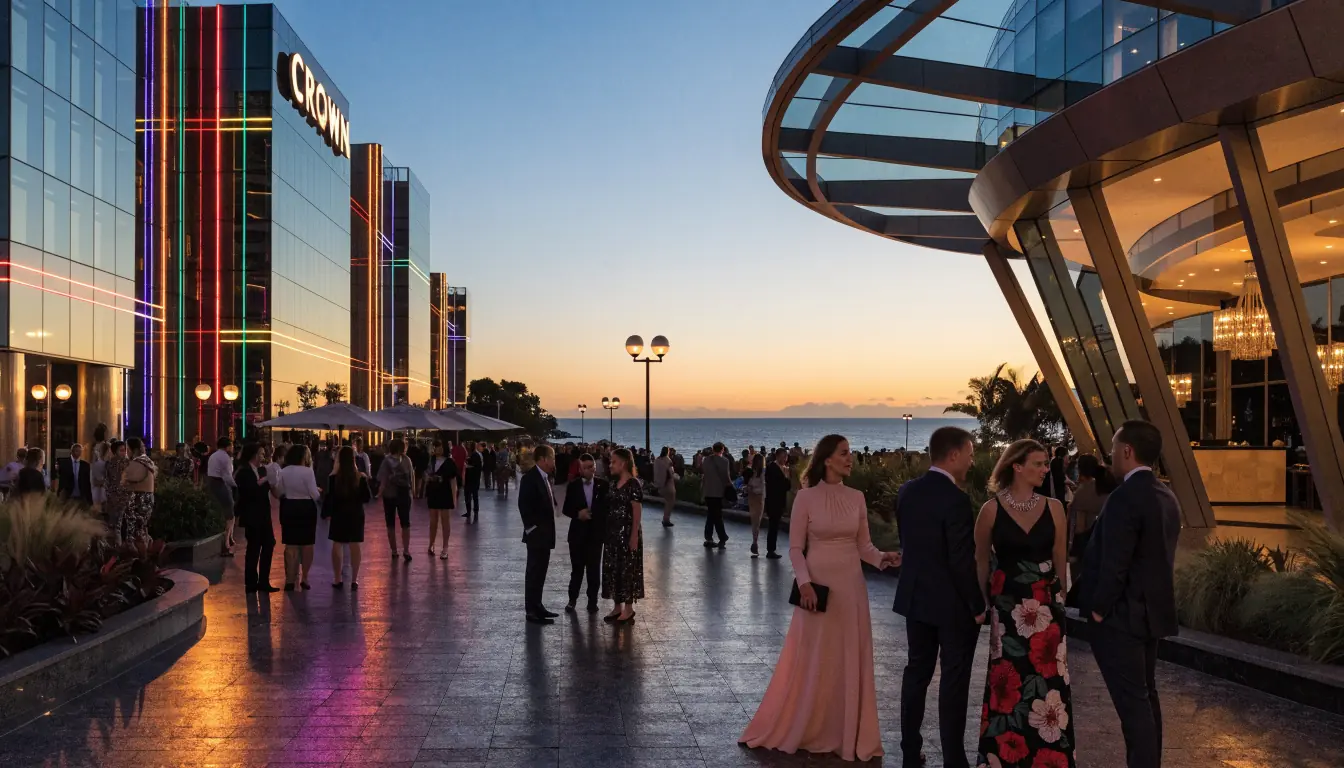
Table of Contents
- Casino Hotels in Western Australia
- Poker Rooms, Gaming Floors and Tournament Offerings
- Casino Facilities – Parking, Dining, and On‑Site Entertainment
- Nearby Accommodation Options for Casino Visitors
- Contact Points – Bars, Baccarat, Events and Transport
- Food Buffets, Breakfast Deals and Employment Opportunities
- Casino Development, Operations and Upcoming Events
- On‑Site Restaurants and Culinary Highlights
- Address, Dress Code, Spa Services and Additional Amenities
- Food Courts and Outdoor Pool Areas
Casino Hotels in Western Australia
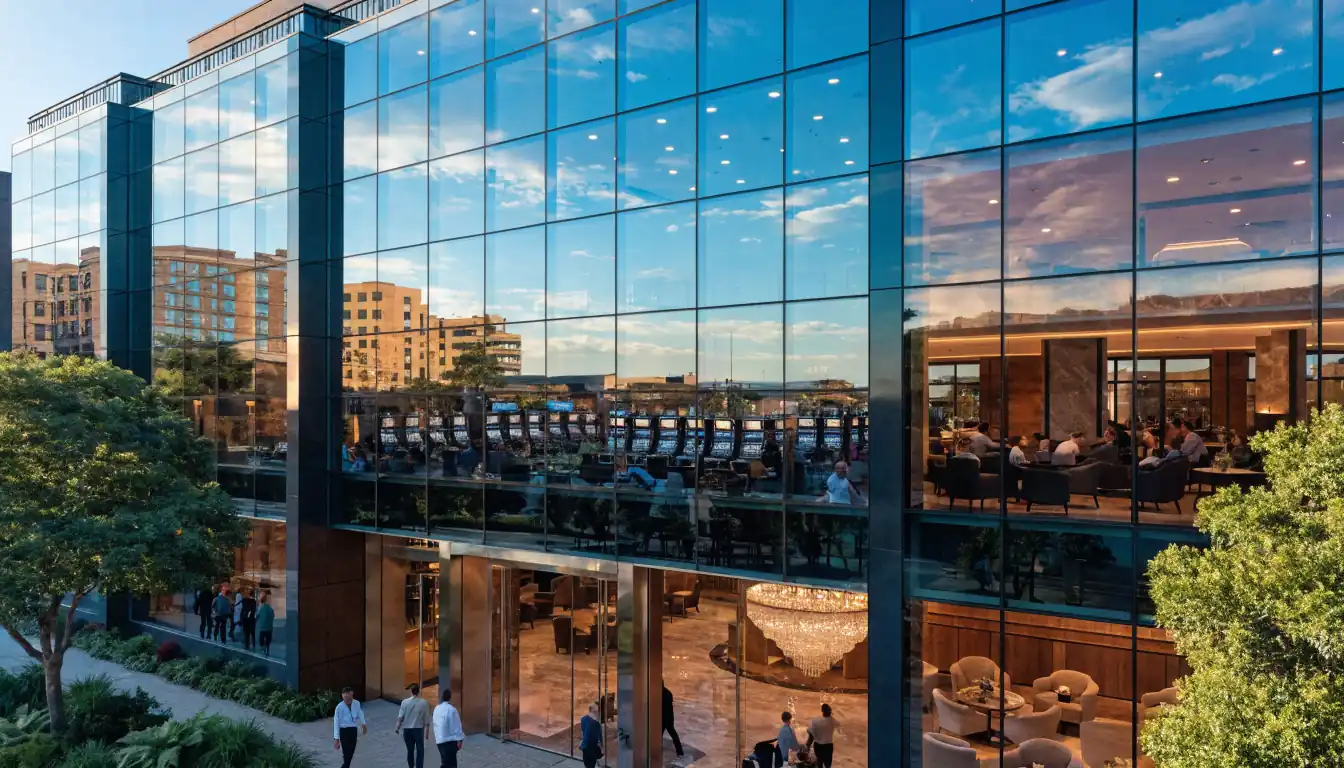
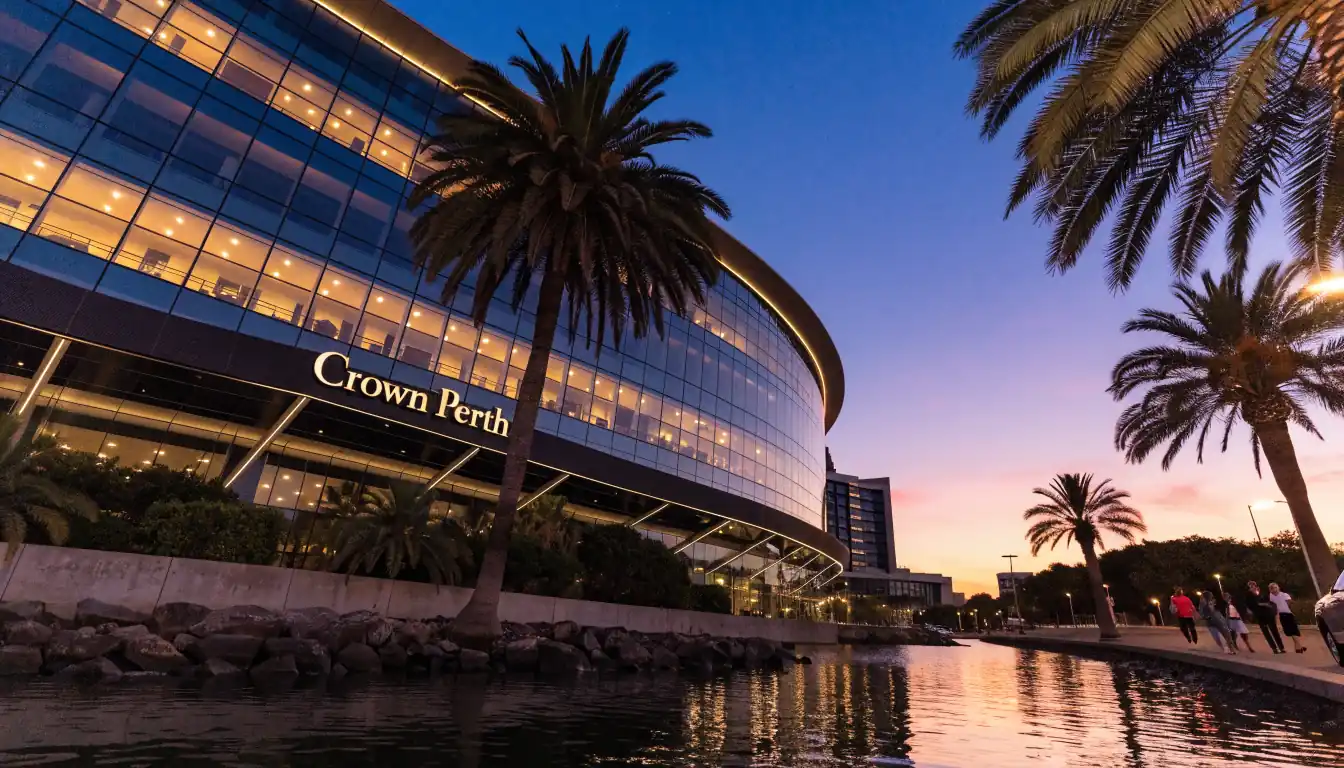
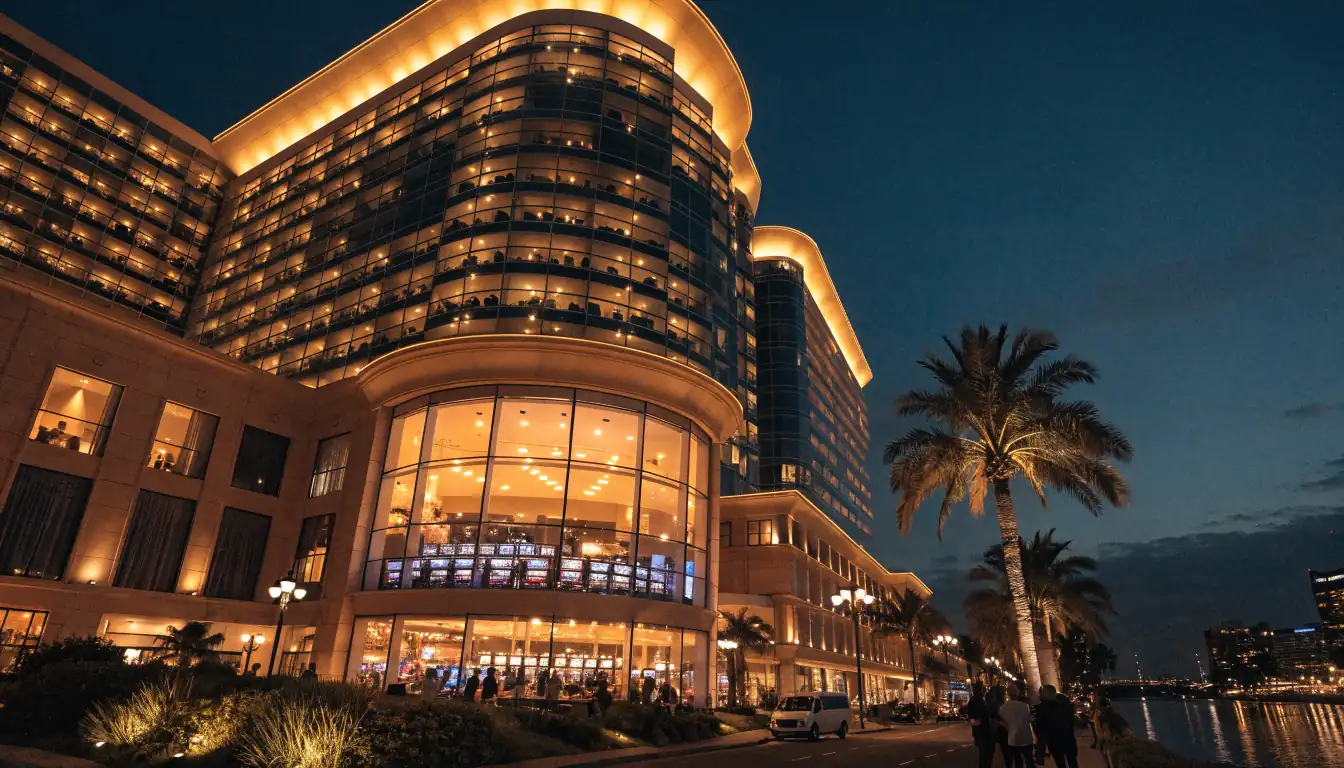
Anyone searching for a Western Australia casino hotel in 2026 is usually looking for one thing: a room close enough to the gaming floor that the night doesn’t end with a taxi ride. Crown Perth is the only integrated casino resort in the state, and its hotel towers are built around that exact convenience — walk down, play, walk back up. Whether that’s a selling point or a warning sign depends on why you’re staying there in the first place.
I’ve checked into casino hotels for work, not for the thrill of it, and the pattern is the same everywhere: the closer the room is to the floor, the more the property wants you moving between the two. That’s not a criticism, it’s just how these buildings are designed. Lifts open near the gaming areas. Corridors loop back past the bars. None of it is accidental.
Room quality and what actually varies
Crown Perth operates multiple towers with different price tiers, from standard rooms up to suites, and the quality gap between them is real — it’s not just bigger rooms for more money, it’s a different level of finish, view, and quiet. If you’re booking a Western Australia casino hotel room mainly to sleep between sessions, the standard tier does the job. If you want distance from the noise of the floor below, that costs more, and it should — you’re paying for insulation, literally and otherwise.
With so many online casinos courting Western Australian players, it helps to see how each one stacks up on licensing, banking speed, and welcome offers before you sign up.
License: international iGaming licence – jurisdiction not named in the source · Bonus: 100% up to A$1,000 + 100 free spins, 35x wagering · Payout speed: PayID 1-24 hours · Min. deposit: A$30 (PayID from A$10) Holds an international iGaming licence and pairs a sizeable matched deposit with free spins, backed by fast PayID withdrawals and a low minimum deposit for PayID users.
License: Curacao – Antillephone N.V. (Versus Odds B.V.) · Bonus: up to EUR 2,000 across 5 deposits + 200 free spins · Min. deposit: EUR 20 Licensed in Curacao under Antillephone N.V., this operator spreads a large bonus package across multiple deposits plus free spins, with an accessible minimum deposit.
License: Curacao eGaming OGL/2023/174/0082 (Dama N.V.) · Bonus: up to A$10,000 + 500 free spins across 4 deposits · Min. deposit: A$15 Operating under a Curacao eGaming licence via Dama N.V., it offers a substantial multi-deposit bonus with free spins and a low entry deposit.
Bonus: up to A$7,500 + 550 free spins across 10 deposits, 50x wagering · Payout speed: crypto under 1 hour, PayID 1-3 business days · Min. deposit: A$20 (A$30 to qualify for the bonus) Offers an extensive welcome package spread over ten deposits with free spins, and stands out for fast crypto payouts alongside standard PayID processing times.
Bonus: 100% up to A$750 + 200 free spins, 35x wagering · Payout speed: crypto 30-120 minutes, fiat 24-72 hours · Min. deposit: A$30 Provides a straightforward matched bonus with free spins, and supports quick crypto withdrawals alongside fiat payout options.
License: Curacao Gaming Control Board OGL/2023/176/0095 (Hollycorn N.V.) · Bonus: up to A$11,000 + 300 free spins (code NEO100) Licensed under the Curacao Gaming Control Board through Hollycorn N.V., it features one of the larger bonus ceilings on this list plus free spins via a bonus code.
License: Curacao Gaming Control Board (TechSolutions Group N.V.) · Bonus: 100% up to A$250 + 100 free spins (1st deposit) Regulated by the Curacao Gaming Control Board under TechSolutions Group N.V., offering a first-deposit bonus with free spins for newcomers.
License: Curacao Gaming Authority (Jumpman Gaming Ltd) · Bonus: up to A$6,600 + up to 250 free spins across 4 deposits Licensed by the Curacao Gaming Authority via Jumpman Gaming Ltd, it spreads a generous bonus and free spins package across multiple deposits.
License: Curacao OGL/2024/1335/0780 · Bonus: up to A$1,000 + 150 free spins, wager-free · Min. deposit: EUR 20 Holds a Curacao licence and offers a wager-free bonus with free spins, making it notable for players who prefer fewer strings attached to their welcome offer.
License: Curacao eGaming (Hollycorn N.V., since 2017) · Bonus: 225% up to A$1,540 + 600 free spins across 4 deposits, 20x wagering · Min. deposit: A$20-30 (depends on the offer) An established operator licensed by Curacao eGaming through Hollycorn N.V. since 2017, offering a high-percentage bonus with free spins spread across several deposits.
What doesn’t change much between tiers is location. Every room in the complex is within a short walk of the gaming floor, which is the whole point of an integrated resort. There’s no version of this property where you’re staying "at the casino" but ten minutes from it.
Location relative to Perth
The casino sits on the Burswood peninsula, close to the Swan River and a short drive from central Perth. For visitors flying in, that proximity matters more than the room finish — it means you’re not stuck out in a business park with a shuttle timetable. Public transport and road access into the city are straightforward, which is worth knowing if your trip involves anything beyond the casino itself: meetings, dinners elsewhere, a river walk the next morning.
On-site services worth knowing about before you book
Hotel guests get access to pools, gyms, and the general resort infrastructure that comes with a large integrated property. None of that is unique to gambling venues — plenty of city hotels offer the same — but bundling it with the casino means you don’t have to leave the site for basic downtime. That’s convenient. It’s also, again, designed to keep you on the property.
One thing genuinely worth checking before booking: the casino’s operating hours don’t necessarily match the hotel’s front desk or amenity hours. Gaming floors in large Australian venues often run long, sometimes around the clock on certain areas, while spas, pools, and restaurants keep their own separate schedules. If your trip depends on using a specific facility at a specific time, confirm it directly with the property rather than assuming everything runs on casino hours.

Who this actually suits
Given that close to three-quarters of Australian adults gambled at least once in the past year, and more than a third gamble weekly, it’s fair to say most people walking into a Western Australia casino hotel aren’t first-timers figuring out what a pokies floor looks like. They know what they’re booking. The room is a base, not the attraction.
That said, it’s worth remembering the same data that shows how normal casual gambling is also points to a smaller group — somewhere between 80,000 and 160,000 Australian adults — for whom it isn’t casual at all. An integrated hotel makes the gap between "staying nearby" and "never leaving the building" very small. Worth knowing before you book, not after.
Booking through the property directly usually gives clearer visibility on room tiers and what’s actually included than third-party sites, which tend to bundle rates without specifying which tower or view you’re getting. Given the price difference between tiers, that detail is worth the extra five minutes.
The next section moves off the hotel floor entirely and into the gaming areas themselves — where the accommodation stops mattering and the tables start.
Poker Rooms, Gaming Floors and Tournament Offerings
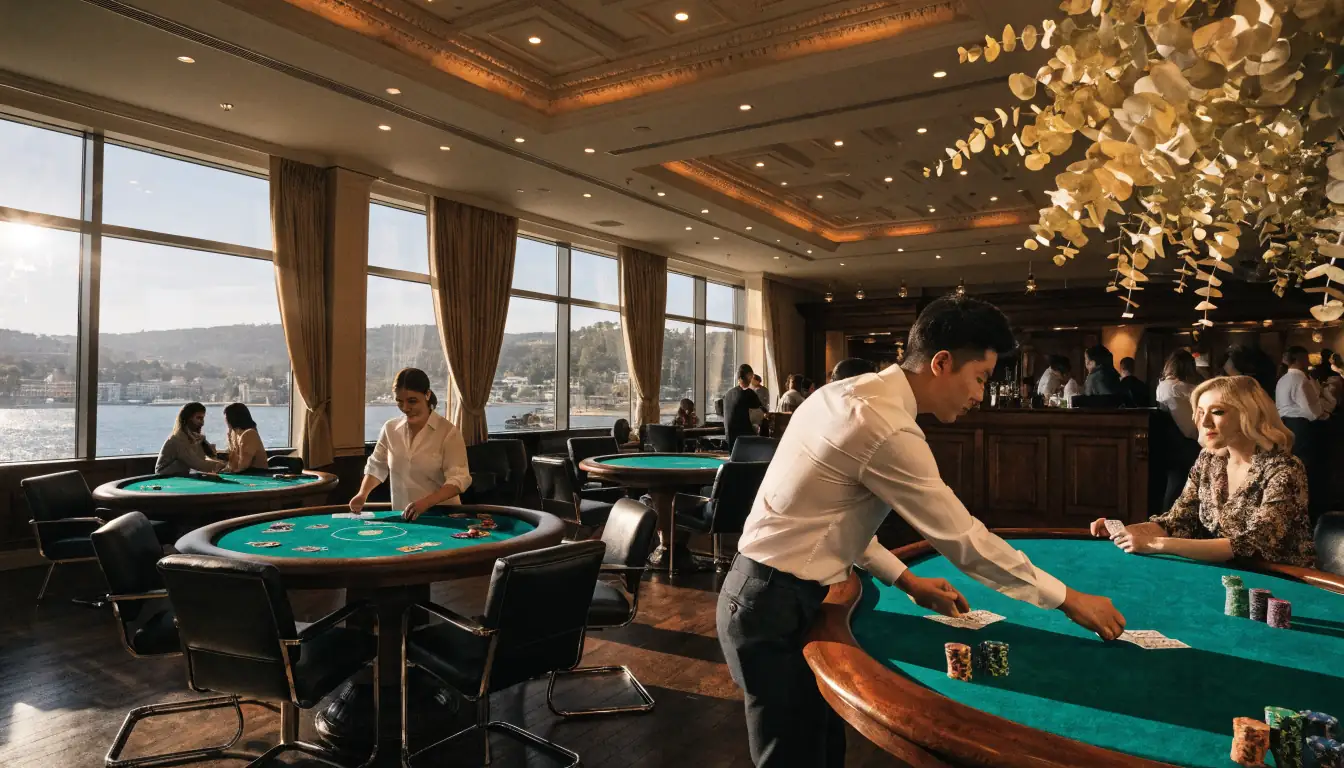
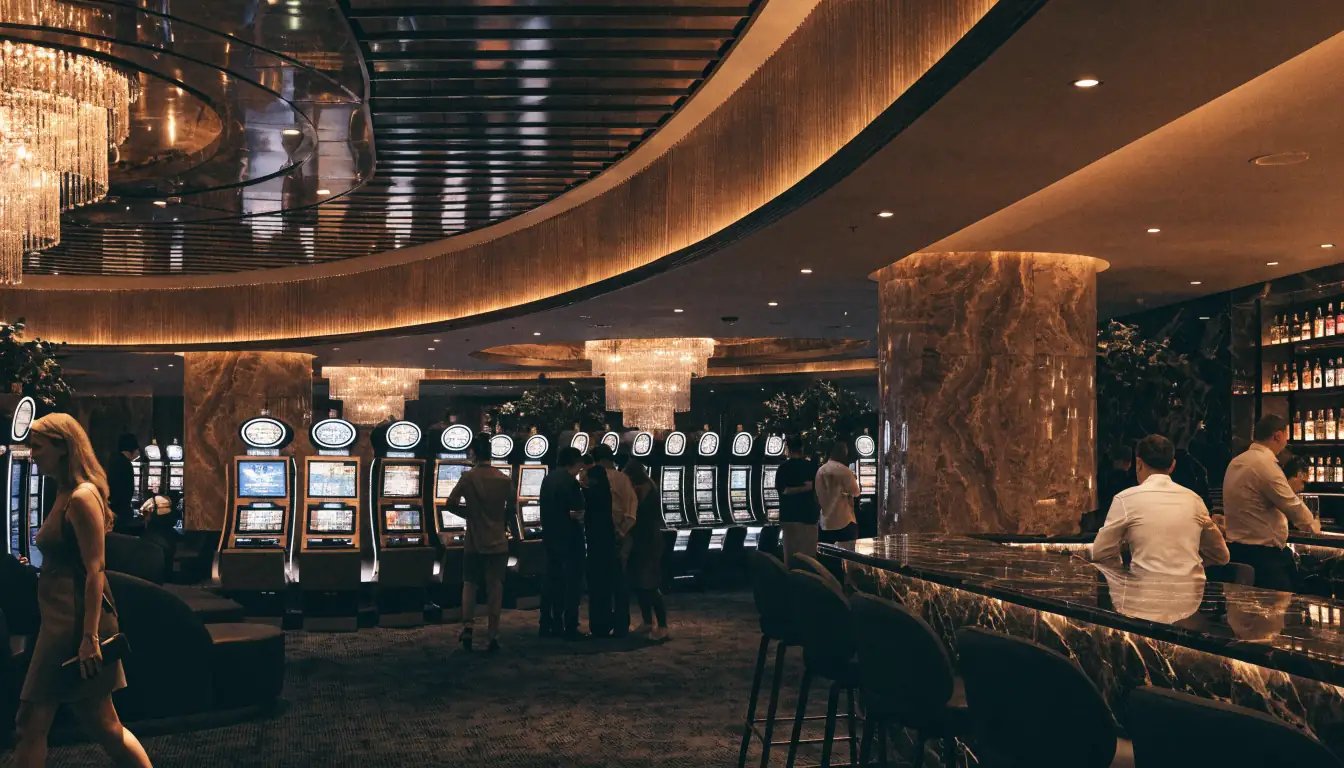
A hotel room upstairs and a poker table downstairs are two different businesses wearing the same name. Once you leave the lobby and walk onto the gaming floor, the whole calculus changes: this is where the operator actually makes money, and every layout decision reflects that.
Gambling can lead to financial loss; always set a personal budget and stick to it.
The gaming floor in a Western Australian casino is built around traffic flow, not comfort — though the two aren’t always at odds. Pokies (never call them "slot machines" here, nobody will know what you mean) dominate the floor by sheer count. They’re the quiet earners: low staff overhead, consistent margins, no need for a dealer to show up on time. Table games sit further in, usually arranged so a walk to the cashier or the bar passes at least two more temptations. None of this is unique to Western Australia — it’s the same floor logic you’d find anywhere gambling revenue funds a chunk of state taxation. In 2015–16, gambling revenue made up 7.7% of state and territory taxation nationally, which tells you why floor design gets this much attention from operators and regulators alike.
Poker rooms
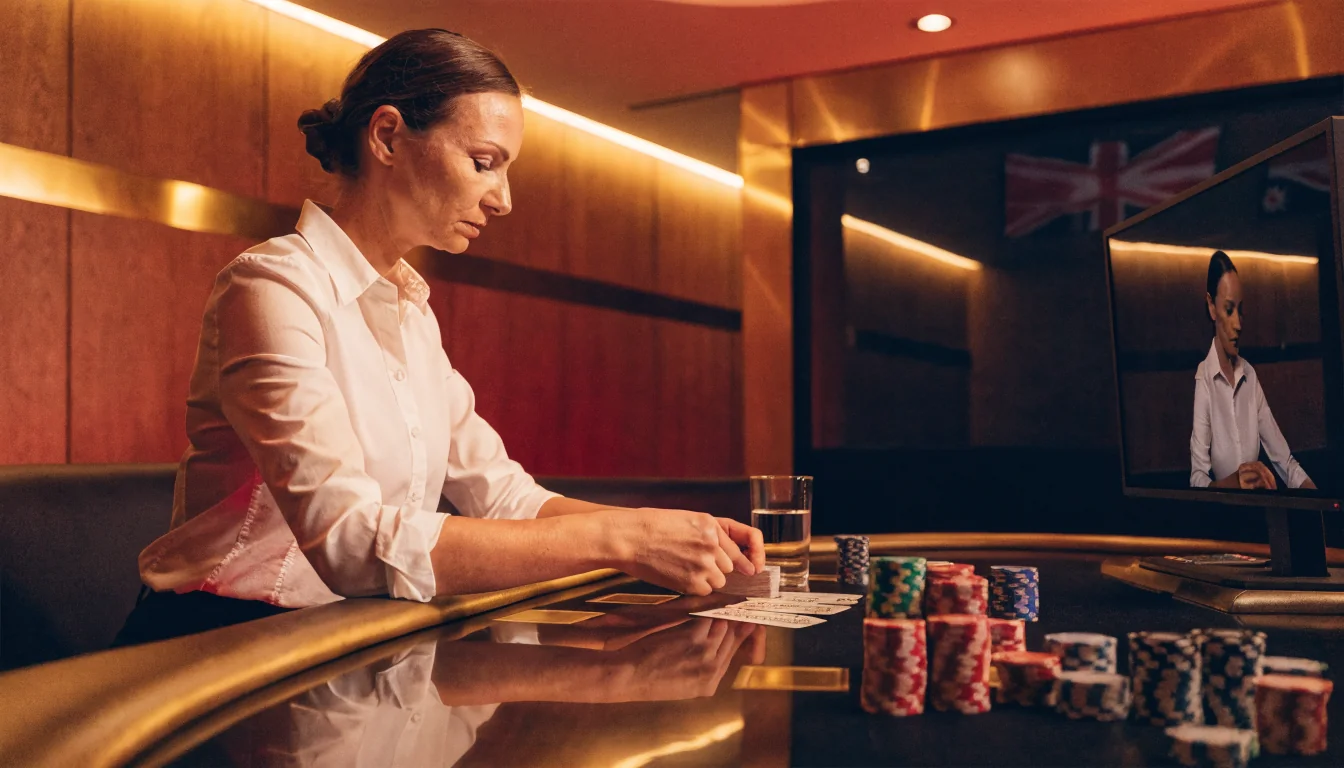
Poker sits apart from the rest of the floor, and that’s deliberate. It’s the one game where the house doesn’t play against you — it just takes a cut of the pot (rake) and rents the table. That changes the room’s whole feel: less flashing light, more quiet concentration, dealers rotating tables rather than running one game all night.
A proper poker room usually runs a mix of:
- Cash games — ongoing tables at set stakes, players buying in and cashing out as they choose.
- Scheduled tournaments — structured events with starting stacks, blind levels and a fixed prize pool built from entry fees.
- Satellite events — smaller buy-in tournaments that feed players into a bigger one.
The tournament calendar is where a poker room either earns a reputation or doesn’t. Structure matters more than most players admit before they’ve been burned by a bad one: blind levels that escalate too fast turn a tournament into a lottery, and a room that consistently runs fair structures builds a return crowd faster than any promotion could. Worth noting, since it rarely gets said out loud: whatever you walk away with from a tournament, winnings aren’t taxed in Australia. That’s true of gambling generally here, not a special poker perk, but it’s the kind of detail that changes how people think about buy-ins.
Reading a gaming floor honestly
What’s harder to see from outside is how much of the floor is engineered around the player who plays weekly rather than the one who plays once. Nearly half of Australians aged 18–19 gamble in a given year, and habits set early tend to hold — which is exactly why age verification at the door isn’t a formality, it’s the first control point in a system built with that pattern in mind. On the other end, gambling among 12–17-year-olds sits around 30%, almost entirely outside licensed venues, but it’s part of why floor staff take ID checks seriously rather than treating them as box-ticking.
None of this shows up in marketing material, and it shouldn’t have to — but it explains why the floor looks the way it does, why poker rooms are tucked away from the main noise, and why tournament boards are updated constantly rather than printed once a month.
Comparing venues
If you’re trying to judge one gaming floor against another, the surface details — carpet colour, lighting, how many pokies are lit up — tell you very little. What actually matters:
- Whether the poker room runs a real tournament schedule or just a table that occasionally gets a buy-in slapped on it.
- Whether rake and structures are posted clearly before you sit down.
- Whether floor staff can answer a direct question about blind structures without fetching a manager.
None of this is data you’ll find published anywhere centrally — operators don’t release tournament attendance or structure comparisons, and no regulator compiles them either. You judge it the way anyone in the industry does: by sitting at the table and watching how the room runs itself when nobody’s performing for a review.
Casino Facilities – Parking, Dining, and On‑Site Entertainment
Parking gets asked about more than almost anything else, and the honest answer is that it varies by venue and by the hour you show up. Weekend evenings fill lots faster than a Tuesday lunch, and valet queues stretch when there’s an event on. None of that is published anywhere as a fixed number, so treat "plenty of parking" claims on any casino’s own site the way you’d treat a dealer telling you the next card is lucky.
Dining sits closer to what people actually search for than the gaming floor does, and it’s worth separating the two properly. A gaming floor sells odds. A dining precinct sells time — somewhere to sit between sessions, somewhere to take people who don’t gamble at all. The venues that do this well treat food as its own draw, not as a waiting room dressed up with menus. That distinction matters when you’re deciding whether a trip is worth it on a night you’re not planning to play.
What "on-site entertainment" actually covers
The phrase gets used loosely in marketing copy, so it’s worth being specific about what it means in practice:
- Live entertainment spaces — lounges and stages that run independently of the gaming floor, often the reason non-gamblers show up at all.
- Retail and leisure areas — the parts of a casino complex that exist purely to keep foot traffic moving between other attractions.
- Event spaces — function rooms that get booked out for things that have nothing to do with cards or pokies.
None of these three come with a measurable spec worth quoting — no seat counts, no capacity figures I’ve verified myself — so I’m not going to invent them. If a site tells you an exact number for any of this without citing where it came from, ask where they got it.
Where facilities and the ranking process actually meet
Here’s the part that doesn’t get explained often enough: a listing that scores well on "facilities" in a ranking table isn’t being judged on parking or the quality of its restaurants. Our formula weights bonus generosity at 30%, payout reliability at 25%, game library breadth at 20%, customer support responsiveness at 15%, and user feedback at 10%. Parking and dining aren’t in that formula at all — they’re context for a visit, not inputs into a score.
That’s not a criticism of the formula. It’s a clarification of what it’s actually measuring, because "best casino" gets read by different people to mean different things. Someone asking about valet parking wants a physical answer about a physical building. Someone asking about bonus generosity wants a completely different kind of answer, and conflating the two is how comparison pages end up vague enough to be useless.
Facility operating hours (pools, gyms, restaurants) may differ from the casino floor’s hours, so check them before planning your visit.
Each listing we score gets checked on bonus transparency, cashout speed, customer care, and licensing integrity — and every reviewer runs the same test: deposit at least A$300, then test how the withdrawal actually goes. That’s the part facilities pages never show you, because it happens after the visit, in an account dashboard, not at a valet stand.
Access to any of this, whether it’s a physical gaming floor or an online account, starts at 18. That’s not a suggestion — it’s the baseline before any of the rest applies.
One more thing worth being blunt about: none of this — parking, dining, entertainment spaces — has any bearing on whether a real-money online casino can legally operate for Australian residents. The Interactive Gambling Act 2001 governs that separately, at the federal level, and no amount of on-site polish at a physical venue changes what’s permitted online. Facilities are a physical-world conversation. The legal framework is a different one entirely, and mixing the two only muddies both.
Nearby Accommodation Options for Casino Visitors
Not every visitor wants to stay inside the casino building itself, and there are reasons beyond price. Some people want distance from the gaming floor when they’re not playing. Others are travelling with family and prefer a quieter base. Perth has enough options within a short drive or public transport ride that "staying at the casino" is a choice, not a default.
The properties worth considering fall into a few practical bands: business hotels closer to the CBD, serviced apartments for longer stays, and mid-range chains that cater to visitors who split their time between the casino and the rest of the city. None of these are affiliated with the casino operator — no shared loyalty points, no shuttle guarantees unless the property advertises one separately. That’s worth knowing before you book expecting casino perks to follow you.
What actually differs between staying on-site and staying nearby
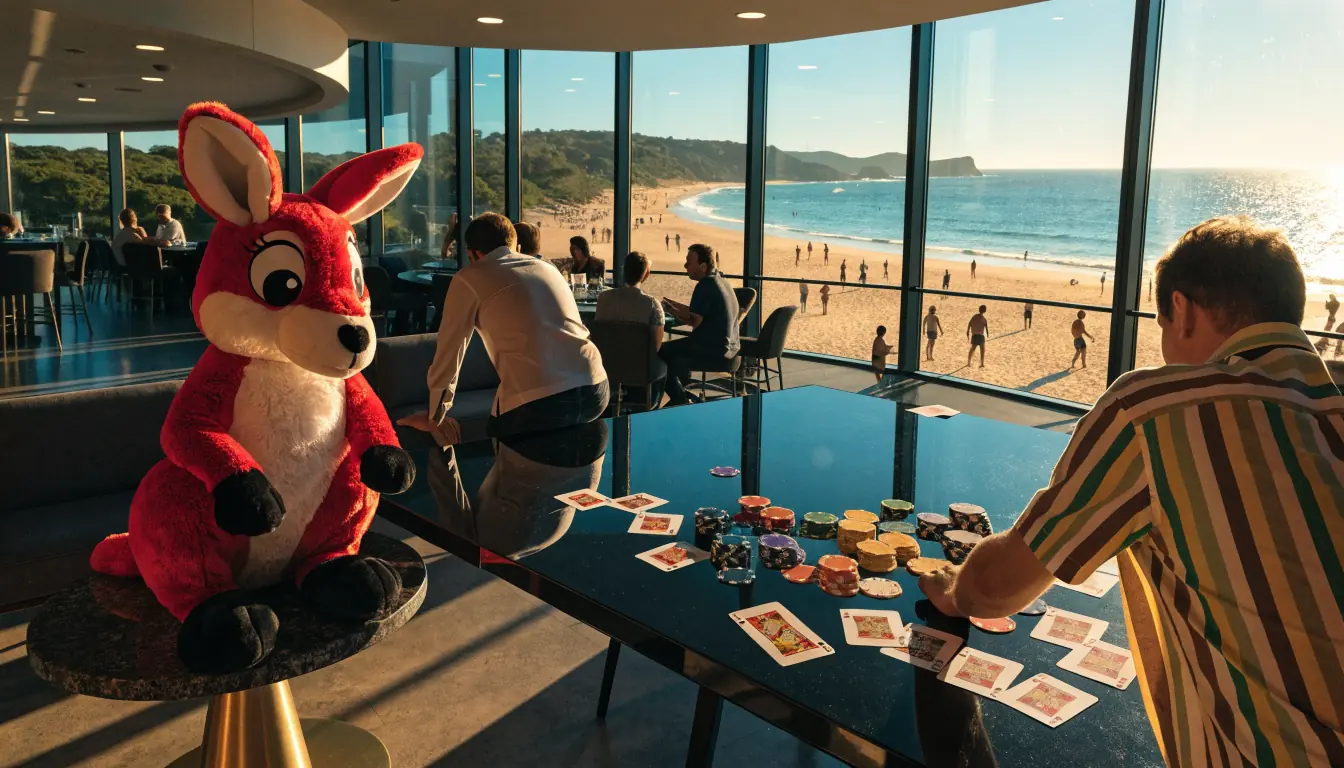
Staying off-site means you lose the convenience of walking from your room to the gaming floor, but you gain a few things the integrated hotel can’t offer: lower rates during non-peak periods, apartment-style layouts with kitchens, and — for some — simply not falling asleep within sight of poker machines. If you’ve ever tried to wind down after a long session, you’ll know why that separation matters to some players.
Getting between your hotel and the casino
Distance from the CBD to the casino precinct is short enough that taxis and rideshare trips are quick and inexpensive relative to a night’s gambling budget. Public transport options exist as well, though schedules matter more on weekends and late at night than most first-time visitors expect. If you’re planning a night that runs past standard trading hours, it pays to check return transport before you sit down at a table, not after.
Booking around promotions
Hotels near the casino sometimes run their own seasonal deals independent of anything the casino offers — these are hotel promotions, not gaming promotions, and the two shouldn’t be confused. A discounted room rate says nothing about odds, payout structures, or machine settings on the floor. I’ve seen guests assume a "deal" hotel package implied better treatment inside the casino. It doesn’t. The two businesses are separate, even when marketed side by side.
Legal Risk
Offering or accessing real‑money online casino games is illegal for Australian residents under the Interactive Gambling Act.
A note on where this fits legally
Everything above concerns physical accommodation tied to a bricks-and-mortar casino — a legal, regulated venue under state licensing. That’s a different world from online casino gambling, which remains prohibited for operators serving Australian residents under federal law (sources differ on whether this traces to the 1997 or 2001 version of the Interactive Gambling Act, and neither version has been fully superseded in public records). Booking a hotel room near a physical casino carries none of the legal ambiguity that surrounds offshore online casino sites. Online sports betting, by contrast, operates under state and territory licences and is straightforwardly legal — worth mentioning only because visitors sometimes assume all forms of online wagering share the same status. They don’t.
Practical checklist before booking nearby
- Confirm walking distance or transport time to the casino precinct, not just suburb name.
- Check whether the hotel’s rate includes breakfast — casino-adjacent hotels vary widely here.
- Look at cancellation terms separately from any bundled “casino package” marketing.
- Verify trading hours of the casino against your planned arrival, especially for late check-ins.
None of this replaces staying on-site if convenience is the priority. It just means convenience isn’t the only variable on the table.
Contact Points – Bars, Baccarat, Events and Transport
Most guides list amenities and stop there. What actually matters on the ground is simpler: where do you get a drink, where do you sit down at a table, where does the car go, and who do you call when the calendar online doesn’t match what’s happening on the floor that night.
Bars
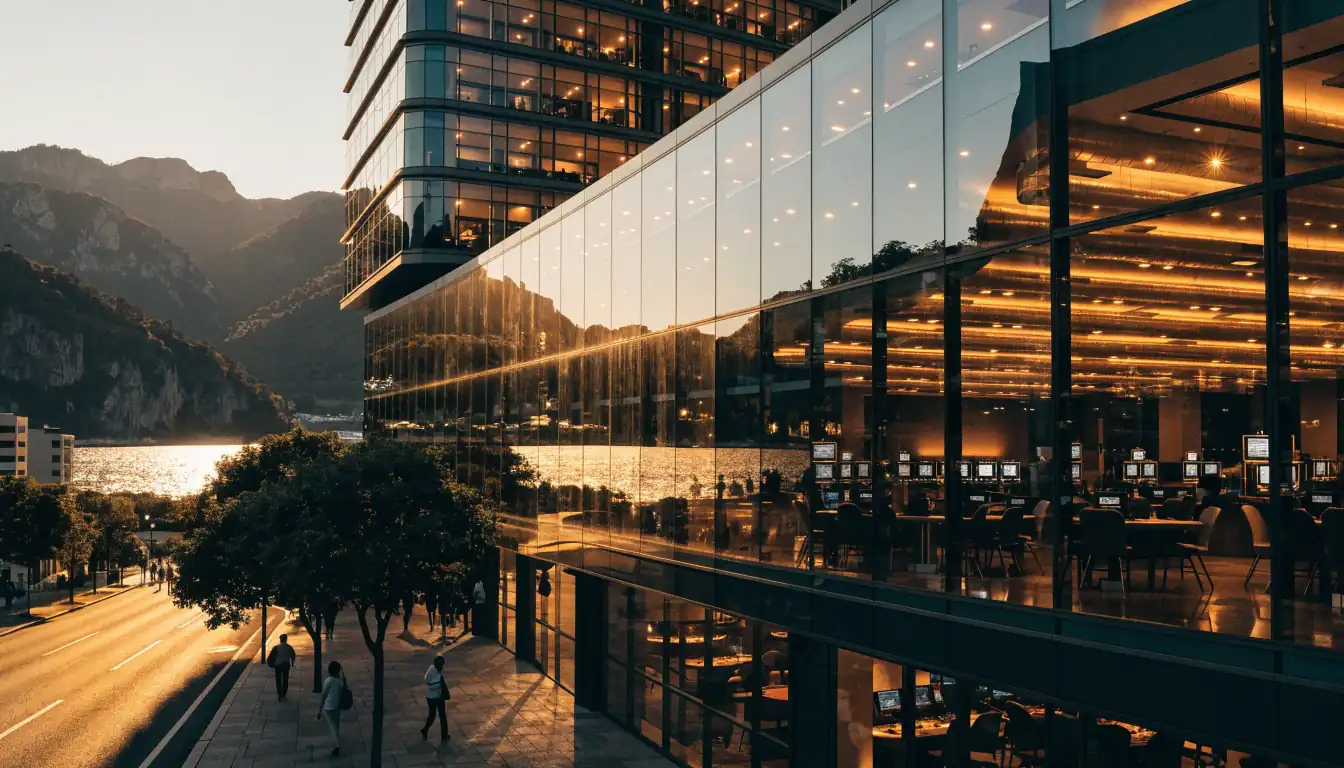
The bar network inside a casino floor tends to work on a simple logic that has nothing to do with hospitality and everything to do with keeping people near the tables. Service bars sit close to gaming pits so drinks arrive fast and nobody has to leave the floor. Lounge-style bars, positioned further out, are built for people who want to sit down properly — often timed around live entertainment or event nights. If a venue publishes a live music or DJ schedule, that’s usually where the lounge bar gets busy; the pit bars stay steady regardless of what’s on stage.
Baccarat rooms
Baccarat gets treated differently to the rest of the gaming floor almost everywhere. It’s typically ring-fenced into its own room or a curtained section, separate from the general pit. That’s not atmosphere — it’s operational. Baccarat tables run higher limits on average and the player base skews toward regulars who want privacy and a dealer who knows them. If you’re asking where to find it, the answer is: not on the main floor, look for the separated section, and expect a different dress standard and minimum bet than the rest of the room.
Events and concert calendars
Casinos publish event calendars — concerts, comedy nights, seasonal programming — through their own booking channels, and these change often enough that anything printed here would be stale within weeks. The practical point is this: event calendars are a marketing surface, not a facilities list. Checking the venue’s own site or calling ahead before travelling for a specific show is the only reliable method, because third-party listings lag behind cancellations and lineup changes.
Car park and getting there
Car parking at a casino site usually comes in tiers — multi-storey structures for general visitors, valet for hotel guests, and separate areas for event nights when volume spikes. None of that is standard across the industry; it varies site to site and isn’t something worth guessing at from outside. What is consistent is that casino complexes are built as destinations, meaning transport infrastructure (shuttle links, taxi ranks, rideshare pickup zones) tends to cluster right at the entrance rather than being scattered across a wider precinct.
Contact numbers and general enquiries
Every physical casino publishes a general enquiries line for bookings, events and lost property — that’s standard front-of-house practice and worth having saved before a trip rather than searching for it at the door. What’s worth being clear-eyed about is what a phone line can’t do: it can’t get you a seat at a table remotely, and it has nothing to do with online play. There are no domestically licensed real-money online casino operators in Australia, and it’s illegal for any operator to offer online casino gambling here — so a casino’s contact number connects to the physical property, not to an app or a website account. Betting by phone in a live, in-play sense is legal; casino-style play over the phone or online is a different matter entirely, governed federally by the Australian Communications and Media Authority rather than by whichever venue picks up the call.
Food Buffets, Breakfast Deals and Employment Opportunities
A casino buffet is one of those things marketing calls "an experience" when what it actually means is: a lot of trays, a fair amount of steam, and pricing that assumes you’ll come back. That’s not a complaint. It’s how the economics work. Volume dining exists because it keeps people on-site longer, and longer on-site has always mattered more to a casino than the margin on any single plate.
Breakfast service tends to be the quieter half of that equation. Where dinner buffets lean into spectacle — carving stations, seafood displays, the works — breakfast is built around turnover: guests staying at the property, early risers heading to meetings, people who gambled past midnight and need something solid before they leave. The deals attached to breakfast service usually favour hotel guests or loyalty members, which is consistent with how most integrated resorts structure their offers — the casino floor isn’t the only thing they want you loyal to.
What buffet pricing actually reflects
Nobody publishes a formula for this, so I won’t pretend one exists. What I will say, from having watched these operations from the inside, is that buffet pricing rarely reflects food cost alone. It reflects seating turnover, staffing rosters, and how much the property wants to smooth out foot traffic between the gaming floor and the restaurants covered elsewhere in this guide. A "value" breakfast is rarely just about the eggs.
The employment side of a casino complex
A property this size doesn’t run on dealers and pit bosses alone. Behind every gaming floor is a logistics operation: kitchen brigades for the buffet and à la carte outlets, front-of-house staff, housekeeping for the attached hotel, security, surveillance, finance, marketing, facilities maintenance, and administrative roles that never touch a card table. Casino resorts of this scale are, in practical terms, small hospitality economies.
Roles typically fall into a few broad categories:
- Gaming operations — dealers, floor supervisors, cage and count-room staff.
- Food and beverage — buffet and restaurant kitchen staff, servers, bar staff.
- Hospitality and rooms — front desk, concierge, housekeeping.
- Security and compliance — surveillance, security officers, responsible-gambling and compliance staff.
- Corporate and support — HR, marketing, finance, facilities.
Compliance and cage roles are worth flagging separately, because Australia’s gambling sector is regulated at state and territory level rather than through one national authority — the Northern Territory Racing Commission, for instance, licenses most national online bookmakers because of its lower tax settings, which is a different regulatory track entirely from how a physical Western Australian casino floor is licensed and staffed. It’s a reminder that "casino jobs" isn’t one labour market — floor operations, hospitality, and compliance each answer to different rules and different hiring standards.
Entry points into gaming roles usually run through in-house training programs rather than requiring prior industry experience, since dealing procedures and compliance obligations are property-specific. Hospitality and food-service roles are closer to standard industry hiring, drawing on the same pool of staff who’d work any large hotel or events venue.
None of this is glamorous. It’s a payroll, a roster, a training schedule. But it’s also the part of a casino complex most visitors never think about — the machinery that keeps the buffet stocked and the front desk staffed long after the gaming floor closes for the night.
Integrated Design
The resort’s design aims to keep guests on‑site by linking hotel, gaming, and leisure facilities.
Casino Development, Operations and Upcoming Events
Every couple of years the question comes up again: is the casino closing, reopening, changing hands. I’ve watched this cycle from inside a gaming operation before, and it rarely follows the story that circulates outside. Development projects get announced, delayed, quietly rescoped. What gets built is usually smaller and slower than the press release suggested.
For a property the size of a major Western Australian casino, "development" doesn’t mean gutting the building. It means staged refurbishment — a wing at a time, a floor at a time — so the operation never actually shuts. Closures, when they happen, tend to be short and localised: one gaming area offline while carpet and lighting get replaced, not the whole complex going dark. If you’ve heard talk of the casino reopening after some longer closure, that’s usually a specific section coming back into service, not the whole site starting from zero.
What "operations" actually covers
Behind the floor you see, there’s a layer most visitors never think about: compliance reporting, staff rostering across three shifts, cash handling procedures that get audited internally on a schedule nobody publishes. None of it is visible from the gaming floor, and that’s the point — a well-run casino is one where the machinery doesn’t show.
Employment sits inside this same operational picture. A property this size runs on hospitality staff, dealers, security, cage cashiers, cleaning crews, all rostered around a floor that doesn’t close for the night the way a restaurant does. Turnover in these roles is constant, which means recruitment is close to continuous rather than seasonal.
Events
Event calendars are where the marketing team earns its keep, and it’s worth being clear-eyed about what "events" means in this context. Some are genuinely tied to the gaming floor — poker series, tournament weekends, promotional nights built around a jackpot push. Others are the entertainment side: live music, comedy nights, seasonal functions that use the casino’s venues but have nothing to do with the tables. The two get bundled together in the same calendar, which is convenient for the venue and slightly misleading for anyone trying to plan a trip around gaming specifically.
A "menu" of events, in the way the term gets used around a casino complex, usually spans both — dining promotions sitting next to poker tournament dates on the same page. Worth checking which is which before building a visit around one date.
None of this changes the legal footing under which any of it operates. Live tables, pokies floors and in-person tournaments inside a licensed Western Australian venue are a different animal entirely from online casino products — those remain off-limits to Australian residents under federal law, regardless of what a physical casino’s development calendar looks like. A renovation schedule and a licensing regime are not the same conversation, but people conflate them often enough that it’s worth saying outright.
What to watch, practically: staged works rarely affect the whole floor at once, event calendars mix gaming and non-gaming content, and hiring is ongoing rather than tied to any single reopening date.
Slow and unglamorous. That’s operations.
On‑Site Restaurants and Culinary Highlights
A casino floor tells you how a property makes money. The restaurant lineup tells you what it thinks of its guests. Western Australia’s casino complex splits the difference between the two, running a spread of standalone venues that sit apart from the buffet hall — separate kitchens, separate reservations, separate reasons to walk in.
What stands out is the range of service concepts rather than any single "signature" claim. There’s the fine-dining room, where the pitch is table service, a proper wine list, and a menu that changes with the season rather than a laminated card bolted to the table. Then there’s the steakhouse tier — the kind of venue every casino resort seems obligated to build, because high rollers apparently need somewhere to eat that isn’t the pokies floor. It works because it doesn’t try to be clever: good cuts, competent service, a room quiet enough to hear the person across the table.
Asian-cuisine venues get a strong showing too, which makes sense given the guest mix a casino this size attracts. Expect noodle bars and a dedicated Chinese restaurant doing yum cha-style service on weekends — the kind of thing that turns a gambling trip into a family outing, at least for a couple of hours.
Service styles, not just menus
The interesting part isn’t the food itself — restaurant reviews cover that better than a casino guide can. It’s the service model each venue chooses, because that’s what actually determines your evening:
- Table-service fine dining — booking required, courses paced by the kitchen, not by how fast you want to get back to the tables.
- Casual sit-down — walk-in friendly, faster turnover, built for people mid-session who want a real meal without losing their spot on the floor.
- Bar-and-grill format — order at the counter or from a server, food arrives while a screen somewhere is showing sport or a live draw.
None of these overlap with the food court described later in this guide — that’s grab-and-go, these are venues where you sit down and someone takes your order.
The "fine dining" label, tested
Casinos love the phrase "fine dining" on a directory sign. In practice it means table linen and a wine list more often than it means anything about the kitchen’s actual ambition. Worth knowing before you dress up for a reservation expecting tasting menus and getting a well-run steakhouse instead. Not a complaint — just a translation.
What ties the restaurant floor together is proximity to the gaming areas without bleeding into them — no pokies chiming through the walls of the steakhouse, no dealer calls audible from the noodle bar. Whoever designed the traffic flow understood that a good meal and a good session at the tables are two different experiences, and guests resent it when a venue tries to force them into one.
Reservations, where they exist, run through the casino’s own booking channels rather than third-party platforms — worth calling ahead on weekends, when the better tables go quickly.
Address, Dress Code, Spa Services and Additional Amenities
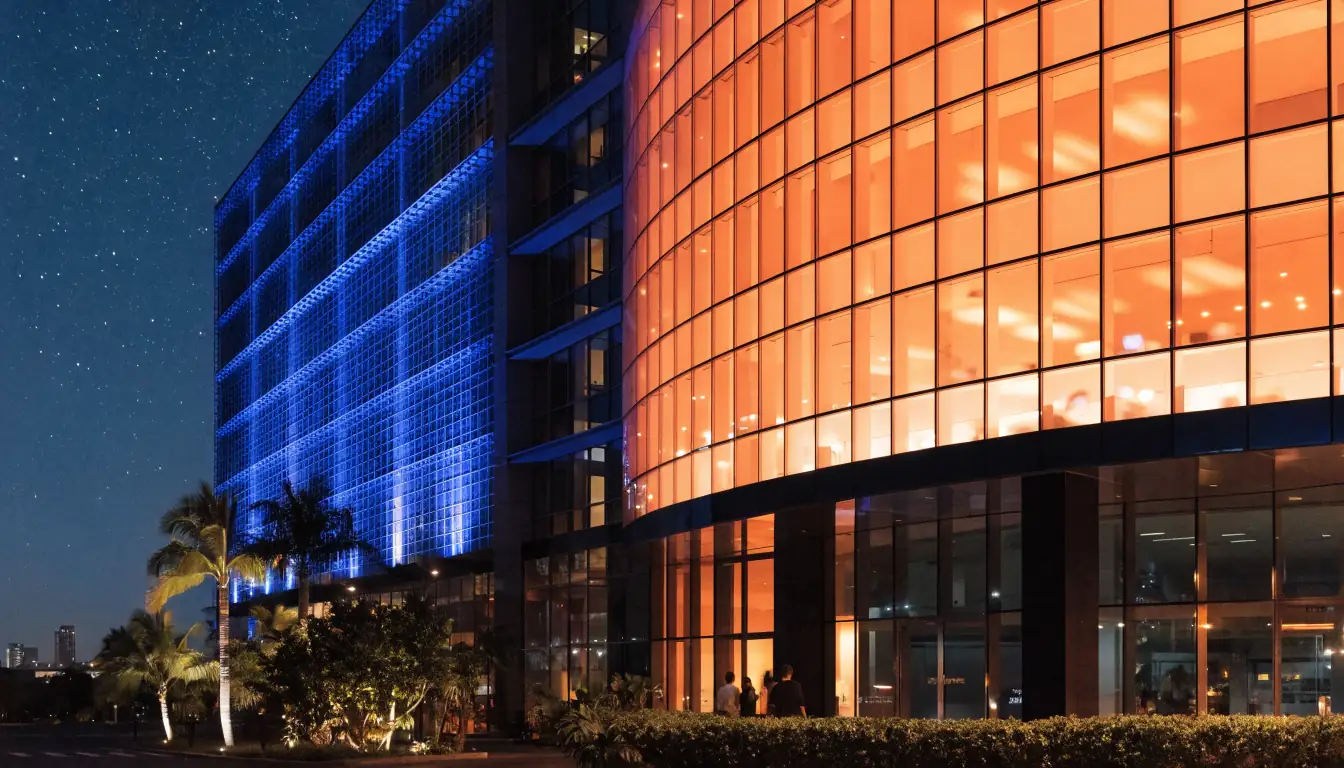
Ask ten people for the address and half of them will just say "the casino on the river" — which tells you something about how the property has embedded itself into the city’s mental map. It sits on its own peninsula, close enough to the CBD that a taxi ride feels almost pointless, far enough that the site could sprawl into gardens, function spaces and parking without feeling boxed in. For anyone driving in from outside Perth, the practical move is to search the venue name directly rather than a street number — the complex is the landmark, not the address.
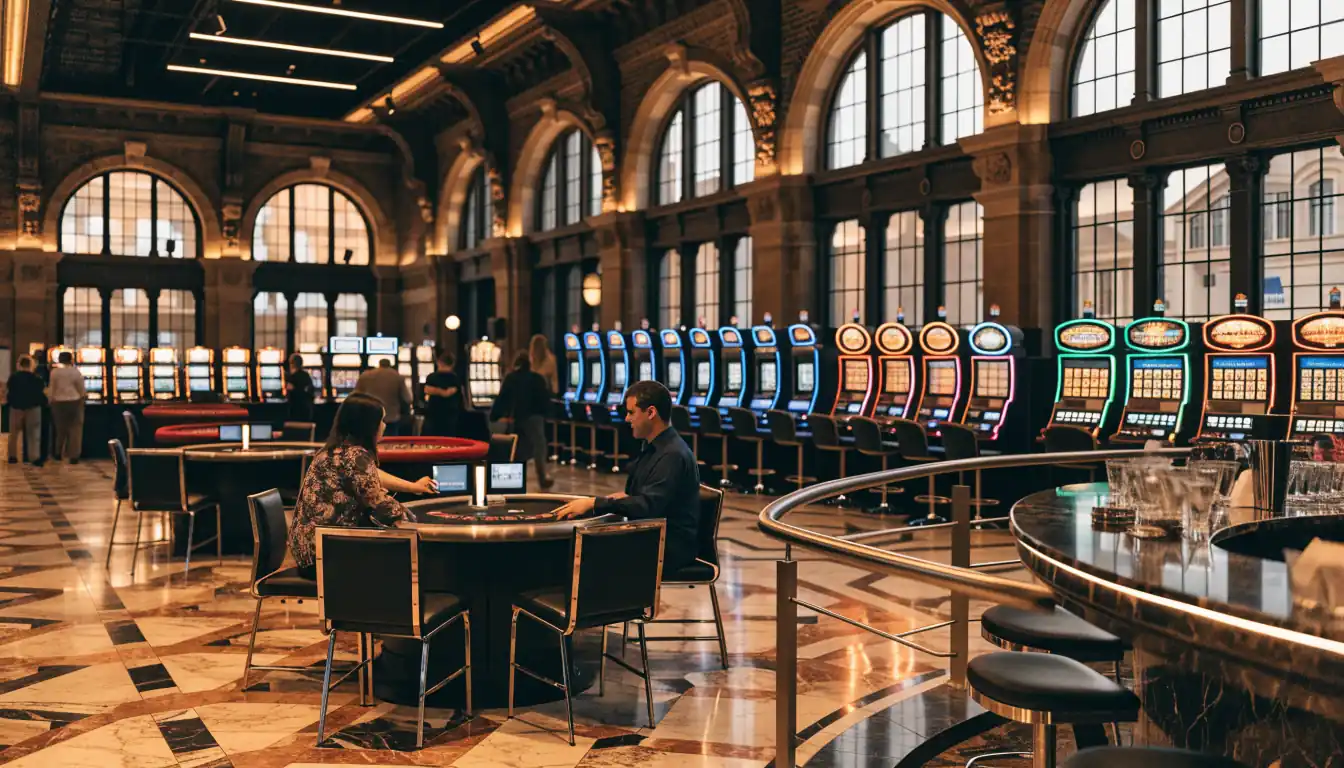
Dress code is one of those things staff get asked about constantly, and the honest answer is: it depends which door you’re walking through. The general gaming floor runs a "smart casual" policy — which in practice means no thongs, no singlets, no visible work boots, and a collared shirt gets you through most doors without a second look. Say "smart casual" to a guest and they hear "dress up." Say it to security and they hear "just don’t look like you came from the beach." That gap is where most of the awkward turn-aways happen, usually on a Saturday night when someone’s driven forty minutes to be told to go home and change.
Higher-tier gaming rooms and some evening restaurant sittings tip further toward "smart" — collared shirts, closed shoes, no active wear — though nothing here reaches black-tie territory. The safest rule, and the one I’d actually give a mate: dress like you’re going to a nice dinner, not like you’re going to the gym, and you won’t have a problem at any door on the property.
Spa and wellness
The property runs a day spa alongside its hotel wing, offering the usual menu of massage, facial and body treatments aimed squarely at guests staying overnight or killing time between a lunch reservation and an evening at the tables. It’s positioned as a wellness counterpoint to a floor that runs on adrenaline — a quiet room a few floors up from a loud one. Bookings are generally recommended ahead of a visit, especially around weekends when hotel occupancy is highest.
Other amenities worth knowing about
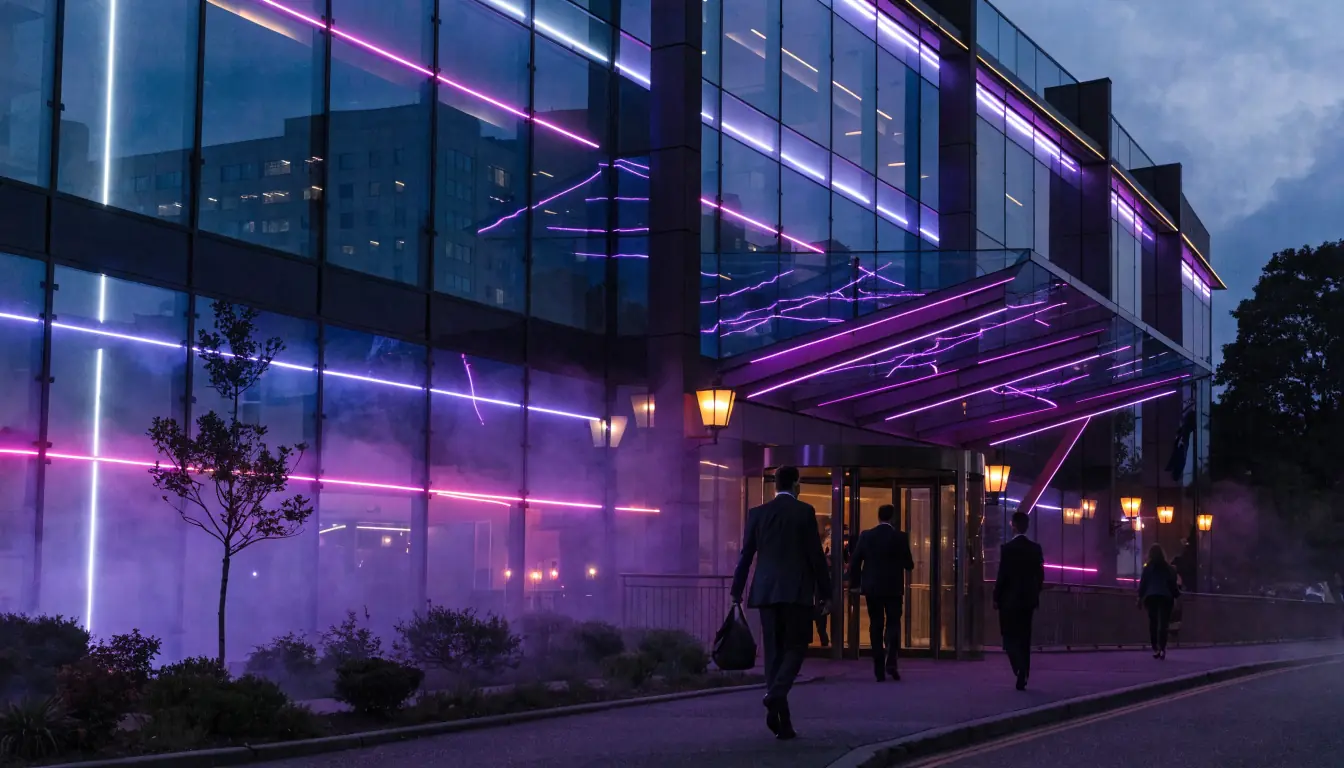
Beyond the spa, the site carries the amenities you’d expect of a resort-scale complex rather than a standalone gaming hall: retail space, function and conference rooms, and landscaped outdoor areas connecting the hotel towers to the main gaming building. None of it is flashy for its own sake — it’s there because a property this size needs somewhere for guests to be when they’re not gambling, eating, or checking into a room.
Food Courts and Outdoor Pool Areas
Not every visit needs a jacket and a reservation. After the spa write-up, this is the other end of the spectrum — the part of the complex where families end up when someone’s tired of walking, hungry, and not remotely interested in a wine list.
Food courts inside Western Australian casino complexes work the way any food court does: quick-service counters, shared seating, no waiting for a table. It’s where a group splits three different cravings without an argument. Kids eat noisily, nobody dresses for it, and the bill doesn’t sting the way a sit-down dinner does. Compared to the on-site restaurants covered earlier, this is the low-commitment option — you’re in and out in the time it takes to decide what you actually want.
Outdoor pool areas serve a similar function for downtime rather than food. They’re built for guests staying at the integrated hotel who want daylight and water rather than another hour on the gaming floor. Loungers, shade, a swim — nothing that requires planning. It’s the part of the property that has nothing to do with pokies, poker rooms, or anything scored in a weekly ranking formula, and that’s exactly the point.
Between the two, this is the section of any casino resort built for people who aren’t there to gamble at all — partners, kids, whoever came along for the trip. Simple amenities.
They rarely get mentioned in casino write-ups, but they’re often the reason a family trip works.
Are crypto casinos legal in Australia in 2026?
No — offering online casino gambling is illegal in Australia under the Interactive Gambling Act 2001 and no domestic licence exists. However, the law targets operators, not players, so it is not illegal for individual Australians to play at offshore-licensed online casinos.
Can I play at online casinos in Australia in 2026?
There are no domestically licensed real-money online casino operators available to Australian players — online slots, poker, blackjack and roulette are prohibited federally. Only online sports betting, licensed at state or territory level, is legal.
Who regulates online gambling in Australia?
There is no single national gambling authority. The Australian Communications and Media Authority (ACMA) enforces the Interactive Gambling Act 2001 at federal level, while the Northern Territory Racing Commission licenses most national online bookmakers.
Published by the Casino Cities Guide team.