
Best Casino in Canberra: Rules, Hours and Facilities Guide

Table of Contents
- Regulation, Licensing and Operational Hours of Canberra Casino
- Key Facilities at Canberra Casino: Bars, Car Parks, and Entertainment
- Parking, Accessibility and Getting to the Best Casino in Canberra 2026
- Casino‑Adjacent Hotels in Canberra
- Accommodation Near Canberra Casino: Deals and Options
- On‑Site Poker Rooms and Gaming Amenities
- Dining, Buffets and Reward Programs at the Casino
- Casino Restaurants: Cuisine Choices and Dining Experience
- Dress Code, Etiquette and Spa Services at the Casino
- Food Court Offerings and Leisure Pool at the Casino
Regulation, Licensing and Operational Hours of Canberra Casino
Ask around about who actually "runs" gambling in Australia and you get a different answer depending on who you corner. That’s not evasion — there genuinely is no single overarching statute or single overarching gambling authority regulating gambling in the country. Regulation splits between state and territory bodies and a handful of federal mechanisms, and a physical venue like Canberra’s casino sits mostly on the territory side of that split, with federal law only reaching in where the venue’s activities touch anything online.
That distinction matters more than it sounds. The land-based casino floor — tables, live dealers, a physical building with fixed opening hours — answers to territory-level gaming regulation, the kind that licenses venues, checks conduct on the floor, and sets the compliance calendar staff work to. None of that is the same regime that covers online gambling in Australia. I’ve seen people conflate the two because both involve "a casino," and it trips up expectations about what’s actually permitted where.
Since players in Canberra are looking beyond land-based venues, it helps to see how online casinos stack up on licensing, bonus structure, and payout speed before signing up.
License: international iGaming licence – jurisdiction not named in the source · Bonus: 100% up to A$1,000 + 100 free spins, 35x wagering · Payout speed: PayID 1-24 hours · Min. deposit: A$30 (PayID from A$10) Operates under an international iGaming licence and offers a matched welcome bonus with free spins, backed by fast PayID withdrawals and a low minimum deposit via that method.
License: Curacao – Antillephone N.V. (Versus Odds B.V.) · Bonus: up to EUR 2,000 across 5 deposits + 200 free spins · Min. deposit: EUR 20 Licensed in Curacao under Antillephone N.V., this operator spreads a sizeable welcome package with free spins across five deposits, with an accessible minimum deposit.
License: Curacao eGaming OGL/2023/174/0082 (Dama N.V.) · Bonus: up to A$10,000 + 500 free spins across 4 deposits · Min. deposit: A$15 Holding a Curacao eGaming licence via Dama N.V., it backs a large multi-deposit welcome bonus with free spins and keeps the entry deposit low.
Bonus: up to A$7,500 + 550 free spins across 10 deposits, 50x wagering · Payout speed: crypto under 1 hour, PayID 1-3 business days · Min. deposit: A$20 (A$30 to qualify for the bonus) A generous welcome offer spread across ten deposits with free spins is paired with quick crypto payouts and PayID processing within a few business days.
Bonus: 100% up to A$750 + 200 free spins, 35x wagering · Payout speed: crypto 30-120 minutes, fiat 24-72 hours · Min. deposit: A$30 Offers a solid matched bonus with free spins and stands out for fast crypto payout times alongside reasonably quick fiat withdrawals.
License: Curacao Gaming Control Board OGL/2023/176/0095 (Hollycorn N.V.) · Bonus: up to A$11,000 + 300 free spins (code NEO100) Licensed by the Curacao Gaming Control Board through Hollycorn N.V., it features a large welcome bonus with free spins activated via a bonus code.
License: Curacao Gaming Control Board (TechSolutions Group N.V.) · Bonus: 100% up to A$250 + 100 free spins (1st deposit) Regulated by the Curacao Gaming Control Board under TechSolutions Group N.V., this operator keeps its first-deposit bonus straightforward with a matched offer and free spins.
License: Curacao Gaming Authority (Jumpman Gaming Ltd) · Bonus: up to A$6,600 + up to 250 free spins across 4 deposits Licensed by the Curacao Gaming Authority via Jumpman Gaming Ltd, it offers a substantial bonus package with free spins spread over multiple deposits.
License: Curacao OGL/2024/1335/0780 · Bonus: up to A$1,000 + 150 free spins, wager-free · Min. deposit: EUR 20 Licensed under a Curacao OGL, it offers a wager-free bonus with free spins, which stands out for its player-friendly terms.
License: Curacao eGaming (Hollycorn N.V., since 2017) · Bonus: 225% up to A$1,540 + 600 free spins across 4 deposits, 20x wagering · Min. deposit: A$20-30 (depends on the offer) Operating under a long-standing Curacao eGaming licence via Hollycorn N.V., it delivers a large multi-deposit bonus with free spins and comparatively lower wagering requirements.
Where federal law comes in
The federal layer is the Interactive Gambling Act 2001 (IGA), the primary Commonwealth law governing online gambling in Australia. It was built around harm minimisation, not around regulating a card table in a physical building. The Australian Communications and Media Authority (ACMA) enforces the IGA — that’s ACMA’s job, not the job of whatever body licenses a bricks-and-mortar casino’s operating hours or floor conduct. Worth saying plainly: the IGA governs online casino activity, and it has nothing to say about a venue’s opening times or its poker room roster. Two different jobs, two different rulebooks.
There’s also the Northern Territory Racing Commission (NTRC), which functions as Australia’s de-facto online gambling regulator because it licenses most of the national online bookmakers who benefit from lower tax there. That’s a Northern Territory arrangement tied to sports and race wagering operators, not a licensing body for a Canberra venue. If a search turns up "NTRC" next to "Canberra casino," it’s a mismatch — different jurisdiction, different product entirely.
What "compliance" actually covers on the ground
For a physical venue, compliance obligations tend to sit around a few practical pillars:
- Operating licence conditions — set by the territory authority, covering what games can run and under what conduct rules.
- Trading hours — fixed by licence conditions rather than by the venue’s own preference, which is why “is it open” questions rarely have a single universal answer; hours can shift around public holidays or renovation periods.
- Staff and floor compliance — training, identification checks, and responsible-service-of-gambling obligations that run continuously, not just at audit time.
- Reporting obligations — periodic disclosures to the licensing body, separate again from anything ACMA or the NTRC touches.
None of this is glamorous. It’s paperwork and rostering, mostly invisible to someone walking in for an evening out. But it’s the actual machinery behind the doors being open at all, and it’s worth knowing it exists before wondering why a floor plan, a menu, or an events calendar looks the way it does — those are the venue’s commercial decisions, made inside a regulatory frame that isn’t.
Key Facilities at Canberra Casino: Bars, Car Parks, and Entertainment
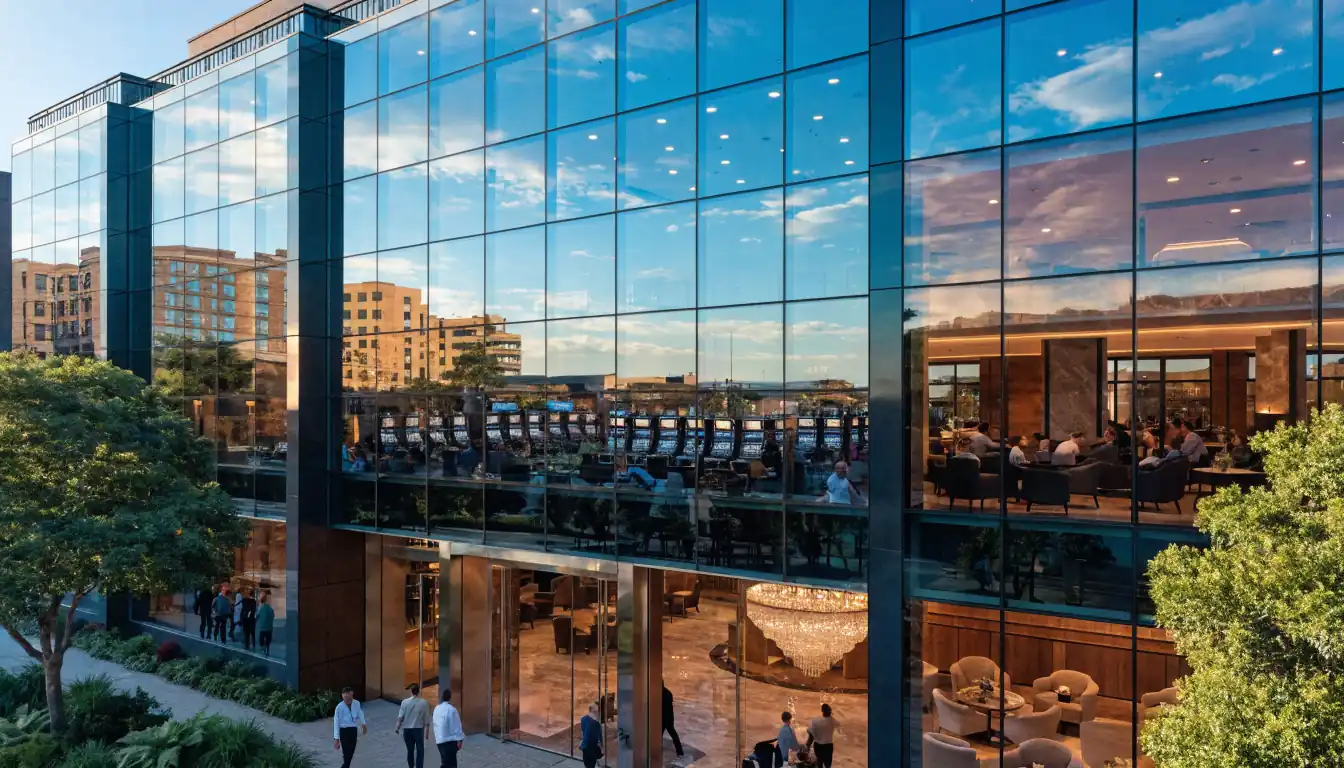
A casino floor is never just tables and machines. It’s the space between them — the bar someone leans on after a losing hand, the corridor to the car park, the room where a band plays so people stay a little longer. Canberra’s casino is no exception, and the "facilities" word covers ground that’s worth separating out before anyone assumes it’s all one blur of carpet and noise.
The bars
There’s usually more than one bar on site, and they serve different purposes depending on where they sit. A bar tucked near the gaming floor tends to be functional — quick service, drinks that don’t get in the way of play. A bar near a stage or lounge area is built for lingering, with seating meant for groups rather than solo punters between hands. Neither replaces a restaurant, and neither tries to. That distinction matters more than it sounds: venues that blur "bar" and "dining" into one concept usually end up doing both poorly. Canberra keeps them as separate offers on the floor plan, which is the more honest way to run it.
Bars are not a substitute for a full restaurant; expect limited seating and a focused menu that may not meet all dining expectations.
Car parking, briefly
On-site parking exists and is part of what makes the venue usable on a weeknight, not just a weekend destination. The mechanics of getting a car in, out, and paid for — that’s a logistics question, and it belongs with the accessibility details covered separately. What matters here is simpler: parking is treated as infrastructure, not as an amenity you’re meant to be impressed by. It’s there so the rest of the building works.
Entertainment beyond the tables
This is where a casino tries to become a destination rather than a room full of odds. Live music, occasional touring acts, comedy nights — the schedule shifts, and what’s booked one month won’t be booked the next. Calling it "world-class entertainment" would be the kind of phrase a marketing brief loves and a regular visitor rolls their eyes at. What it actually is: a stage, a sound system, and a booking calendar that tries to give people a reason to come in on a night they weren’t planning to gamble.
That’s worth sitting with for a second, because it’s not incidental. A venue’s entertainment program exists partly to soften the fact that gambling itself is the core business. Nearly four in ten Australian adults gamble at least weekly — that’s a market a casino doesn’t need to work hard to reach. The bar, the band, the lounge — those are for the other crowd, the ones who’d otherwise never buy a chip.
Where the line sits
None of this — bars, parking, the stage — is the gaming floor, and none of it is the dining room either. Those get their own treatment elsewhere on this page, because conflating "things to do at a casino" with "how the casino makes money" tends to flatten both into vague enthusiasm. Better to say plainly: this section is about what surrounds the gambling, not what constitutes it.

A note on scale
It’s easy to read a facilities list and assume bigger means safer, or that variety is automatically good. It isn’t automatically anything. A small number of Australian adults — somewhere between eighty and a hundred sixty thousand — experience gambling problems serious enough to be counted, and no amount of bar seating or concert booking changes that arithmetic. Facilities make a venue pleasant. They don’t make gambling risk-free, and no honest description of "what’s on site" should imply otherwise.
For anyone trying to reach the venue directly — checking opening hours, confirming a booking, or asking about an upcoming show — contact details are listed on the casino’s own site rather than reproduced here, since operating hours and phone lines are the kind of detail that changes without much notice.
Parking, Accessibility and Getting to the Best Casino in Canberra 2026
Getting there matters more than most write-ups admit. A venue can have the best floor in the territory and still lose a Friday-night crowd if the approach roads are confusing or the car park fills up by eight.
Canberra’s layout works in the casino’s favour. It sits close to the city centre, on a road grid built wide and mostly free of the gridlock you’d find in Sydney or Melbourne. Driving in is the default for most visitors, and the trip rarely involves the kind of stop-start traffic that makes people abandon a night out before it starts.
Getting there without a car
Public transport options exist but they’re not the headline act here. Canberra’s bus network connects the CBD to the casino precinct, and for anyone staying in the city centre, walking distance is realistic depending on the hotel. Taxis and rideshare cover the gap for late finishes, which matters more than the buses do — gaming floors don’t run on a bus timetable, and the last service home rarely lines up with when people actually want to leave.
Free parking offers frequently change; always check the signage on arrival to avoid surprises.
For interstate visitors, the practical route is Canberra Airport, then a short transfer by taxi or rideshare into town. There’s no dedicated casino shuttle to speak of, so budgeting the transfer time yourself, rather than assuming one will materialise, is the safer plan.
Parking on site
On-site parking is the more relevant question for most locals, and it’s straightforward: spaces are available at the venue itself, with no separate booking system layered on top. What I’d flag from experience is that "free parking" claims circulating online aren’t something a visitor should take at face value without checking current signage on arrival — car park terms are the kind of detail that shifts without much notice, and turning up expecting one thing while the boom gate says another is a bad way to start an evening.
Peak periods — weekend nights, event nights — are when spaces tighten. Arriving early is the only real strategy; there’s no VIP queue-jump for parking that applies to the general public.
Accessibility
Ground-level access and lift provision are standard at a venue this size, and mobility access into the gaming floor and public areas isn’t something patrons have reported struggling with. Where detail runs thin is on the specifics — designated accessible parking bay counts, exact drop-off points — and that’s a gap in what’s published, not something I’ll paper over with a guess.

Why the approach matters more than it looks
None of this is glamorous, and none of it shows up in the marketing photos. But access is infrastructure, and infrastructure is downstream of money — casino floors generate tax revenue that funds a chunk of state and territory budgets, gambling revenue made up 7.7% of that taxation take in 2015-16, and venues that draw steady foot traffic are the ones contributing to that line item year after year. A casino that’s hard to reach doesn’t draw the volume; a casino that’s easy to reach does. Getting the parking and transport right isn’t hospitality generosity — it’s the mechanism that keeps the doors busy.
None of this touches on how the site is licensed to operate, or what happens once you’re through the door — those are separate questions, with separate answers. This section is only about the walk, drive, or ride to get there.
Straightforward trip. Manage expectations on parking.
Casino‑Adjacent Hotels in Canberra
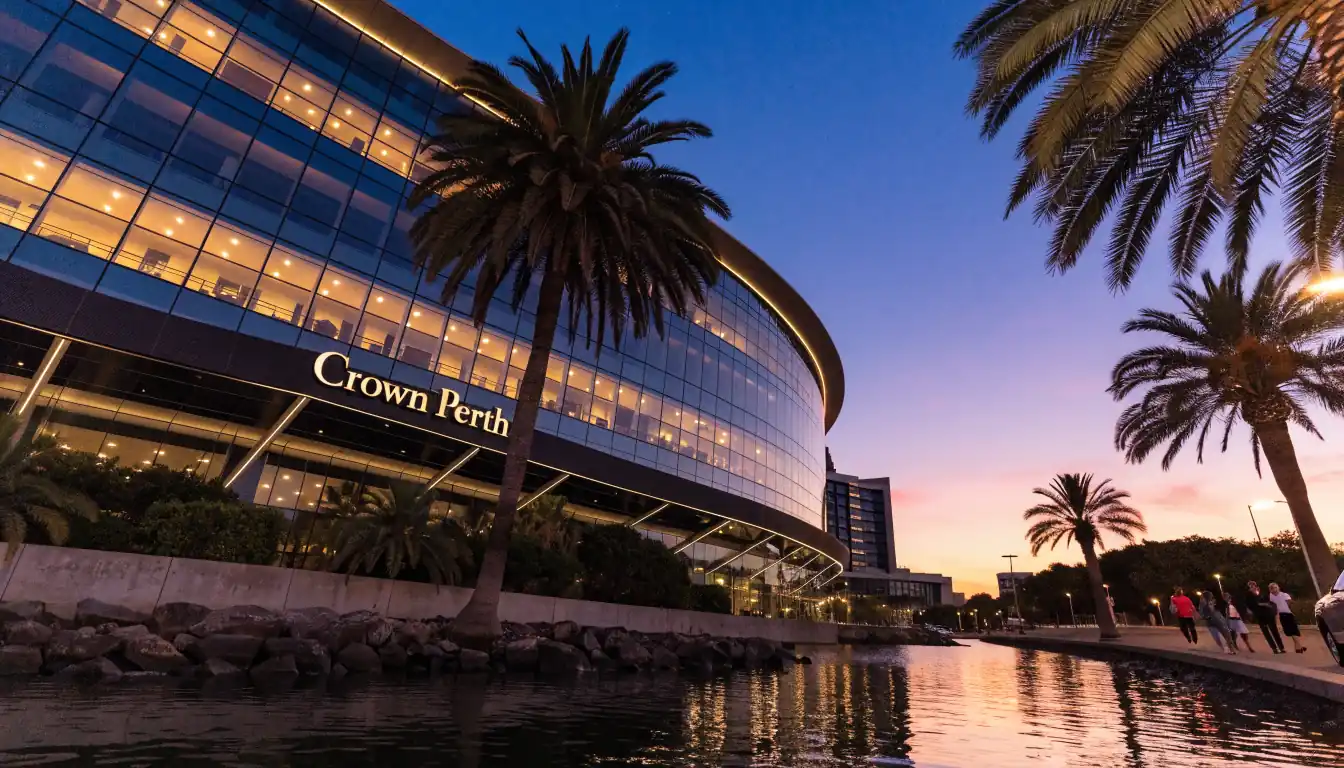
I’ve checked into a fair number of properties that market themselves as "the hotel at the casino," and the phrase does a lot of quiet work. Sometimes it means the building shares a wall with the gaming floor and a lift takes you down in ninety seconds. Sometimes it means a ten-minute walk and a shuttle timetable nobody hands you until check-in. Worth asking before you book, not after.
A genuinely casino-adjacent hotel in Canberra sits on the same footprint as the gaming rooms, or close enough that the property markets itself jointly with the casino brand rather than merely sitting nearby. That distinction matters for anyone weighing a "casino hotel" search result against something three suburbs over. The adjacency itself is the product being sold — convenience, not just a bed.
Properties that share a wall or direct lift access to the casino, often offering bundled room packages, gaming vouchers and 24‑hour access.
Nearby accommodations without formal casino partnerships; they provide flexible rates, independent cancellation policies and no built‑in gaming credits.
What "linked" actually buys you
The practical value of staying in a property attached to the casino comes down to three things: not needing transport after a late session, room packages that bundle in something gaming-related, and staff who are used to guests keeping unusual hours. None of that is exotic. It’s logistics dressed up as hospitality.
Room packages tied to the casino typically bundle accommodation with vouchers, dining credit, or event access — the kind of thing hotels call a "package deal" because "we discounted the room to get you spending at the tables" is less appealing on a booking page. That’s not a criticism of the practice, just a translation of it. Read what the voucher actually covers before treating it as free money; a food credit that only applies at one outlet on a weekday isn’t the same as cash off your bill.
Booking mechanics worth knowing
Any offer attached to a casino-linked hotel that includes gaming credit, membership perks, or bonus play will require guests to be 18 or older — that’s the legal minimum to access casino offers in Australia, and properties enforce it at check-in with ID, not just at the cashier. If you’re booking for a group, assume everyone in the room needs to clear that bar, not just the person whose name is on the reservation.
Rate structures on these properties move with occupancy and events more than with the calendar. A midweek stay during a quiet stretch looks nothing like a weekend during a headline show or tournament — which is one reason "casino hotel deals" as a search phrase returns such wildly different price points depending on when someone runs it. Flexible cancellation terms are worth paying slightly more for if your dates aren’t locked in, because the better packages tend to sell through early.
What to compare before booking
| Consideration | Why it matters |
|---|---|
| Physical connection to gaming floor | Determines whether “adjacent” means a lift ride or a walk outside |
| What the package voucher covers | Dining credit, play credit and general “resort credit” are not interchangeable |
| Minimum age enforcement | 18+ applies to anyone named on a gaming-linked package, not just the primary guest |
| Cancellation flexibility | Casino-linked rates often move with events; flexible terms cost more but protect against surge pricing |
| Late checkout or gaming-hours alignment | Relevant if you’re staying specifically to be near the floor late at night |
None of this replaces checking the room itself — the bed, the view, the noise from the corridor. It’s just the layer of questions specific to booking through a casino rather than booking a hotel that happens to be nearby.
A note on scale, not sentiment
Gambling in Australia isn’t a fringe activity that these hotels are catering to a niche crowd — close to three in four Australian adults gambled in the past year, and total bets placed nationally run into the hundreds of billions annually. Casino-adjacent accommodation exists because the customer base is broad, not because it’s chasing a small, specific type of traveller. That’s worth keeping in mind when a package looks aimed at "high rollers" — the actual guest list is far more ordinary than the marketing suggests.
Book the adjacency for what it is: a convenience premium. It’s fair value if you’re using the floor late and don’t want a commute back to a room. It’s dead weight if you’re visiting Canberra for other reasons and the casino is incidental — in which case the next section, on accommodation nearby but not officially tied to the venue, is the more useful comparison.
Accommodation Near Canberra Casino: Deals and Options
Not every bed within walking distance carries a partnership arrangement with the casino, and that distinction matters more than it might seem. A hotel with a booking desk in the lobby that quotes room rates alongside gaming credits has a commercial relationship with the venue — its pricing reflects that. Everything covered here doesn’t. These are independent operators who happen to sit close enough to the gaming floor to matter to someone walking there, but who set their own rates, run their own loyalty schemes, and owe the casino nothing.
That independence shows up in the pricing pattern. Because there’s no revenue-share arrangement pushing rates in a particular direction, nearby apartments and mid-range hotels tend to compete on straightforward value rather than bundled perks. I’ve stayed in a few of these on trips where I wanted proximity without wanting to be in the casino’s orbit the moment I stepped out of the lift. The trade-off is real: no in-house credit line, no arranged late checkout tied to a gaming account, none of the small conveniences a partnered property builds in. What you get instead is flexibility — cancellation terms that aren’t hostage to a gaming package, and rates that move with ordinary seasonal demand rather than casino occupancy.
What’s actually on offer
The stock in this category splits roughly three ways:
- Serviced apartments — self-contained units aimed at longer stays, kitchenettes included, priced by the week as often as by the night. Useful if the plan involves more than one evening at the tables and you’d rather not eat out every meal.
- Independent business hotels — the kind built for conference traffic and government visitors, given Canberra’s role as the capital. Rooms are functional rather than themed, and rates are usually lower midweek than on a Saturday.
- Boutique and smaller guesthouses — fewer rooms, more character, and pricing that isn’t standardised the way chain hotels are. Availability is the constraint here, not cost.
None of these will have a "casino package" listed on their booking page, because there’s nothing to package — no dining credit, no show tickets bundled in. What they do sometimes offer is their own seasonal promotion, running on a completely separate calendar from anything happening at the gaming floor.
Booking around it, not through it
Distance is the main variable worth checking before locking anything in, since "near the casino" gets used loosely by booking platforms and can mean anywhere within a broad radius of the city centre. If walking to the venue matters, checking the actual distance on a map beats trusting a listing’s description of itself.
Rate comparison also behaves differently here than with partnered properties. Because no single booking channel has an arrangement with these operators, the same room can show different prices across different platforms, and calling the property directly sometimes beats both. It’s a small habit, but it’s saved me more than once.
One thing worth being straightforward about: none of this changes what’s legal to do once you’re checked in and reaching for a phone instead of heading downstairs. Australians can legally play at offshore-licensed online casinos on their own account — the law here targets the operators offering the service, not the individual placing a bet. That’s a separate matter from anything the hotel or the casino controls, and it’s worth knowing plainly rather than assuming either way.
Legal risk
Engaging in online gambling while on the casino premises can breach Australian law; ensure any online betting is done through offshore‑licensed operators only.
Booking near the casino, then, is really booking a base — not a discount, not a bundle, just a place to sleep that happens to be close to where the night is going.
On‑Site Poker Rooms and Gaming Amenities
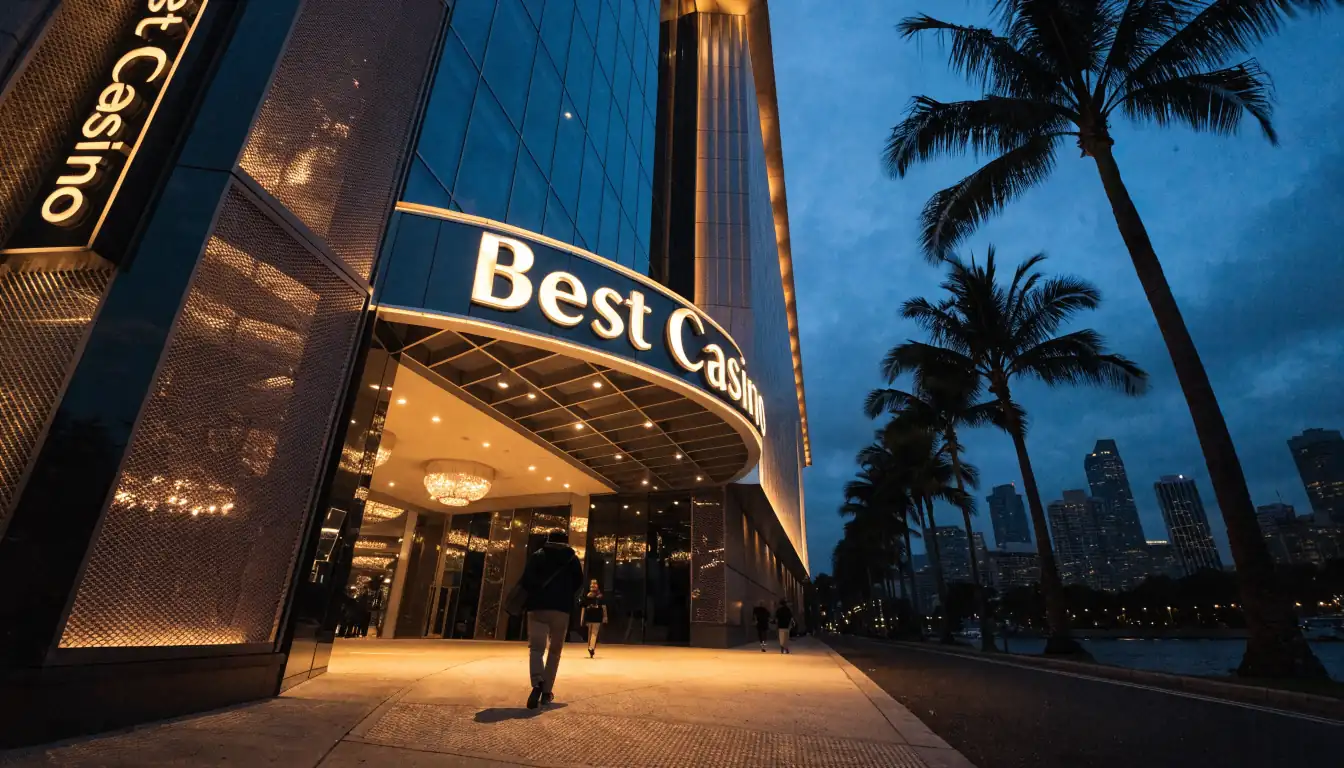
Ask a pit manager what separates a poker room from the rest of the floor and you get the same answer every time: the house isn’t the opponent. On the tables, the casino takes a rake. Everywhere else on the floor, it’s the house you’re playing against. That distinction shapes how the poker room at the Canberra casino is run, and it’s worth understanding before walking in expecting the same rules as the pokies floor.
The poker room sits apart from the main gaming floor, with its own dealers, its own clock, and its own rhythm. Cash games run on a schedule that fills around evenings and weekends, when enough players are in the building to keep multiple tables going. Tournament schedules follow a similar logic — buy‑in events are timed to draw a field, not just to fill a slot on a noticeboard. Whether a specific tournament is running on a given night depends on the room’s current schedule, which changes often enough that it’s not something worth pinning down here. What doesn’t change is the format: structured blinds, posted rules, and a dealer whose only job is to run the game straight.
What’s actually different about poker here
Table games and pokies are built so the house edge does the work over time. Poker isn’t built that way — the room’s revenue comes from the rake and tournament fees, not from odds stacked against the player. That means the skill gap between players matters more here than anywhere else on the floor. It also means the etiquette is different: seat requests, buy‑in minimums, and dealer tipping conventions are poker‑specific and won’t be posted at a blackjack table.
Winnings from a poker session, like any gambling win in Australia, aren’t taxed — worth remembering before doing any mental accounting of a good night, since nothing gets clawed back later by the ATO. That said, the money moving through a poker room is real and adds up fast. Australians lost $31.5 billion to gambling in 2022–23, and on a per‑person basis the average bettor was down around AUD 1,200 against bets of roughly AUD 9,885 in FY 2020‑21. Poker is a smaller slice of that national total than pokies, but the same discipline that applies to a night on the machines applies at the felt: set a number before sitting down, not after.
Gaming amenities beyond the tables
Around the poker room, the wider gaming floor runs the standard mix — table games, electronic gaming machines, and the private or semi‑private rooms sometimes set aside for larger groups or higher‑stakes play. These rooms are booked separately from general floor access and tend to have their own minimums, which the venue sets rather than publishes broadly. None of this overlaps with the bars or entertainment spaces elsewhere in the building — the gaming floor is deliberately kept as its own zone, separate from where people go to watch a band or grab a drink between hands.
A few practical notes
- Poker room hours generally track the casino’s broader operating hours, but tournament nights can extend later depending on the field size.
- Buy‑in tables are posted at the room, not online, and they shift with the schedule.
- Seating is first-come for cash games; tournaments require registration ahead of the start time.
- Dealers rotate; the rake structure doesn’t.
None of this is complicated once you’ve sat at a table once or twice. What trips people up isn’t the game — it’s assuming the poker room runs on the same house-edge logic as the rest of the floor. It doesn’t. The tournament clock, the rake, and the skill involved make it a different kind of night than a session on the pokies, and the room is set up, physically and operationally, to reflect that.
Worth knowing before you sit down. Not after.
Dining, Buffets and Reward Programs at the Casino
Buffet breakfast is the meal people ask about most, and it’s also the one where expectations run ahead of what I can actually confirm. There’s no shortage of forum chatter about spreads, prices and whether the coffee is any good — none of that is something I’ve verified firsthand, and I’d rather say that plainly than dress up a guess as a fact.
What I can speak to is the shape of the offer, because it’s the same shape at every casino resort of this type. A buffet breakfast runs on a fixed window, typically tied to check-in and check-out times for guests staying on-property, and it’s priced separately from any room package unless a hotel deal explicitly bundles it in — something covered in more detail in the section on casino-adjacent hotels. The buffet itself sits apart from the food court: it’s table service or self-serve stations under one roof, aimed at people who want a sit-down meal without ordering off a menu, rather than the grab-and-go setup discussed elsewhere in this guide.

Reward Programs: What They Actually Are
Loyalty schemes at land-based casinos work on a simple mechanic dressed up in marketing language. You get a card, the card gets scanned or inserted at gaming stations, and play generates points that convert into perks — meals, room credit, event tickets, sometimes cash-back style rebates. The word "rewards" gets used loosely enough that it’s worth separating what’s guaranteed from what’s promotional.
Tiered structures are standard: more play, higher tier, better perks. That’s the industry template everywhere, not a Canberra-specific feature. What I won’t do here is quote a specific tier name, a specific point threshold, or a specific dollar value for this property, because I haven’t verified those numbers against a primary source, and repeating a number I’ve seen floating around online isn’t the same as confirming it.
One thing worth flagging for context: none of this reward-program mechanic has anything to do with online play. There are no domestically licensed real-money online casino operators in Australia, so a physical rewards card tied to a bricks-and-mortar floor is a completely different animal from anything advertised as an "online rewards program." If a website ever conflates the two, that’s a red flag, not a bonus.
Jobs and the Buffet Connection
People searching for work at the casino often land here expecting a buffet review and get a staffing question instead — fair enough, the two are more connected than they look. Buffet and banquet operations are usually among the larger hospitality employers on a casino floor, alongside bar and gaming staff, simply because of the volume of covers a buffet-style service needs to run. I don’t have confirmed current vacancy numbers or role titles to list, and I’d rather leave that gap open than invent a job title that sounds plausible.

What Sits Outside This Section
Reward-card meal credits sometimes get redeemed at the casino’s sit-down restaurants — those are reviewed separately, with actual menu detail, in the next section. Casual all-day dining and poolside snacks are covered later under food court offerings. And the etiquette expected of guests at a buffet — dress code included — gets its own treatment further down.
Buffet, card, tier. Nothing more mysterious than that.
Casino Restaurants: Cuisine Choices and Dining Experience
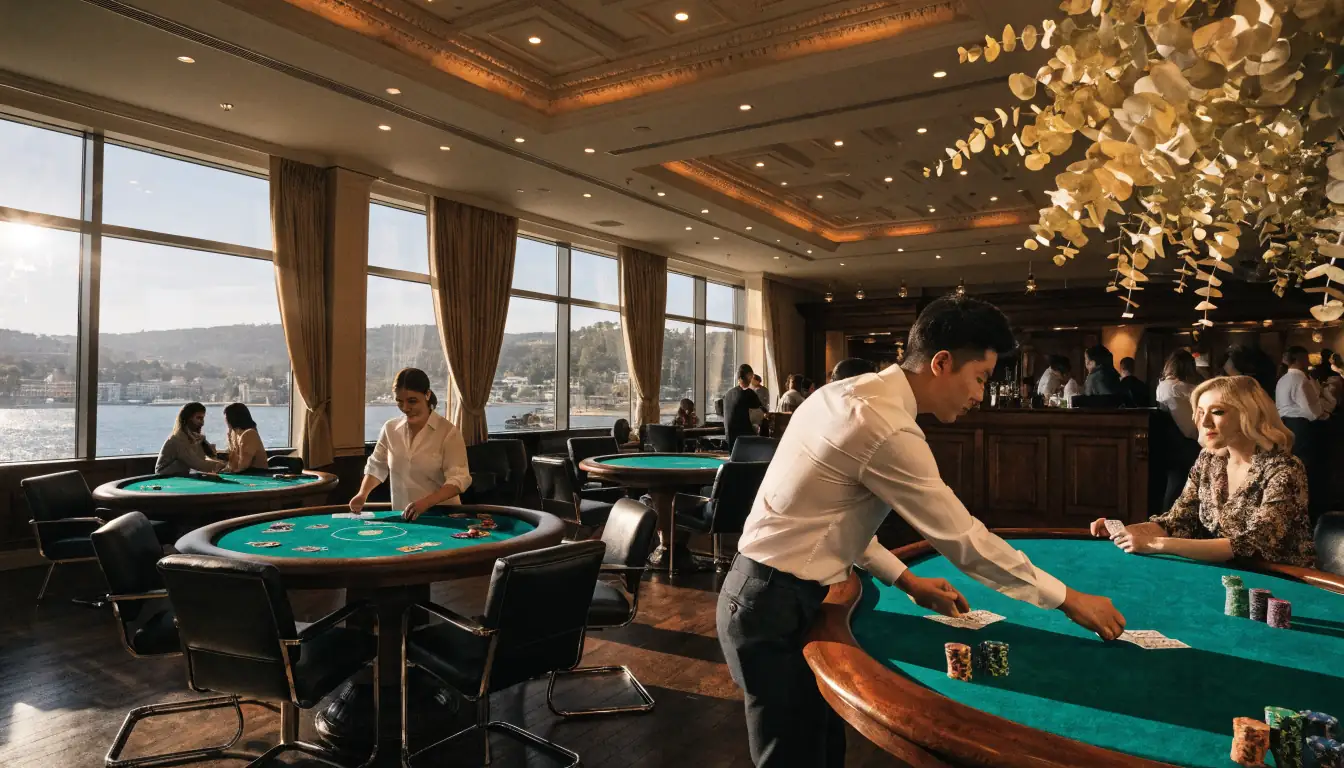
A buffet solves hunger. A restaurant is supposed to solve something else — the reason someone drives across town instead of eating at home. Canberra casino’s a-la-carte venues sit apart from the buffet hall for that reason: table service, a printed menu, a wine list someone actually thought about, and a kitchen working to order rather than to a steam tray.
What I look for in a casino restaurant isn’t ambition — it’s consistency. Gaming floors run on volume, and kitchens attached to them can drift toward whatever reheats fastest. The a-la-carte rooms here are the exception rather than the rule, which is exactly why they’re worth naming separately from the food court and the breakfast spread covered elsewhere.
What’s actually on the plate
The standing menu leans on steak and seafood, which is the safe default for any venue trying to hold a crowd that includes both high rollers celebrating and everyone else just wanting a decent dinner before or after a session on the floor. Where the kitchen earns its keep is in the detail: proper aging on the beef, a raw bar that isn’t an afterthought, and a dessert list that doesn’t just recycle whatever’s on the buffet that night.
There’s also a rooftop dining and bar space, which changes the pitch entirely — the food matters, but the view over the city at night is doing a lot of the selling. That’s not a criticism. A rooftop bar attached to a casino restaurant works because it gives people a reason to linger with a drink rather than head straight back to the machines, and the operator knows it.
Booking and timing
Table service means table turnover, which means the good slots — Friday and Saturday evenings especially — go early. Walk-ins get seated when there’s room; reservations get the room reserved. If there’s a show or a promotional night on the gaming floor, expect the restaurant to fill around it, since the two feed off the same foot traffic.
Where this sits against everything else on-site
- A-la-carte restaurants: table service, fixed menu, the closest thing to a “night out” the venue offers.
- Buffet and breakfast service: volume dining, covered separately, built for speed rather than a menu you’d remember.
- Food court: casual, fast, no reservation needed — a different job entirely.
None of this touches the gaming floor’s own rules or licensing, which sit outside a restaurant review. And none of it has any bearing on online play — Australia doesn’t licence online casino operators domestically, so nothing here translates into an app or a website. What’s on offer is physical: a table, a menu, a view if you book the right spot.
Dress Code, Etiquette and Spa Services at the Casino
Every casino floor has an unwritten hierarchy of who looks like they belong and who’s about to get a polite word from security. Canberra is no exception. The written rule is simpler than the unwritten one: neat, clean, casual is fine for most of the gaming floor during the day. Thongs, singlets and visible workwear tend to get stopped at the door once evening service starts, and anything with offensive graphics or club colours won’t get past the podium at any hour. If there’s a specific dress code tier for high-limit rooms, staff will tell you at the entrance rather than posting it anywhere public — that’s typical of how these floors are run, and it’s worth asking ahead rather than assuming.
Dress code enforcement is strict in the evening; thongs, singlets or offensive graphics may result in being turned away.
Etiquette matters more than people expect walking in. Table games run on rhythm: dealers expect chips placed within the betting spot before cards are dealt, not lobbed in after the fact, and calling "no more bets" is not a suggestion. Phones at the table are generally discouraged, less for atmosphere and more because dealers need to keep the count clean. None of this is written on a card at the entrance. You learn it by watching the table for one hand before joining.
One clarification worth making here, because it comes up in conversation on the floor more than you’d think: none of this etiquette extends to placing live bets over a phone app while sitting at a table. In-play online betting is illegal in Australia. Betting live by phone call — an actual phone call to a bookmaker — is a different, legal channel, but it has nothing to do with anything happening inside a casino building, and pit staff aren’t the ones to ask about it.
Spa services
A day spa attached to a casino property is usually pitched as "relaxation between sessions" — the marketing phrase glosses over the fact that it’s a straightforward wellness offering with no connection to the gaming floor’s rules or hours. Typical inclusions at properties like this run to massage treatments, facials and sometimes packages bundled with a hotel stay upstairs. None of that is gambling-adjacent in any regulatory sense; it’s a retail service sitting inside the same building.
What I’d actually check before booking: opening hours separate from the casino floor’s own hours, since spa staff don’t keep casino time, and whether treatments need booking ahead or take walk-ins. Property front desks handle this booking directly — it’s not something concierge at the gaming floor deals with.
None of the above — dress rules, table manners, spa hours — appears on the venue’s public compliance documentation. It’s operational detail, not licensing detail, and the two get confused more often than they should.
Food Court Offerings and Leisure Pool at the Casino
Not every visit calls for a tablecloth. The food court sits apart from the à la carte rooms and the buffet counters covered elsewhere — it’s the quick, unfussy option for someone breaking up a session at the tables rather than settling in for a meal. Think grab-and-go counters, a mix of quick-service cuisines, coffee that doesn’t require a reservation. No dress code beyond the casino’s general rules, no waiting for a table.
It’s the layer of the operation that rarely gets mentioned in the glossy material, because it’s not glamorous. But it’s the part that keeps people fed between hands without pulling them off the floor for an hour.

The leisure pool works the same way — a practical amenity, not a wellness destination. That distinction matters: the spa, dealt with separately, is about treatments and quiet. The pool is about a break in the sun, somewhere to sit if you’re staying on-site and want out of the gaming rooms for a while. It’s not pitched as a resort centrepiece, and treating it as one would be overselling it.
Both amenities do one job well: give people a reason to stay on the property without gambling every minute they’re there. That’s good business for the venue and, worth remembering, good for the player too — a break away from the machines costs nothing and clears the head.
One fact worth having straight before any of this: whatever’s won at the tables isn’t taxed. Nothing here changes that.