House of Pokies Casino Australia: Market, Rules, Bonuses
 Available in AU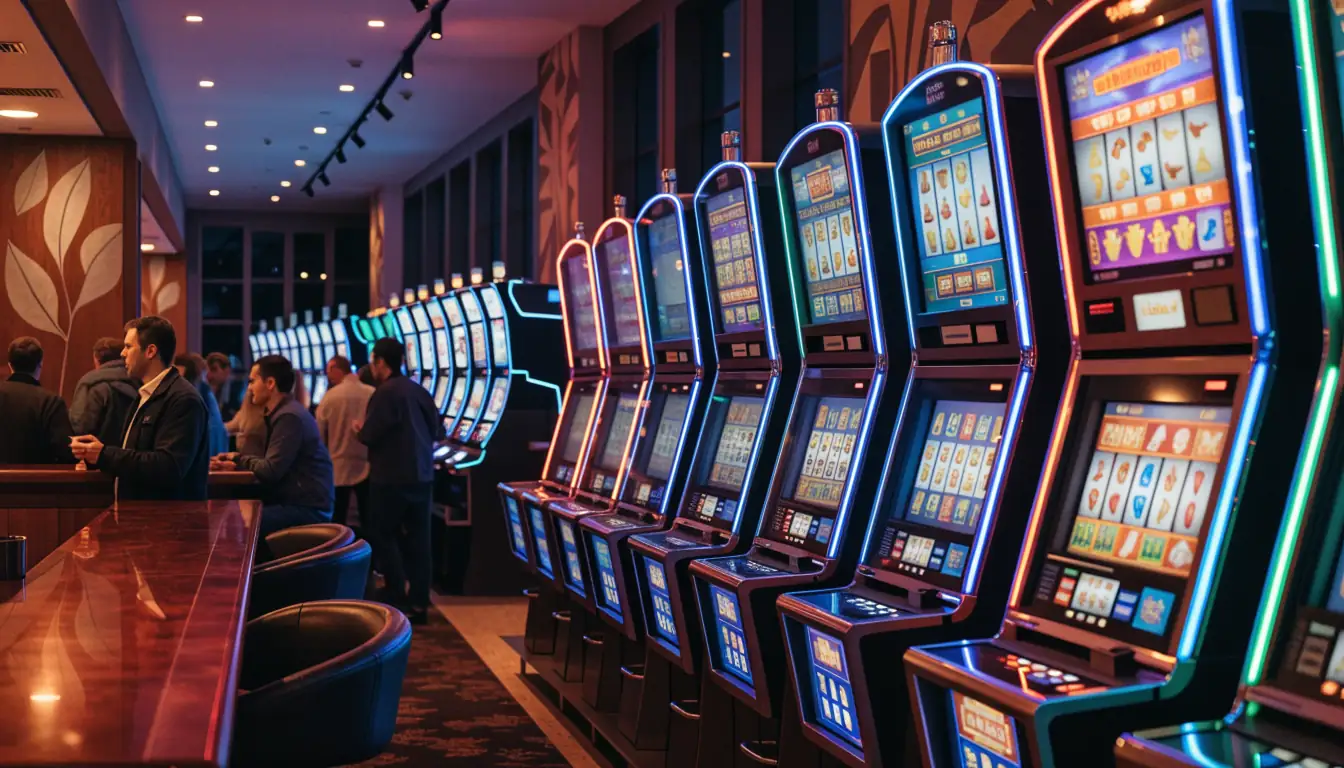
Understanding Pokies in Australia: Market Size, Regulation, and Risks
Anyone searching for something like house of pokies casino Australia in 2026 is usually looking for one of two things: a place to play, or an explanation of what’s actually going on behind the machines. This section is the second thing. Before getting into deposit codes and bonus terms — covered separately below — it’s worth understanding what pokies actually are in this country, how big the industry is, who regulates it, and why the same machines that pay out jackpots also attract money launderers. I spent years around gaming floors watching how operators talk about these numbers versus what the numbers actually show. There’s a gap. This is an attempt to close it.
What "pokies" actually means here
"Pokies" is the word Australians use for what regulators call electronic gaming machines, or EGMs. Same object, different register — one is the term you’d hear at the pub, the other is what shows up in AUSTRAC filings. I’ll use both, because the topic moves between casual gaming floors and formal compliance documents, and pretending those are separate worlds would be dishonest.
Before signing up anywhere, it helps to see how a casino’s licensing, welcome offer, and payout speed actually stack up, since these details make the biggest difference to your day-to-day experience.
License: international iGaming licence – jurisdiction not named in the source · Bonus: 100% up to A$1,000 + 100 free spins, 35x wagering · Payout speed: PayID 1-24 hours · Min. deposit: A$30 (PayID from A$10) Holds an international iGaming licence (specific jurisdiction not disclosed) and pairs a sizeable welcome package with fast PayID withdrawals, making it a solid pick for players who value quick access to their funds.
License: Curacao – Antillephone N.V. (Versus Odds B.V.) · Bonus: up to EUR 2,000 across 5 deposits + 200 free spins · Min. deposit: EUR 20 Licensed in Curacao under Antillephone N.V., this operator spreads a generous multi-deposit bonus with free spins across five deposits, giving newcomers room to build up their bankroll gradually.
License: Curacao eGaming OGL/2023/174/0082 (Dama N.V.) · Bonus: up to A$10,000 + 500 free spins across 4 deposits · Min. deposit: A$15 Operating under a Curacao eGaming licence via Dama N.V., it offers one of the larger welcome packages on this list, split across four deposits with a low minimum deposit requirement.
Bonus: up to A$7,500 + 550 free spins across 10 deposits, 50x wagering · Payout speed: crypto under 1 hour, PayID 1-3 business days · Min. deposit: A$20 (A$30 to qualify for the bonus) A strong multi-deposit bonus spread across ten deposits is backed by notably fast crypto payouts, though PayID withdrawals take a few business days.
Bonus: 100% up to A$750 + 200 free spins, 35x wagering · Payout speed: crypto 30-120 minutes, fiat 24-72 hours · Min. deposit: A$30 Combines a straightforward welcome bonus with quick crypto payout times, while fiat withdrawals take somewhat longer.
License: Curacao Gaming Control Board OGL/2023/176/0095 (Hollycorn N.V.) · Bonus: up to A$11,000 + 300 free spins (code NEO100) Licensed by the Curacao Gaming Control Board through Hollycorn N.V., it stands out for a large welcome bonus activated via a bonus code.
License: Curacao Gaming Control Board (TechSolutions Group N.V.) · Bonus: 100% up to A$250 + 100 free spins (1st deposit) Regulated by the Curacao Gaming Control Board under TechSolutions Group N.V., it keeps things simple with a first-deposit bonus suited to players who prefer a straightforward offer.
License: Curacao Gaming Authority (Jumpman Gaming Ltd) · Bonus: up to A$6,600 + up to 250 free spins across 4 deposits Licensed through the Curacao Gaming Authority under Jumpman Gaming Ltd, it offers a sizeable bonus package spread across four deposits.
License: Curacao OGL/2024/1335/0780 · Bonus: up to A$1,000 + 150 free spins, wager-free · Min. deposit: EUR 20 Operating under a Curacao licence, it features a wager-free bonus, a rare and player-friendly feature that avoids the usual playthrough requirements.
License: Curacao eGaming (Hollycorn N.V., since 2017) · Bonus: 225% up to A$1,540 + 600 free spins across 4 deposits, 20x wagering · Min. deposit: A$20-30 (depends on the offer) Backed by a long-standing Curacao eGaming licence via Hollycorn N.V. since 2017, it offers a high-percentage bonus spread across four deposits with relatively low wagering requirements.
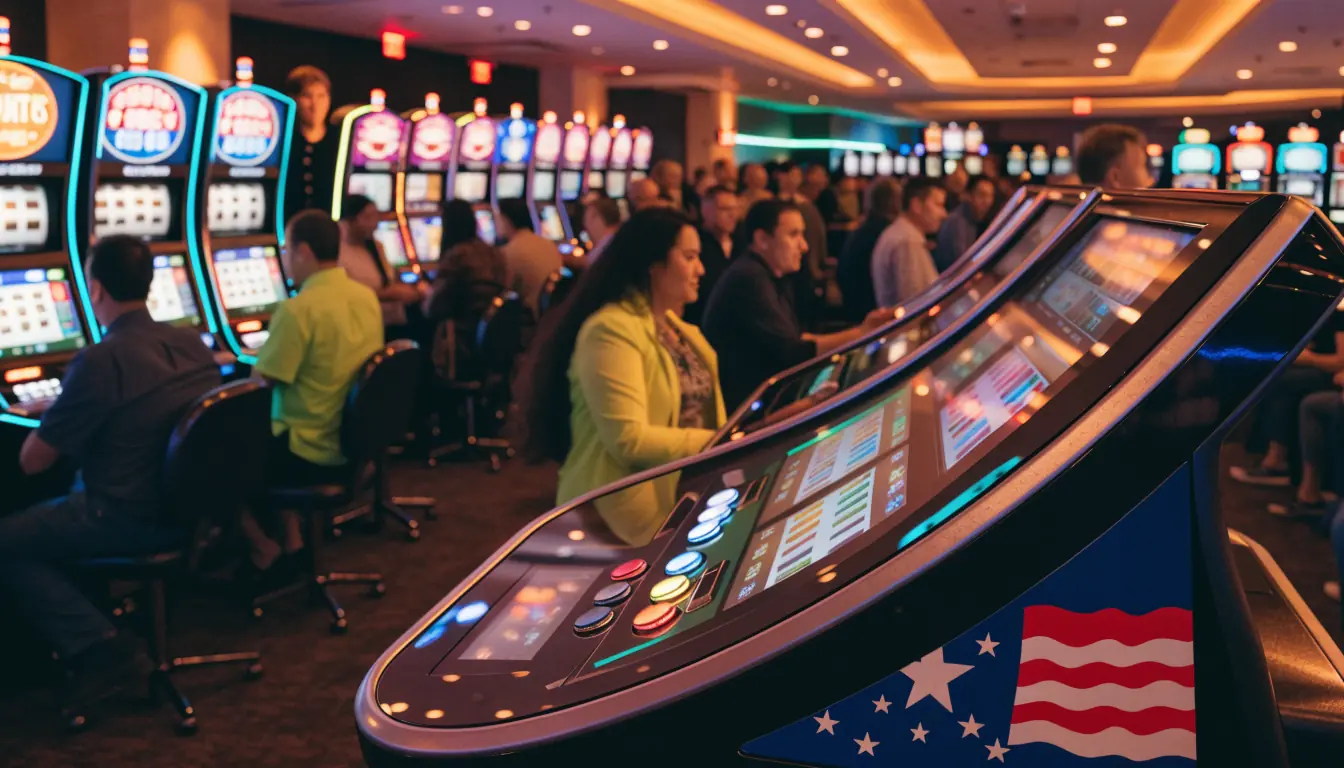
These machines aren’t a niche product confined to casinos. They’re operated in every state, in the Australian Capital Territory, and in the Northern Territory. There is no jurisdiction in the country where pokies don’t exist in some form — the differences are in density, machine caps, and how tightly each state polices them, not in whether they’re present at all. Pubs have them. Clubs have them. Casinos have them. For a lot of Australians, the nearest pokies machine is a shorter walk than the nearest ATM.
That ubiquity is the first thing to understand about the market size. Pokies aren’t a specialty product — they’re furniture.
The size of the market, in numbers that actually mean something
Numbers about gambling get thrown around loosely, so it’s worth being precise about what’s actually documented.
In the financial year 2020–2021, Australians placed bets worth almost AUD 150 billion on electronic gaming machines. That’s turnover — the total value of bets placed, not money lost, since most of what goes into a machine comes back out as smaller wins before eventually being wagered again. Turnover is a measure of activity, not of financial damage.
The damage figure is separate: in that same financial year, total player losses from electronic gaming machines came to about AUD 12 billion. That’s the actual net cost to Australian pokies players — money that went in and didn’t come back out. Divided across the population, per-capita losses for that year worked out to AUD 608. That’s not a per-player figure — it’s spread across every Australian, gambler or not — which tells you something about how concentrated this spending actually is among the people who do play.

More recent turnover data puts the number higher. According to reporting that references complyadvantage.com, pokies generated AUD 191.2 billion in gambling turnover in 2023. I’m flagging the source deliberately, because that figure comes from a single reference point rather than an official multi-year statistical series, and turnover isn’t the same measure as losses — it’s a different metric describing a different year. Treat it as a data point from that source, not as a government-confirmed benchmark for the size of the current market.
There’s also a claim, repeated often enough to sound settled, that Australia holds an outsized share of the world’s pokies machines. The trouble is the sources don’t agree with each other. One version puts Australia’s share of the world’s pub and club poker machines at 3%. Another version — cited elsewhere — puts it as high as 18%. Those numbers aren’t close enough to be a rounding difference; they’re describing different scopes or different machine counts, and no single figure here can be called definitive. Anyone repeating "Australia has X% of the world’s pokies" as settled fact is skipping over a real discrepancy in the data, and I’d rather name that gap than pretend one version is obviously right.
Turnover (FY 2020‑21) AUD 150 billion
Player losses (FY 2020‑21) AUD 12 billion
Regulation State‑level licensing for machines; federal ban on online pokies
Who actually regulates pokies
This is where a lot of online content gets sloppy, so it’s worth being direct about the legal shape of the market.
Pokies themselves — the physical machines in pubs, clubs and licensed casinos — are lawful and regulated at the state and territory level. Bodies like the Office of Liquor and Gaming Regulation and the ACT Gambling and Racing Commission oversee licensing, machine caps and venue compliance within their own jurisdictions. There is no single national pokies regulator; each state sets its own rules, which is part of why reform proposals (cashless gaming, for instance) move at different speeds depending on where you are.
What doesn’t exist, and this matters more than most articles admit, is a domestic licence for online casino games. The Interactive Gambling Act 2001 makes it an offence for online operators to offer real-money casino-style gambling — slots, roulette, blackjack, live dealer games — to people living in Australia. That prohibition sits at the federal level and applies regardless of what state you’re in. There is no Australian licensing regime for online pokies or online casinos, full stop, and no register of licensed local operators to check, because that register doesn’t exist here. The law targets the operators offering the games, not the individual playing them, but the practical result is the same: any online casino accepting Australian players is doing so from an offshore licence, not a domestic one.

Sports betting and lottery products are a different story — both are lawfully licensed at the state and territory level, and that’s a genuine, checkable distinction. But "pokies" in the licensed, regulated sense that Australian law actually recognises means the physical machines on a venue floor. Anything calling itself an online pokies casino sits outside that framework entirely.
On taxation, one thing is consistent: player winnings themselves are not taxed in Australia. What is taxed — and taxed differently depending on where the venue operates — is the operator’s revenue. Tax treatment of gambling operators varies by state and by the type of gambling product on offer, so a club running fifteen machines in Queensland is taxed under a different structure than a licensed casino running hundreds in New South Wales. There’s no single national pokies tax rate, and anyone claiming otherwise is flattening a genuinely state-by-state system into something simpler than it is.
Illegal Online Pokies
Offering real‑money online pokies to Australian residents breaches the Interactive Gambling Act 2001 and has no domestic licence. Playing on such sites is illegal and carries enforcement risk.
Why pokies specifically attract money laundering
Here’s the part that doesn’t get talked about much in venue marketing, and it’s worth sitting with, because it explains a lot of the regulation that follows.
Pokies are cash-heavy by design. Coins and notes go in, tickets or cash come out, and — outside of newer account-based systems — there’s often limited traceability of who actually put money in and where it came from. That combination of high cash volume and weak traceability is exactly what makes a machine attractive to someone trying to clean dirty money, and it’s a well-documented weakness, not a hypothetical one.
The mechanics are fairly plain once you see them laid out. A person inserts a large sum of cash into a machine, plays minimally — just enough to generate activity — and then cashes out. On paper, that cash-out looks like gambling winnings. In practice, it’s a laundering technique: dirty cash goes in, a "clean," traceable payout comes out the other side, and the machine’s transaction record provides cover.
A related version of the same trick involves buying winning tickets off other players. Instead of running the cash through a machine directly, an offender simply purchases someone else’s legitimate winning ticket for cash, then redeems it themselves. The money changes hands twice, and the paper trail points to a genuine win rather than a cash conversion.
There’s also structuring across venues — spreading smaller cash amounts across multiple pubs, clubs or casinos specifically to stay under the reporting thresholds that would otherwise trigger scrutiny at a single location. No single transaction looks suspicious. The pattern across venues is what gives it away, which is exactly why detection depends on venues and regulators comparing notes, not just watching their own floor.
Pokies are cash‑heavy and often lack traceability, making them attractive for money‑laundering schemes such as large cash deposits followed by minimal play and quick cash‑out.
According to reporting referencing complyadvantage.com, money mules — people recruited specifically to move laundered funds through pokies on someone else’s behalf — are part of this ecosystem too. I’m naming that source again deliberately, because it’s describing a criminal recruitment pattern reported by one outlet, not a formally quantified law-enforcement statistic with an official count attached.
The red flags regulators actually watch for
AUSTRAC issued a guide in 2024 specifically to help venues and compliance staff recognise money-laundering red flags in the pokies environment. It’s worth listing what that guide actually flags, because "suspicious activity" isn’t left vague — it’s fairly specific:
- Unusually high cash access — a customer handling far more cash than would be typical for casual play.
- Large deposits — feeding unusually large sums into a machine in a single session.
- Cash transfers — moving cash between people or accounts around gaming activity.
- Casino disbursement checks — irregularities in how winnings are paid out or verified.
- Certain occupations — patterns tied to jobs known to correlate with cash-intensive laundering risk.
Beyond that formal list, the pattern-based red flags that venues and regulators watch for include large or repeated cash insertions followed by minimal play and an immediate cash-out; frequent small redemptions spread across different venues within a short window of time; and customers who refuse to provide identification or who use multiple player cards to obscure a single identity behind several accounts. None of these on their own proves wrongdoing — someone might genuinely just be an impatient gambler — but taken together, they’re the pattern compliance teams are trained to notice.
What’s actually required of operators
The compliance burden on venues scales with how many machines they run, and it’s split into two tiers.
Operators running up to 15 pokies have a lighter but still mandatory obligation: register with AUSTRAC, keep identification records on relevant transactions, and submit suspicious matter reports when something doesn’t look right. This is the baseline — even a small club with a handful of machines is inside the regulatory perimeter.
Operators running more than 15 pokies carry a heavier load. They’re required to appoint a dedicated compliance officer, conduct formal risk assessments of their own operation, implement an AML/CFT program (anti-money laundering and countering the financing of terrorism, to spell out the acronym once), perform customer due diligence on patrons, and report any cash transaction over AUD 10,000. That last threshold is the one structuring is specifically designed to dodge — which is exactly why regulators watch for patterns across multiple smaller transactions rather than relying on the threshold alone to catch bad actors.
Falling short of these obligations isn’t a paperwork inconvenience. Non-compliant operators can face remedial directions ordering them to fix specific failures, infringement notices, civil fines, and the reputational damage that comes with being publicly named as non-compliant. For a venue whose entire business model depends on foot traffic and trust, that last consequence can outlast any fine.

New South Wales has gone further than most other jurisdictions on enforcement teeth. An amendment to the Casino Control Act 1992 allows NSW casino operators to be fined up to AUD 100 million for compliance failures — a figure large enough to function as a genuine deterrent rather than a cost of doing business. That’s specifically a NSW casino provision; it doesn’t automatically extend to every pub or club pokies venue across the country, which again reflects how fragmented enforcement is state by state.
The cashless reform question
The clearest regulatory response to all of the above is the push toward cashless, account-based pokies — machines where deposits, gameplay and withdrawals run through a traceable account rather than loose cash.
The most concrete proposal on record comes out of New South Wales. The 2022 NSW Islington Report recommended making all NSW pokies cashless by the end of 2028. I want to be precise about what that is: a recommendation from a specific report, not a law currently in force, and not a commitment that’s been finalised into binding legislation as things stand. It’s the direction regulators are pointing in, not a done deal — and given how much resistance venue operators have historically shown to reforms that touch cash flow, treating it as inevitable would be getting ahead of the facts.
The logic behind the push is straightforward enough, though. Cash is anonymous by nature. An account is not. According to material from facctum.com, adoption of cashless, account-based pokies improves traceability and reduces anonymity for the people using them — which is precisely the property that makes laundering through a machine harder to pull off. I’m naming that source because it’s one industry-compliance vendor’s framing of the benefit, not an independently verified market-wide outcome measured after the fact.
What’s less disputed is the mechanical difference: a transparent, account-based pokies system provides full traceability of deposits, gameplay, and withdrawals in a way a coin slot simply cannot. Every dollar in has an identity attached to it, every dollar out does too, and the gap between "money in" and "money out" that structuring and ticket-buying exploit narrows considerably. That’s not a promise about what cashless gaming will do to problem gambling rates or industry revenue — those are separate questions this section isn’t making claims about — it’s a statement about traceability specifically, which is the property regulators are chasing.

Off the back of this, the broader regulatory advice — from AUSTRAC and state bodies alike — leans toward three things: tighter customer due diligence at the point of play, ongoing transaction monitoring rather than one-off checks, and continued movement toward cashless systems where jurisdictions are willing to legislate for it. None of that is exotic. It’s the same playbook used against cash-based laundering in other cash-heavy industries. Pokies just happen to combine high volume, low friction, and — until recently — minimal identity verification, which made them a slower adopter of controls that other sectors picked up earlier.
What this means for anyone actually looking at "house of pokies" style sites
None of the above is really about any single brand. It’s about the environment a name like house of pokies casino operates in, and that environment has a hard boundary: online casino-style gambling aimed at Australian residents sits outside the law, regardless of what a website’s footer claims or what licence logo it displays. There’s no domestic licence to check, because domestic online casino licences for Australians don’t exist — not from a state gaming authority, not from ACMA, not from anyone. A site can hold a licence from somewhere else in the world, and plenty do, but that’s a different legal question from whether offering the product to Australian residents complies with the Interactive Gambling Act.
The pokies market this section has actually described — the AUD 150 billion in FY 2020–2021 turnover, the AUD 12 billion in losses, the AUSTRAC compliance tiers, the cashless reform debate — is the land-based, state-regulated machine market: pubs, clubs, and licensed casinos operating inside Australia under state oversight. That’s a genuinely regulated, genuinely taxed, genuinely documented industry, warts and all. It is not the same thing as an offshore online casino using "pokies" in its name to sound local. Understanding the difference between those two things is most of what protects a reader from mistaking marketing language for legal status.

For anyone dealing with problem gambling concerns arising from either context, Gambling Help Online and the BetStop self-exclusion register are the support services that actually exist in this market — worth knowing about regardless of where someone plays.
Deposit Bonuses and No‑Deposit Codes: What Australian Players Need to Know
Every second inbox has one of these subject lines: a "no deposit bonus code", a "free chip", a "signup" offer with a string of letters and numbers attached. I used to file these under promotions when I worked the other side of the counter. Now I read them as a legal question first.
The Interactive Gambling Act 2001 makes it an offence for an online operator to offer real‑money gambling to an Australian resident. That’s the operator’s problem, not the promotion’s — but the promotion doesn’t exist without the product behind it. A no‑deposit code, a free chip, a match on your first deposit: all of it is marketing for real‑money online casino play. There’s no local licence that makes that play legal to offer here. So a bonus code advertised to an Australian player isn’t a grey area dressed up as a perk — it’s an offer that sits on top of something the law already prohibits.
I’m not going to tell readers to "check the operator’s licence" before claiming a code. There’s no public register on this market to check against, and pretending otherwise would be worse than saying nothing.
What actually changes with money
Two things stay constant no matter which code or chip is on the table.
- Winnings aren’t taxed. If a player is on the winning side of a bet, gambling winnings in Australia are not subject to tax.
- Operators are taxed differently depending on where they sit. Taxation of gambling operators varies by state and by the type of gambling service offered — there’s no single national rate or rule.
That second point matters more than it looks. It’s why "the same offer" can carry different real costs depending on who’s providing it and under what state framework they’d need to operate legally. A bonus code doesn’t change either of these facts — it just sits in front of them, worded to look like a gift.
None of this is advice to chase or avoid a specific code. It’s a reminder that "free" and "legal to offer here" are two separate claims, and a promotional email answering one doesn’t answer the other.
Prepared by the Casino Cities Guide editorial staff.