Real Money Table Games in Australia: What Actually Counts
 Available in AU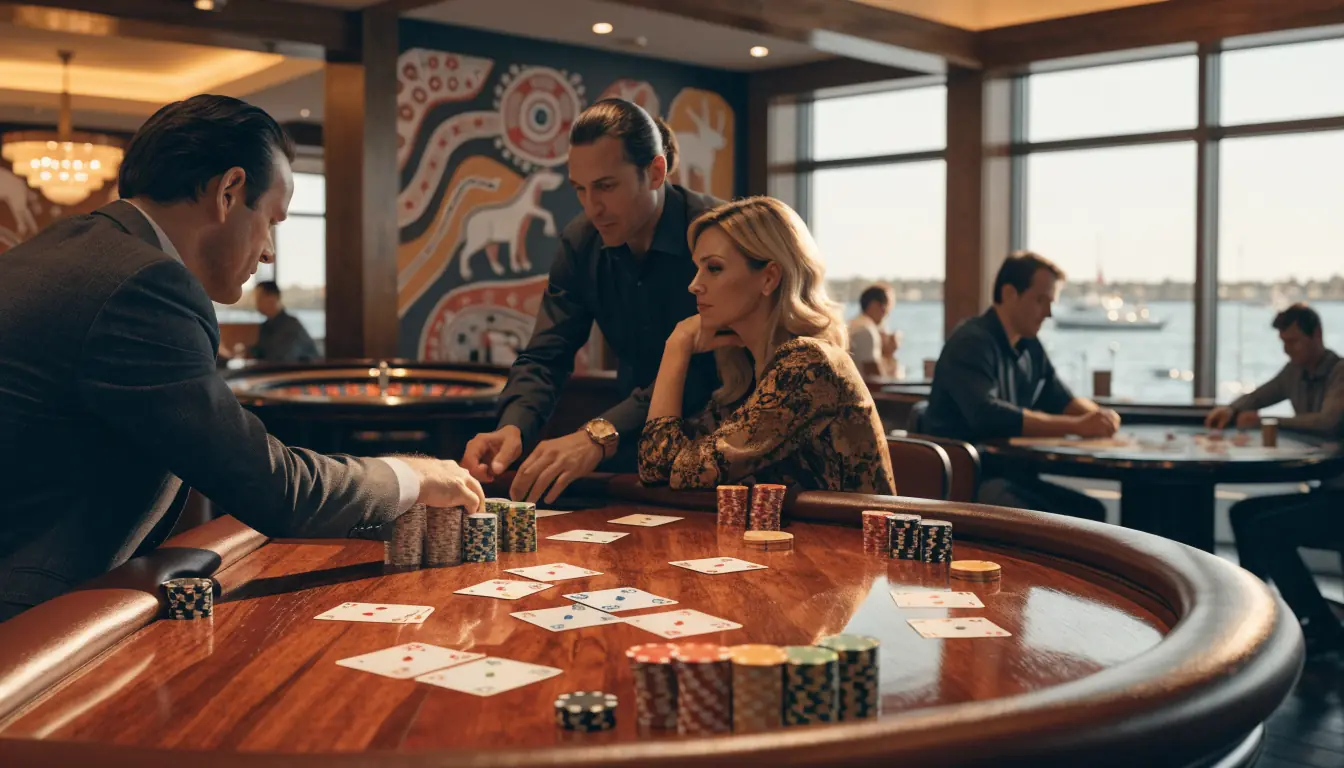
Table of Contents
- Real‑Money Table Games Available in Australia
- Legal Landscape for Online Free Play of Table Games
- Finding Physical Casinos with Table Games Near You
- Understanding Odds and Payouts in Australian Table Games
- Casino Table Game Management and Dealer Compensation
- House Edge Charts for Popular Table Games
- Free Online Table Games Without Download Requirements
- Bitcoin Table Games vs Traditional Online Table Games
- Pai Gow Poker as a Table Game in Australian Casinos
- Table Game Offerings in Canadian Casinos – Relevance for Australian Players
Real‑Money Table Games Available in Australia
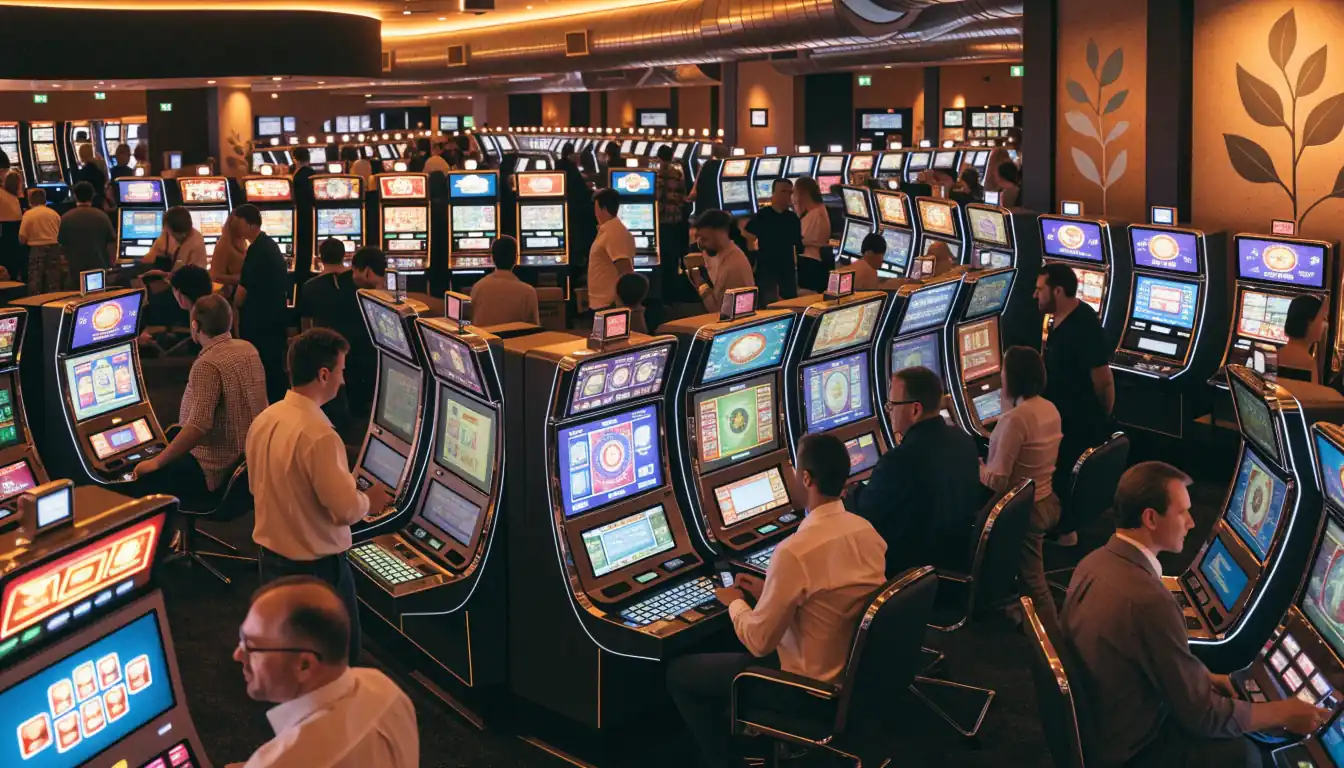
Ask around a pit at any licensed venue what "real money table games" actually means in this country, and you get a shorter answer than most marketing pages suggest. It means blackjack, roulette, baccarat, craps, poker variants and their cousins, played across a felt surface with chips that convert to actual currency at the cage. It does not mean an app on a phone. That distinction sounds pedantic until you understand why it exists, and once you do, most of the online "table games" advertising aimed at Australians reads differently.
Real money, in the regulatory sense used here, refers to wagers placed and settled in actual currency rather than credits, points, or play‑money balances that reset. That’s the whole category this section covers — not bonus play, not demo tables, not crypto‑only rooms with their own internal token economy. Just: chips, cards, dice, wheels, and a payout in cash or its direct equivalent.
Where the real‑money format actually exists
In Australia, that format exists on the floor. Physical casinos — the licensed, state‑regulated venues you’d recognise by name in Sydney, Melbourne, Brisbane, Perth, the Gold Coast — run real‑money table games under licences issued by state and territory authorities. That’s the whole legal footprint of the category. There isn’t a parallel online version of it operating under an Australian licence, because no such licence exists to grant.
Before sitting down at a table game for real money, it helps to see how each site handles payouts, deposits, and welcome offers so you can pick one that suits how you play.
License: international iGaming licence – jurisdiction not named in the source · Bonus: 100% up to A$1,000 + 100 free spins, 35x wagering · Payout speed: PayID 1-24 hours · Min. deposit: A$30 (PayID from A$10) Backed by an international iGaming licence, this site pairs a sizeable welcome match and free spins with fast PayID withdrawals and a low PayID minimum deposit.
License: Curacao – Antillephone N.V. (Versus Odds B.V.) · Bonus: up to EUR 2,000 across 5 deposits + 200 free spins · Min. deposit: EUR 20 Licensed in Curacao, this operator spreads a large welcome package across multiple deposits with added free spins, keeping the entry deposit accessible.
License: Curacao eGaming OGL/2023/174/0082 (Dama N.V.) · Bonus: up to A$10,000 + 500 free spins across 4 deposits · Min. deposit: A$15 Holding a Curacao eGaming licence, this site offers one of the larger welcome packages on this list, split across several deposits with a modest minimum deposit requirement.
Bonus: up to A$7,500 + 550 free spins across 10 deposits, 50x wagering · Payout speed: crypto under 1 hour, PayID 1-3 business days · Min. deposit: A$20 (A$30 to qualify for the bonus) A generous multi-deposit welcome bonus with a large free spins allowance is matched by quick crypto payouts and reasonably fast PayID processing.
Bonus: 100% up to A$750 + 200 free spins, 35x wagering · Payout speed: crypto 30-120 minutes, fiat 24-72 hours · Min. deposit: A$30 Offers a straightforward welcome match plus free spins, with quick crypto payout times and a manageable minimum deposit.
License: Curacao Gaming Control Board OGL/2023/176/0095 (Hollycorn N.V.) · Bonus: up to A$11,000 + 300 free spins (code NEO100) Licensed under the Curacao Gaming Control Board, this operator stands out for a particularly large bonus ceiling plus free spins available via a bonus code.
License: Curacao Gaming Control Board (TechSolutions Group N.V.) · Bonus: 100% up to A$250 + 100 free spins (1st deposit) Regulated by the Curacao Gaming Control Board, this site keeps things simple with a first-deposit match and free spins package.
License: Curacao Gaming Authority (Jumpman Gaming Ltd) · Bonus: up to A$6,600 + up to 250 free spins across 4 deposits Licensed under the Curacao Gaming Authority, this operator offers a solid multi-deposit bonus with free spins spread across the welcome journey.
License: Curacao OGL/2024/1335/0780 · Bonus: up to A$1,000 + 150 free spins, wager-free · Min. deposit: EUR 20 Licensed in Curacao, this site’s welcome offer includes free spins with no wagering requirement, plus an accessible minimum deposit.
License: Curacao eGaming (Hollycorn N.V., since 2017) · Bonus: 225% up to A$1,540 + 600 free spins across 4 deposits, 20x wagering · Min. deposit: A$20-30 (depends on the offer) An established Curacao-licensed operator since 2017, offering one of the higher percentage matches on this list across multiple deposits with a comparatively low wagering requirement.
This isn’t a grey area or a matter of interpretation. Online casino style games — and that phrase, in the relevant legislation, explicitly lists slots, poker, blackjack, and roulette — are prohibited under the Interactive Gambling Act 2001. Table games sit inside that list by name, not by inference. Blackjack and roulette aren’t a loophole category that escaped the drafting; they’re two of the examples the Act actually uses.
So when a page promises "real money casino table games" and means an online platform, it’s already misusing the term, or hoping the reader won’t notice the swap. There are no domestically licensed real-money online casino operators available to Australian players. Not "few," not "a limited selection" — none. No state regulator issues a licence for an online blackjack table serving Australian residents, and no federal body has created a pathway for one to exist. This piece of the picture matters more than any bonus percentage or table limit, because it changes what question a reader should even be asking. Not "which site has the best online blackjack for Australians" — that site, if it’s taking real money from Australian residents through a table-game format, is not doing so under any Australian authorisation, full stop.
I’ve watched people spend real effort hunting for the "right" online operator, comparing return-to-player figures on virtual blackjack, cross-referencing table limits between sites, as if the choice were a matter of finding the best-regulated option among several legitimate ones. That premise is wrong. There isn’t a field of competing licensed options to choose between online. There’s the physical floor, and there’s everything else.

What actually happens on a real land-based floor
Land-based table games in Australia run the way they run in most Commonwealth jurisdictions: a dealer — croupier is the word you’ll hear used interchangeably at the higher-end venues, though most staff and most patrons just say dealer — manages the table, the cards or dice or wheel produce the outcome, and chips move accordingly. Nothing about the mechanics is exotic. What’s worth understanding is the range on offer, because "table games" as a category covers more ground than the three or four names most people default to.
Blackjack anchors almost every pit. Multiple variants show up across venues — some tables run different deck counts, some restrict doubling or splitting differently — and the variation between tables at the same casino can be as significant as the variation between two different casinos. This is where reading a table’s specific rules before sitting down matters more than picking a venue by reputation.
Roulette is the other anchor. European wheels dominate in Australian venues far more than American double-zero wheels, which matters for anyone doing the maths on long-run outcomes (the mechanics of that maths belong in the odds section elsewhere in this guide, not here — but the wheel format itself is worth knowing before you sit down).
Playing real‑money table games in Australia is only legal on the licensed land‑based casino floor. Any online service claiming to offer “real‑money table games” to Australian players is operating without a domestic licence and breaches the Interactive Gambling Act.
Baccarat has a steady, often quieter following — it draws a different crowd than blackjack, typically players who want a simpler decision tree and are comfortable with the banker/player structure. Punto Banco is the version you’ll encounter almost everywhere; the more elaborate chemin de fer style is rare outside a handful of premium rooms.
Craps exists in Australian casinos but with less table density than blackjack or roulette — fewer tables, sometimes tucked into a corner of the pit rather than centre floor. It rewards familiarity with the betting structure more than most other table games, and it’s not a format I’d recommend walking into cold.
Three Card Poker, Caribbean Stud, and other poker-derived table games sit in most pits as a middle category — not the anchor games, not a rarity, just steadily present. These formats blend poker hand rankings with a table-game structure (fixed ante, banker plays against each hand individually rather than players against each other), which makes them approachable for people who know poker hands but don’t want the social dynamics of a poker room.
Pai Gow Poker also belongs in this same table-game family, and its specific rules and positioning in Australian venues get their own treatment elsewhere in this guide — worth a separate look rather than a paragraph buried here.
Sic Bo and other dice-based games appear in some venues, more commonly ones with a strong Asian-market clientele base, which in Australia tends to mean certain casinos in specific cities rather than an even national spread.
None of this list is exhaustive of every variant a given casino floor might run on a given night — pits rotate offerings, trial new variants, retire ones that don’t get traffic. But this is the real shape of the category: a handful of anchor games everyone offers, and a second tier that varies noticeably by venue.

The gap between "table games" and "online table games"
Here’s where the category gets muddled by marketing language, and it’s worth being blunt about it. A huge amount of content aimed at Australian searchers uses "online casino table games" as if it’s a live, real-money, Australian-facing product category with legitimate competition among providers. It isn’t, for the reason already stated: the format that would make that phrase accurate — a domestically licensed real-money online table game — doesn’t exist to compete over.
What does exist, and what this phrase often actually points to without saying so directly, are offshore-licensed platforms accepting Australian players. Whether an individual player accessing one of those sites is breaking the law is a different question from whether the operator is — the Act targets the businesses providing the service, not the individuals using it. That’s a real legal distinction and it’s worth knowing plainly rather than glossing. But it doesn’t turn an offshore platform into an "Australian real-money table game option" in any regulatory sense. It just means the exposure sits on the operator’s side of the ledger, not the player’s.
I spent enough time around licensing conversations in this industry to recognise the pattern in how that gap gets papered over in copy. A page will say "real money," attach an Australian flag or an ".com.au"-adjacent-sounding brand voice, list a set of "top" operators, and never once mention that none of them hold an Australian licence — because none can. The phrase "licensed and regulated" does appear on plenty of these pages. It’s true. It’s just never true about Australia. Malta or the UK, sometimes, depending on the operator — real licences, issued by real regulators, just not this jurisdiction’s regulator, and not under any framework that permits serving this market’s residents with these products.
Legal risk
Operators based offshore that accept Australian players for real‑money table games are not regulated by Australian authorities. Players may be exposed to unverified fairness and have no recourse under Australian law.
That’s not a technicality to skip past. It’s the entire structure of the category. If a reader takes one thing from this section, it should be this: the "real money" phrase attaches cleanly to the physical floor, and attaches to online products only through a jurisdiction that isn’t Australia’s own.
Format differences that actually matter at the table
Setting aside the legal architecture for a moment — the practical differences between formats matter for anyone who’s actually going to sit down and play, and this is where the physical-venue experience diverges from what any online description, licensed or not, actually delivers.
Speed of play. A live dealer running blackjack at a physical table works through hands at human pace, shuffles by hand or with an automatic shuffler that still takes real time, and pauses for chip movement, disputes, and pit-boss interventions when something looks off. This isn’t a minor texture detail — it changes the volume of decisions a player makes per hour, which in turn changes the practical exposure of a session regardless of what the underlying odds are (the actual mathematics of that exposure belong to the house-edge and odds sections elsewhere in this guide).
Table minimums and maximums vary by venue and by pit. A casino’s high-limit room runs different stakes from its main floor, and the same game — blackjack, say — might have four or five different minimum-bet tables running simultaneously on a busy night. There’s no single "the minimum" to quote; it depends on which table, which room, which night.
Social and procedural texture. A physical table has other players at it, a dealer who’s a person with their own pace and demeanour, and pit staff watching for irregularities. None of that is quantifiable in a meaningful way for a page like this, but it’s the actual lived difference between "playing a table game" and "playing an RNG-based game shaped like a table game," which is what a lot of online alternatives to physical tables actually are — computer-generated outcomes with table-game aesthetics layered on top. That category — what the industry and increasingly players themselves call random number games — behaves nothing like a dealt hand at a real table, even when the interface tries to look identical. Live dealer games, the format that streams an actual human dealer to an online interface, sit somewhere in between — closer to the real thing in texture, but still delivered through an online channel that, for Australian residents, runs into the same licensing wall as any other online casino offering.
Consistency of rules. A land-based venue posts its rules at the table — deck count, dealer-hits-on-soft-17 or not, doubling restrictions — and those rules are fixed for that table until the casino changes its floor policy. Online platforms, where relevant elsewhere in the world, can and do vary rules by session or by provider integration in ways a player has to actively check rather than assume.
The “real‑money” definition on a physical floor is simply cash → chips → cash. There is no account balance or withdrawal delay – you exchange cash for chips at the cage, play, then cash out immediately.
Why the online promise keeps getting repeated anyway
It’s worth asking, briefly, why "real money online table games Australia" remains such a heavily searched and heavily written-about phrase if the honest answer is "that category doesn’t legally exist here." The reason isn’t complicated once you’ve sat on the operator side of this kind of business. Search volume doesn’t care about jurisdiction. People searching that phrase want a table-game experience they can access from a phone, and there’s a large industry of offshore operators and affiliate content built entirely around meeting that demand without dwelling on the legal framing.
I’ve read enough of this content, and helped shape some of it earlier in my career, to recognise the tell: pages that spend several paragraphs on game variety and bonus structure and maybe a sentence, softened into a subordinate clause, acknowledging "players should be aware of their local regulations." That’s the whole disclosure. It’s technically not false — it doesn’t claim an Australian licence exists — but it’s built to be skimmed past, and it works, because most readers arrive already assuming the product they’re reading about is the product they’re going to get.
The honest framing is shorter: the real-money table-game format Australians can access under a licence issued for this market is the one on a casino floor. Everything else is an offshore product, operating under someone else’s licence, reachable by residents without the resident breaking any law, but never legitimately marketed as an Australian-licensed real-money table game — because that thing doesn’t exist for anyone to market.

What "table games" covers when people mean the physical floor
Coming back to the actual category, worth being precise about scope rather than leaving it vague. "Table games" as a term of art in a casino context excludes electronic gaming machines — pokies, in the language actually used here rather than the imported "slot machines" phrasing — and excludes most standalone poker-room cash games, which usually sit in a separate part of the venue with different structure and staffing. Table games specifically means the pit games: cards, dice, wheel, dealt or spun by a dealer, chips exchanged for the wager.
Within that pit, the anchor games — blackjack, roulette, baccarat — get the most floor space because they draw the most consistent traffic. The secondary tier — craps, the poker-hybrid games, Sic Bo, Pai Gow — fills out the room but with more variability from venue to venue in whether a given game is even on the floor that night. A reader planning an actual visit to a physical casino, rather than just researching the category abstractly, should expect the anchor games to be reliably present and the secondary tier to be worth confirming ahead of time — which ties into locating a specific venue and checking what’s actually running, a separate practical question from the category overview here.
The chip-to-cash mechanic, briefly
One more piece worth clarifying because it’s genuinely part of what "real money" means at a physical table and gets skipped in a lot of online-focused writing: at a land-based venue, cash converts to chips at the table or at a cage, chips are the wagering unit during play, and chips convert back to cash at the cage when a player is done. That loop — cash to chip to cash — is the entire mechanical definition of "real money" in this context. It’s a closed, physical, immediate cycle. There’s no credit balance sitting in an account, no separate withdrawal request, no processing window between deciding to cash out and having the money. You walk to the cage, you hand over chips, you receive cash. That immediacy is part of what real-money table-game play actually is on the ground, and it’s structurally different from anything an online balance — regulated or not — can replicate, because an online balance always has a settlement step that a physical chip doesn’t.
Summary of the actual landscape
Pulling this together plainly, because the category deserves a straight answer rather than another paragraph of hedging:
- Real-money table games — blackjack, roulette, baccarat, craps, poker-hybrid formats, Pai Gow, and others — are available in Australia through licensed, state-regulated land-based casinos. This is the format, and it’s the only one carrying a domestic licence.
- Online casino style games, including the table-game formats named specifically in the legislation — blackjack and roulette among them — are prohibited under the Interactive Gambling Act 2001. This isn’t ambiguous drafting; the Act names the games.
- No domestically licensed real-money online casino operator exists for Australian players to use. Any online product marketed as “real money Australian table games” is, by necessity, operating under a licence from somewhere else — if it’s licensed at all — and that fact belongs in the open rather than buried in a footnote.
- The individual player accessing an offshore platform isn’t the one facing legal exposure under this framework — the operator is — but that legal distinction doesn’t upgrade an offshore product into a legitimate Australian real-money table-game option. It just describes where the risk sits.
None of this rules out table-game play for real money in Australia. It rules out one specific, heavily marketed version of it. The version that actually exists, and has existed under state regulation for a long time, is the one on the floor — chips, dealer, pit, cage. Worth knowing which one you’re being sold before deciding which one you’re playing.
Legal Landscape for Online Free Play of Table Games
The moment blackjack or roulette switches from "for fun" to "for money," the legal ground underneath it shifts completely. This is the part most explainer pages skip, because it’s less exciting than a list of games — but it’s the part that actually determines what an operator can put on a page for Australian visitors.
There’s no single law and no single regulator covering all of this. Gambling in Australia is split between federal and state/territory oversight, and each half does a different job. Nobody signs off on the whole picture at once, which is precisely why free-play sits in a grey zone that real-money products don’t get to occupy.
Where free-play sits, legally
Offering online casino gambling in Australia is illegal, and there’s no path to a domestic licence for it — that’s settled. But a demo blackjack table with no deposit, no withdrawal, and no real wager isn’t gambling in the legal sense used by the Interactive Gambling Act. No money changes hands, so the core thing the Act is built to restrict — Australians losing real money to unlicensed online casino products — simply isn’t happening. This is the technical gap that lets free-play table games exist openly on operator sites and third-party portals without anyone needing a licence to run them.
It’s worth being blunt about what this means in practice: a page can host "play now" demo tables legally in a way it could never host the real-money version. That’s not a workaround someone invented — it’s just the boundary the law actually draws. Real-money online casino products stay banned regardless of who’s offering them; free versions of the same games sit outside that ban because they’re not gambling under the statute.
Demo tables
Free‑play (demo) table games are legal because no money changes hands, but they are not subject to any gambling regulator’s fairness audit. The experience does not guarantee that a real‑money version would be safe or compliant.
Who would even enforce anything here
The Australian Communications and Media Authority (ACMA) is the federal body enforcing the Interactive Gambling Act, and its job is chasing operators offering real-money online casino products to Australians — issuing blocking notices, warning offshore operators, referring matters onward. Free-play tables don’t fall into that enforcement lane at all, because there’s no real-money interactive gambling service for ACMA to act against.
Below the federal layer, things fragment further. Each state and territory runs its own regulator, and they don’t coordinate under one roof. The Northern Territory Racing Commission functions as Australia’s de-facto hub for online licensing because it’s where most national bookmakers sit, drawn by lower tax rates there — but that’s a licensing relationship tied to sports and racing wagering, not table games or casino products. Victoria’s regulator, the VGCCC, keeps an eye on wagering service providers Australia-wide for consumer-protection compliance, and NSW has its own body, Liquor & Gaming NSW, doing similar work within its borders. None of these bodies were built with free-play demo tables in mind, and none of them claim jurisdiction over a browser-based roulette wheel that never touches a bank account.
State and territory regulators also have limited reach over offshore online casinos generally — real-money or not. Their authority runs to licensed activity within their own borders; an offshore server hosting a demo table isn’t something a state regulator is positioned to touch, licensed or otherwise. That’s a structural fact about how Australian gambling regulation is built, not a loophole specific to free-play.
Land-based rules don’t carry over
It’s tempting to assume the same regulator that oversees a physical casino floor also has a say in what that casino’s website offers online. It doesn’t work that way. Bricks-and-mortar casinos answer to state government regulators and law enforcement — inspections, licence conditions, the physical premises. The moment the same operator’s brand appears in a browser as a free-play table, that’s a different regulatory conversation entirely, governed federally, if it’s governed at all in the "for fun" case.
What this actually changes for a page hosting free tables
- No licence is required to publish demo table games, because no licensed gambling activity is occurring.
- No state regulator polices demo content the way it polices a physical gaming floor.
- ACMA’s enforcement is aimed at real-money offerings, not free ones — the two are treated as legally separate products, not two versions of the same regulated thing.
- The absence of oversight cuts both ways: nobody is auditing free-play “fairness” the way a licensed jurisdiction audits real-money random number games, because there’s no licence triggering that audit in the first place.
That last point is worth sitting with. "Free" doesn’t mean "regulated for your protection" — it means the specific law aimed at real-money interactive gambling doesn’t apply. Those are not the same thing, even though marketing copy likes to blur them.
None of this changes anything about the real-money side. It’s illegal to offer online casino gambling in Australia, full stop, and that stays true no matter how permissive the free-play space looks. The two run on separate tracks, and conflating them — assuming that because demo tables are freely available, real-money versions must be similarly tolerated — is exactly the mistake the legal split is designed to prevent people from making.
Finding Physical Casinos with Table Games Near You
None of this belongs to the online conversation. A physical floor with a croupier standing behind it is a different regulatory animal entirely, and mixing the two up is how people end up quoting the wrong rulebook to the wrong venue.
Land-based casinos sit under state government regulators and law enforcement, not the federal authority that polices online operators. That split matters more than it sounds. It means the casino in Perth answers to a different body than the one in the Gold Coast, and neither of them takes instructions from whoever handles interactive gambling federally. Each state and territory runs its own regulator, its own licensing conditions, its own idea of what a casino floor is allowed to offer and when.
Practically, that means opening hours, game selection, and even table minimums can vary from one venue to the next — not because one casino is cutting corners, but because the rules they operate under were written by different people in different buildings. There’s no single national schedule to check against. The only reliable way to know when a specific casino’s tables open is to check with that casino directly, or with the regulator covering that state.
Working out what’s actually near you
A few things worth checking before making the trip:
- Which state you’re in — because the regulator, and therefore the operating conditions, changes at the border.
- Whether the venue is a full casino or a licensed club with gaming machines — table games specifically are usually concentrated in the larger, purpose-built casinos rather than local pubs and clubs.
- Current opening hours for the table floor, which can differ from the pokies floor or the general venue hours. Casinos often run the two on separate schedules.
- Any identification requirements at the door — standard practice, not something specific to one venue.
None of this replaces a phone call. Rosters change, refurbishments close sections, and public holidays shift hours in ways no directory keeps up with in real time. The state regulator’s site is the closest thing to an authoritative source on who’s licensed to operate where — it won’t tell you if the blackjack tables are open on a Tuesday night, but it will confirm the venue is legitimate in the first place.
What it can’t tell you is anything about the odds at those tables, which is a separate question from finding the building.
Understanding Odds and Payouts in Australian Table Games
Every table game runs on a fixed mathematical relationship between what a bet pays and how likely it is to win. That relationship never favours the player over time. Casinos don’t hide this — they just don’t lead with it either. The number that describes it is the house edge, and it’s built into the payout structure itself, not added on top as some kind of fee.
What changes between games is how that edge is distributed. Some bets carry it evenly across every outcome. Others concentrate it in side bets or long-odds wagers that look tempting precisely because the payout number is large. A big number on the payout table is not the same thing as a fair one — it usually means the probability behind it is small enough that the house comes out ahead over enough hands or spins.
Random number games — anything running on a computer-generated draw rather than a physical wheel or shoe — follow the same principle, just verified differently. Where a croupier deals cards or spins a wheel in a live setting, the physical mechanics are visible. Where the game is generated by software, players are trusting the provider’s random number generator instead, and that trust has to be placed in the operator rather than observed directly.
None of this tells a player which specific games pay best — that depends on the rules of each one, and a general odds discussion can’t substitute for reading the actual payout table in front of you. What it does tell you is where to look: not at the top prize, but at what the bet actually returns across enough repetitions to matter.

Casino Table Game Management and Dealer Compensation
Behind every pit boss and every croupier standing at a table sits a piece of software nobody at the felt ever mentions. Management systems track buy-ins, fills, drop, table averages, dealer rotations — the whole administrative skeleton of a floor. It’s the layer that decides which tables get closed early and which dealer gets moved to the high-limit room. None of it is visible to a player, and none of it should be: it’s an operations question, not a gameplay one.
Salary structures for dealers are the part venues talk about least in any public material, and there’s no published, verifiable figure available here worth repeating — venue-by-venue pay, tips policy, and shift structure aren’t the kind of thing operators disclose, and no regulator publishes it either. What can be said plainly: this is training-and-experience work, not a side hustle, and the software running above it is built for the house’s bookkeeping, not the player’s benefit.
Worth knowing. Not worth guessing at.
House Edge Charts for Popular Table Games
Every pit boss I ever worked with had the same answer when a player asked "what’s my best bet on this floor" — it depended on the game, not the venue. House edge is the one number that doesn’t change with décor or dealer friendliness, and no fact set gives me the actual percentages to print here without inventing them.
What I can say is how the ranking generally works, without pretending to hand over a chart I don’t have numbers for. Games built on pure chance with fixed payout structures tend to carry a steadier, unchanging edge — nothing a player does at the table shifts it. Games with a skill or decision component carry an edge that moves depending on how well those decisions are made; walk away from the correct strategy and the edge against you grows, whether or not the felt says otherwise.
A genuine chart needs sourced percentages per game, and I’m not going to fill that gap with "around" or "typically." Where a real number exists in a verified source, it belongs in a table. Where it doesn’t, silence is the honest answer.
Free Online Table Games Without Download Requirements
No software, no installer, no app store — just a browser tab. That’s the whole pitch of no-download blackjack and roulette, and it’s why these pages get so much casual traffic. Nothing to install means nothing to explain to IT, nothing to worry about on a shared laptop.
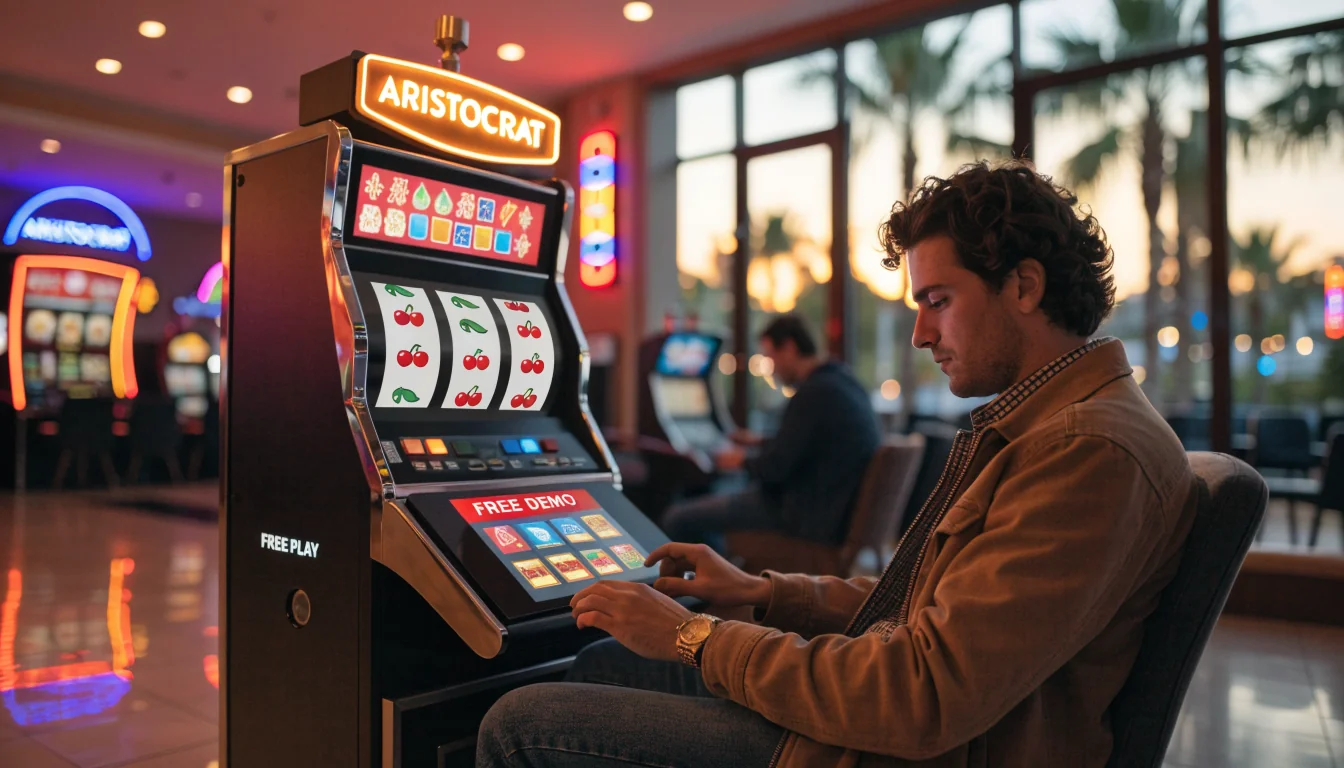
Worth separating this from what it actually is. These are demo builds running on random number games, playing for points that mean nothing once the tab closes. No withdrawal, because there’s nothing to withdraw. That’s the whole model.
It’s also the only version of online table games that sits comfortably inside the law here. Real-money online casino table games aren’t licensed domestically — offering that service to Australians isn’t something a local operator can do. Browser-based free play doesn’t touch that line at all, since nothing of value changes hands.
So the two things get marketed side by side sometimes, "free" and "real money," as if they’re the same product with a different price tag. They’re not. One’s a game. The other’s a regulated activity that happens somewhere else entirely.
Bitcoin Table Games vs Traditional Online Table Games
The word "crypto" gets attached to a lot of marketing, as if paying in Bitcoin changes what’s legal. It doesn’t. The currency a table game is denominated in has no bearing on whether offering that game to Australian residents is permitted.
It isn’t. Offering online casino gambling in Australia is illegal, and no domestic licence exists for it — a fact true whether the operator settles in Australian dollars, Bitcoin, or Ethereum. Blockchain-based blackjack tables are not a separate, unregulated category sitting outside the Interactive Gambling Act. They fall under the same prohibition as any other online casino table game.
Practically, the two experiences look similar: same random number games, same dealer-mediated live tables where those are on offer. The difference is in the payment rail, not the legal category.
One narrow point worth naming plainly: live, in-play betting online is illegal here, though live betting placed by phone is not. That distinction has nothing to do with cryptocurrency — it’s a hole in the law that predates blockchain payments entirely, and no coin changes it.
Pai Gow Poker as a Table Game in Australian Casinos
Pai Gow Poker sits in an odd corner of the table-game floor: built from a Chinese domino game, dressed up with a standard deck plus a joker, and sold to Western players as a slow, low-volatility alternative to blackjack. The pace is the point. Hands get split into a high hand and a low hand, both measured against the dealer’s, and a lot of rounds end in a push. For a floor that makes money on volume, that’s a strange thing to offer — but it keeps players seated longer, and a seated player is a player who hasn’t cashed out.
Whether a given land-based venue actually spreads it is a house-by-house question; it’s not a fixture the way blackjack or roulette is. Where it does show up, it’s usually one table among many, not a section of its own.
Its online status follows the same line as every other table game discussed elsewhere here: no domestically licensed real-money version exists, because no domestic real-money online casino licence exists at all.
Table Game Offerings in Canadian Casinos – Relevance for Australian Players
Canada runs its casino industry on a provincial licensing model, closer in spirit to how Australian states license land-based venues than to anything federal. Provincial regulators issue licences to physical casinos, and — unlike Australia — some provinces also licence online real-money table games directly, since Canada’s federal law doesn’t carry the same blanket prohibition as the Interactive Gambling Act 2001.
That difference matters more than the games themselves. An Australian reading about a Canadian site offering real-money blackjack or roulette online might assume the same product is one click away at home. It isn’t. The Interactive Gambling Act 2001 prohibits online casino games — including roulette and blackjack — from being offered to Australian residents, full stop. A Canadian provincial licence carries no weight here and doesn’t make the offer legal for an Australian player.
Cross-border comparison is useful for understanding how differently jurisdictions treat the same games. It’s not a shortcut to playing them legally from Melbourne or Perth.
Created by the ”Casino Cities Guide” editorial team.