
Best Pokies in Brisbane: Where to Play and What to Know
Physical Pokies in Brisbane: Locations and Regulations
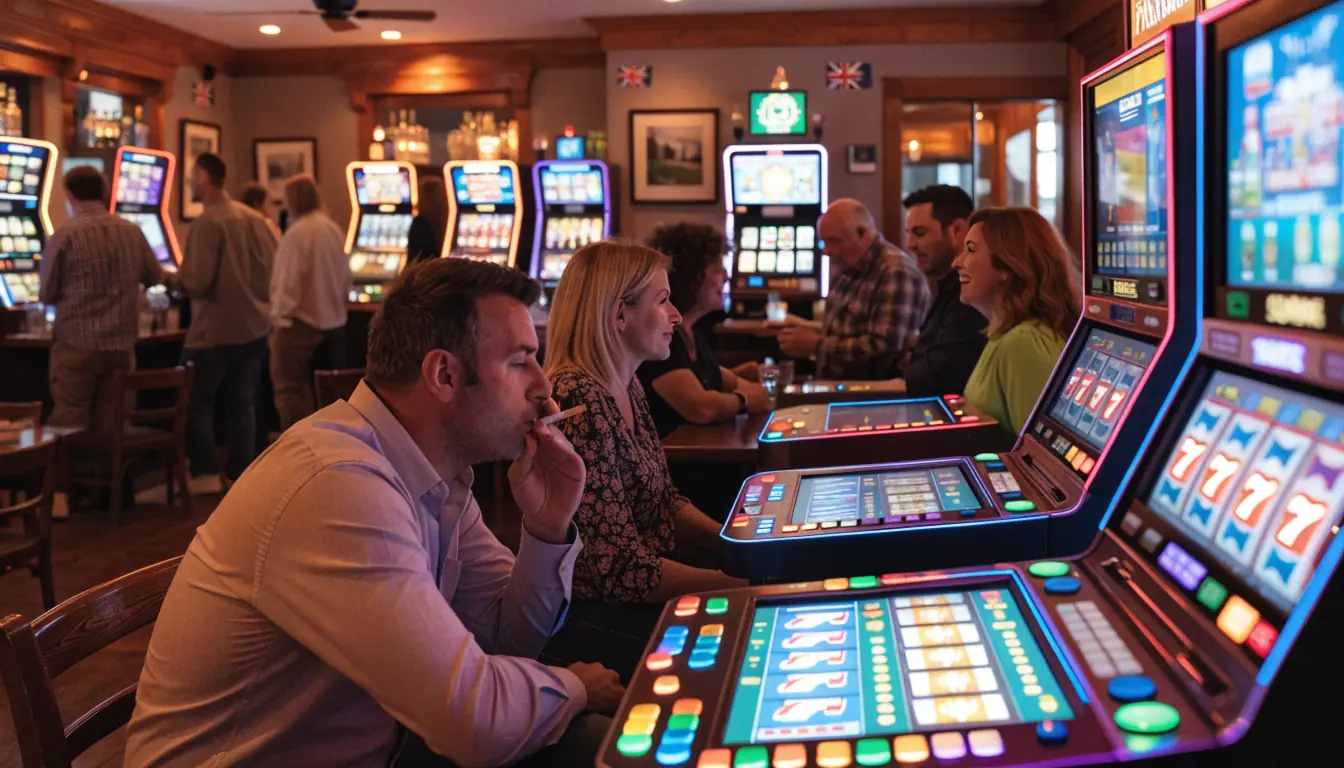
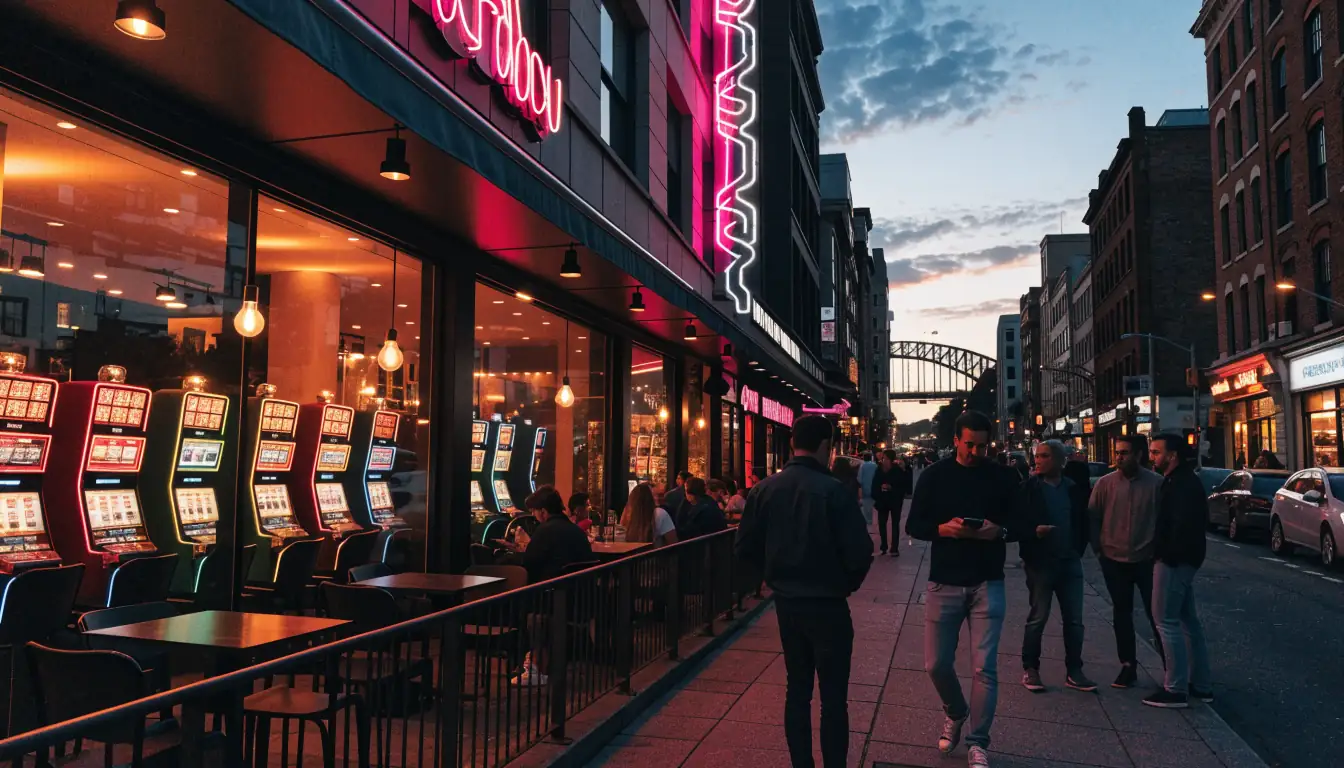
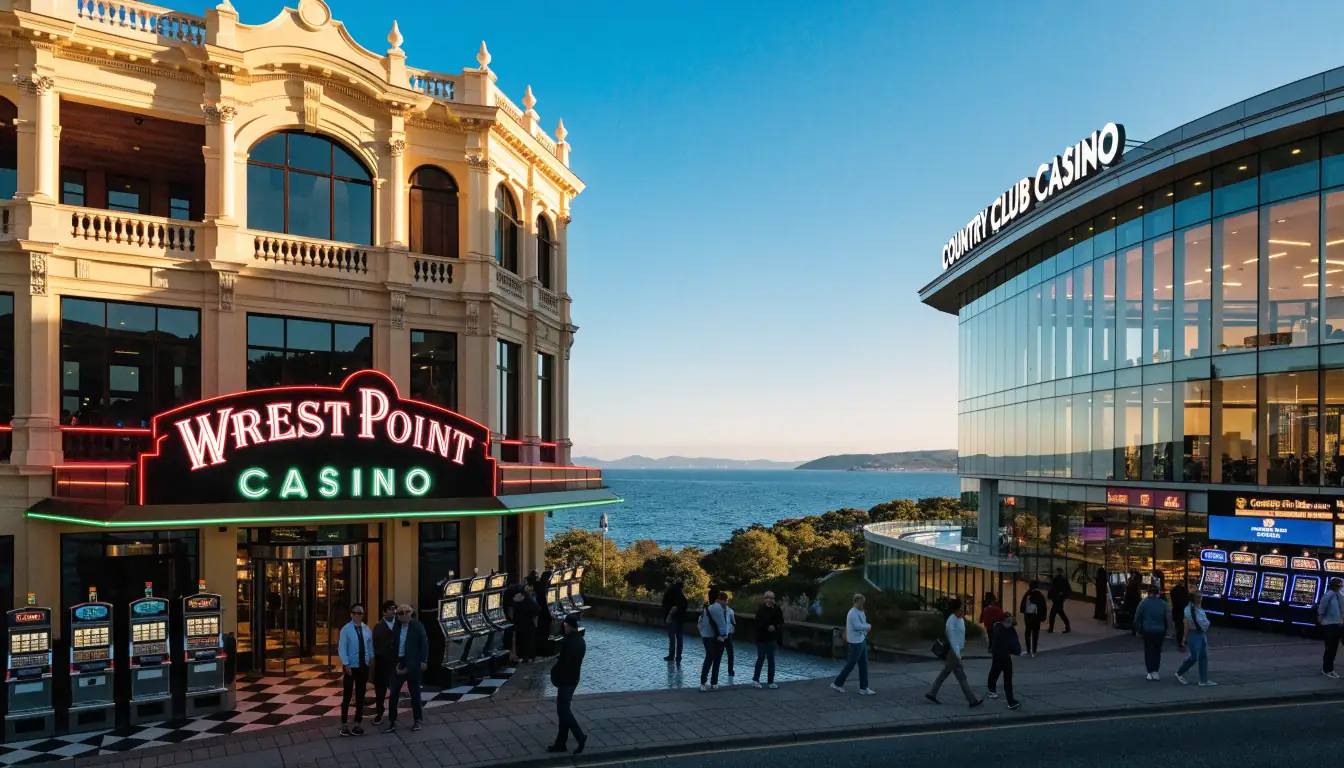
Brisbane has plenty of pokies, and it’s worth being upfront about where they actually are before touching anything else. Most of them aren’t in a casino at all. They’re in the pub down the road, in the RSL where your grandfather used to drink, in the leagues club attached to a footy oval. The casino floor is a small, visible fraction of a much larger, quieter machine that sits in the walls of ordinary licensed venues across the city.
I’ve spent time on the operations side of licensed venues, and one thing becomes obvious fast: the pokie room is never the front of the building. It’s the back room, the side room, the bit past the bistro that doesn’t get photographed for the website. That’s not an accident. It’s a layout decision, and it tells you something about how this whole sector is built — around foot traffic that came in for something else and stayed for one more spin.
Before picking a pokies site to play at in Brisbane, it helps to compare licensing, bonus terms and payout speeds side by side so you know what you’re actually signing up for.
License: international iGaming licence – jurisdiction not named in the source · Bonus: 100% up to A$1,000 + 100 free spins, 35x wagering · Payout speed: PayID 1-24 hours · Min. deposit: A$30 (PayID from A$10) Holds an international iGaming licence and offers a matched welcome bonus with free spins, backed by fast PayID withdrawals processed within a day and a low minimum deposit via PayID.
License: Curacao – Antillephone N.V. (Versus Odds B.V.) · Bonus: up to EUR 2,000 across 5 deposits + 200 free spins · Min. deposit: EUR 20 Licensed in Curacao under Antillephone N.V., this operator spreads a sizeable welcome package with free spins across five deposits, with an accessible minimum deposit.
License: Curacao eGaming OGL/2023/174/0082 (Dama N.V.) · Bonus: up to A$10,000 + 500 free spins across 4 deposits · Min. deposit: A$15 Operating under a Curacao eGaming licence via Dama N.V., it offers a large multi-deposit welcome bonus with hundreds of free spins and a low minimum deposit.
Bonus: up to A$7,500 + 550 free spins across 10 deposits, 50x wagering · Payout speed: crypto under 1 hour, PayID 1-3 business days · Min. deposit: A$20 (A$30 to qualify for the bonus) Stands out for a generous welcome package spread over ten deposits with free spins, plus fast crypto payouts and PayID withdrawals processed within a few business days.
Bonus: 100% up to A$750 + 200 free spins, 35x wagering · Payout speed: crypto 30-120 minutes, fiat 24-72 hours · Min. deposit: A$30 Offers a 100% matched bonus with free spins and quick payout options, including crypto withdrawals within a couple of hours and fiat processed within a few days.
License: Curacao Gaming Control Board OGL/2023/176/0095 (Hollycorn N.V.) · Bonus: up to A$11,000 + 300 free spins (code NEO100) Licensed by the Curacao Gaming Control Board through Hollycorn N.V., featuring a substantial welcome bonus with free spins unlocked via a promo code.
License: Curacao Gaming Control Board (TechSolutions Group N.V.) · Bonus: 100% up to A$250 + 100 free spins (1st deposit) Regulated under a Curacao Gaming Control Board licence via TechSolutions Group N.V., with a straightforward first-deposit bonus that includes free spins.
License: Curacao Gaming Authority (Jumpman Gaming Ltd) · Bonus: up to A$6,600 + up to 250 free spins across 4 deposits Licensed by the Curacao Gaming Authority under Jumpman Gaming Ltd, providing a multi-deposit welcome offer with a solid free spins allowance.
License: Curacao OGL/2024/1335/0780 · Bonus: up to A$1,000 + 150 free spins, wager-free · Min. deposit: EUR 20 Holds a Curacao licence and stands out with a wager-free welcome bonus that includes free spins, plus a reasonable minimum deposit requirement.
License: Curacao eGaming (Hollycorn N.V., since 2017) · Bonus: 225% up to A$1,540 + 600 free spins across 4 deposits, 20x wagering · Min. deposit: A$20-30 (depends on the offer) Licensed by Curacao eGaming through the long-established Hollycorn N.V., offering a large multi-deposit bonus with hundreds of free spins and moderate wagering requirements.
Where the machines actually sit
Brisbane’s land-based pokies cluster into a few recognisable zones, each with a slightly different character depending on what kind of venue dominates it.
South Brisbane and South Bank. This is the polished end of the market. The precinct around South Bank carries the city’s only casino-style gaming floor, sitting alongside restaurants, the cultural precincts, and the river walk. Machines here are part of a broader entertainment offer — the venue wants you to eat, drink, watch a show, and gamble, in whatever order suits the night. The gaming floor operates on a different regulatory footing to the pub down the street, which I’ll get into below, but from a punter’s point of view the practical difference is atmosphere and machine variety rather than anything mechanical.
Northside Brisbane. North of the river the pattern flips. Fewer flagship venues, more suburban pubs and RSLs with a modest bank of machines tucked behind the bistro. Chermside, Aspley, the corridor running up toward Strathpine — this is where the everyday pokies economy lives, in venues that also do Sunday roasts and trivia nights. The machines are older on average in some of these rooms, the selection narrower, but they’re closer to where people actually live, which is the whole point of a suburban licence.
The inner south and west. Leagues clubs and bowls clubs hold a disproportionate share of licences here. Membership-based venues have their own rhythm — quieter on weekday afternoons, busier when there’s a home game or a members’ function running in the next room.
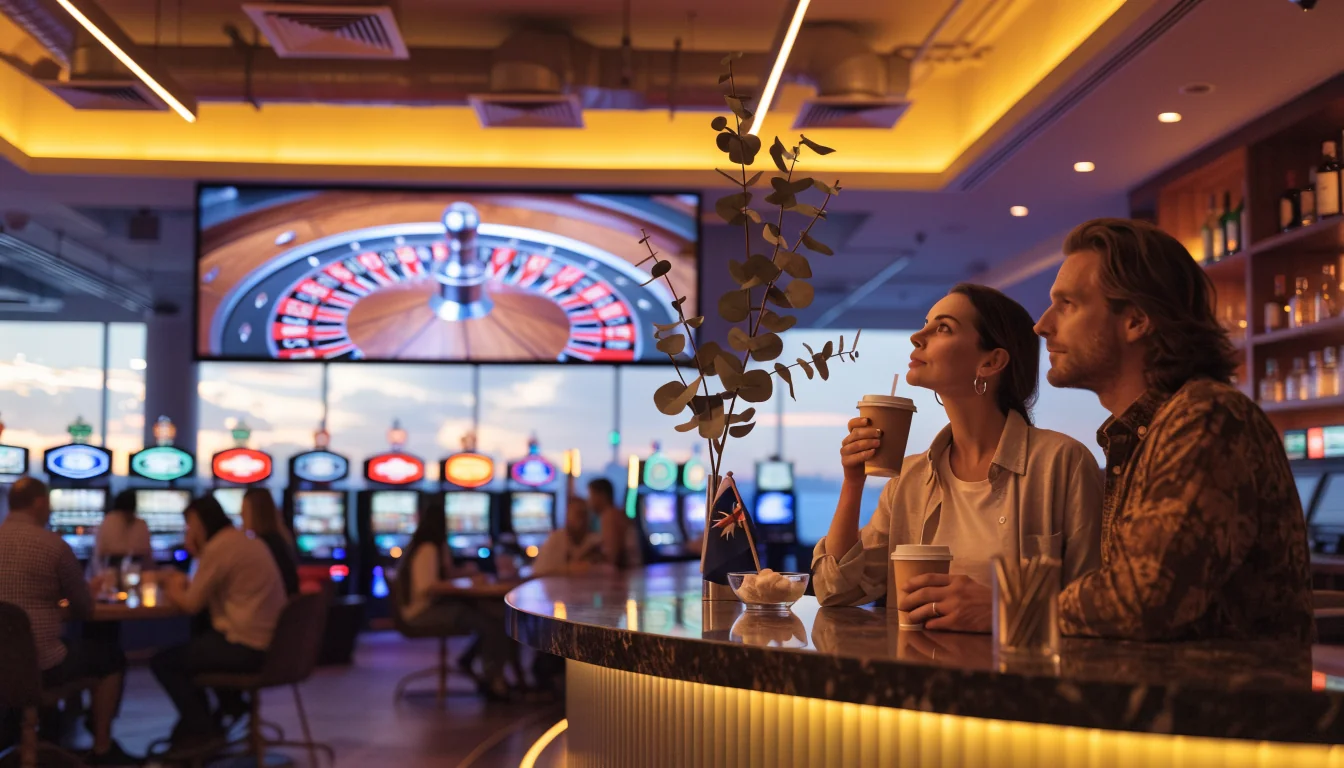

None of this is exhaustive, and venue mix changes as leases turn over and clubs merge or close. What doesn’t change is the underlying structure: casino floor in one category, everything else — pubs, clubs, RSLs — in another, governed by different rules even when the machines look identical from the front.
Two different animals wearing the same coin slot
Here’s the bit that trips people up, including some staff who should know better: a poker machine in a Brisbane pub and a poker machine on a casino floor are not licensed the same way, even if the cabinet is identical and the game is identical.
Land-based gambling in Australia is regulated by state government bodies and law enforcement agencies — a completely separate system from the federal oversight that applies to anything online. That split matters more than most players realise. It means the casino floor at South Bank, the pokies room in a Fortitude Valley pub, and the machines in a suburban RSL are all sitting under state authority, not under some national gambling commission that oversees the whole country the way, say, a national broadcasting regulator might. Queensland runs its own house.
I’ve sat in enough compliance briefings to know the phrase "separate but parallel" gets used a lot, and it’s accurate. Casinos, pubs, and clubs each answer to state licensing conditions, but the specific conditions attached to a casino licence (extended trading hours, a broader mix of table games plus machines, different reporting obligations) are not the same conditions attached to a hotel or club licence, even though both categories sit under the same state umbrella. A pub owner can’t simply decide to run the casino floor’s hours or game mix because they hold a liquor licence with a gaming component — the two licence types come with different obligations baked in from the start.
Regulatory shift
When you move from a casino floor to a suburban pub, you’re also switching to a different state regulator that monitors the venue’s licensing conditions. Ignoring this can lead to misunderstandings about what is allowed and when.
This is worth knowing if you’re the kind of player who moves between a Saturday night at South Bank and a Tuesday afternoon at the local. You’re not just changing venues. You’re changing which piece of the regulatory apparatus is actually watching the floor.
Why every state runs its own show
Australia doesn’t have one gambling regulator that oversees the whole country’s land-based scene. Each state and territory runs its own — a structure that looks strange from outside but makes more sense once you remember gambling revenue and licensing has historically been a state matter, tied into state budgets, not a federal one.
Queensland’s system covers Brisbane’s venues directly: casino floors, pub gaming rooms, club gaming rooms, all licensed and monitored within the state’s own framework, separate from whatever happens in Victoria, New South Wales, or anywhere else. That’s not a footnote — it’s the reason a machine’s approval, a venue’s trading conditions, and the compliance checks that apply to a Brisbane pub don’t automatically mirror what’s happening in Melbourne or Sydney, even for an identical cabinet made by the same manufacturer.
Other states show how far this separation actually goes. In Victoria, for instance, the Victorian Gambling and Casino Control Commission doesn’t limit itself to venues physically located in Victoria — it monitors wagering service providers more broadly for compliance with the national consumer protection framework that spans multiple states. That’s a genuinely unusual arrangement: a state regulator with a watching brief that extends past its own border on a specific compliance question. It tells you the states do talk to each other and do coordinate on shared standards where it matters, even while each one keeps its own licensing authority intact for the venues sitting inside its own borders.
For Brisbane specifically, this means: the pub, the club, and the casino floor are all licensed under Queensland’s own regulatory structure, and that structure doesn’t hand any authority to a body in another state. If you’ve read about a scandal or a compliance crackdown in a different state’s gaming rooms, it’s not automatically relevant to what’s sitting on the floor at your local RSL. Different regulator, different paperwork, sometimes different outcome for what looks like the same problem.
What "regulated" actually covers on the floor
It’s worth being specific about what state regulation actually touches, because "regulated" gets thrown around as a comfort word without much behind it.
State law enforcement and gambling regulators oversee land-based venues on questions like: who’s allowed to hold a gaming licence, how machines are approved before they hit a floor, how venues report their gaming activity, and how compliance is checked over time. This is a genuinely different job to what happens federally with online gambling, where the Australian Communications and Media Authority polices offshore operators trying to reach Australian residents over the internet. The state regulator watching a Brisbane pub’s gaming room has never had anything to do with an offshore website — that’s not their jurisdiction and never has been.
State regulators oversee who can hold a licence, how machines are approved, and how venues report activity, while the federal ACMA only polices offshore online operators. The two systems operate side‑by‑side but do not overlap.
I mention this because players sometimes assume "the government regulates gambling" as a single flat statement, as if there’s one office somewhere issuing one set of rules for every machine in the country, physical or digital. There isn’t. The machine in front of you at a Fortitude Valley pub answers to Queensland’s state framework. A game running on a website answers, if it answers to anyone at all in Australia, to a federal law aimed at operators rather than venues. These are not overlapping systems with one calling the shots — they’re parallel systems that happen to both use the word "pokies" for what’s on offer.
The venues themselves: pubs, clubs, and the one casino floor
Pubs. The bulk of Brisbane’s machine count sits in hotels — what Queenslanders just call pubs — that hold a liquor licence with an attached gaming component. These rooms are typically smaller than a club’s, tucked away from the main bar, often separated by a door or a change in flooring that signals "different room, different rules apply past this point." Age verification is checked at entry to these rooms specifically, on top of whatever’s checked at the front door of the pub itself.
Clubs. RSLs, leagues clubs, bowls clubs, and other membership-based venues run some of the larger gaming floors in the suburbs. Because these are membership organisations first, the gaming room often has a slightly different feel — less transient foot traffic, more regulars, sometimes a loyalty or rewards structure tied to club membership rather than to the machines themselves. The machines are still licensed under the same state gaming framework as a pub’s, but the surrounding business model (membership fees, subsidised meals, function hire) changes the room’s rhythm.
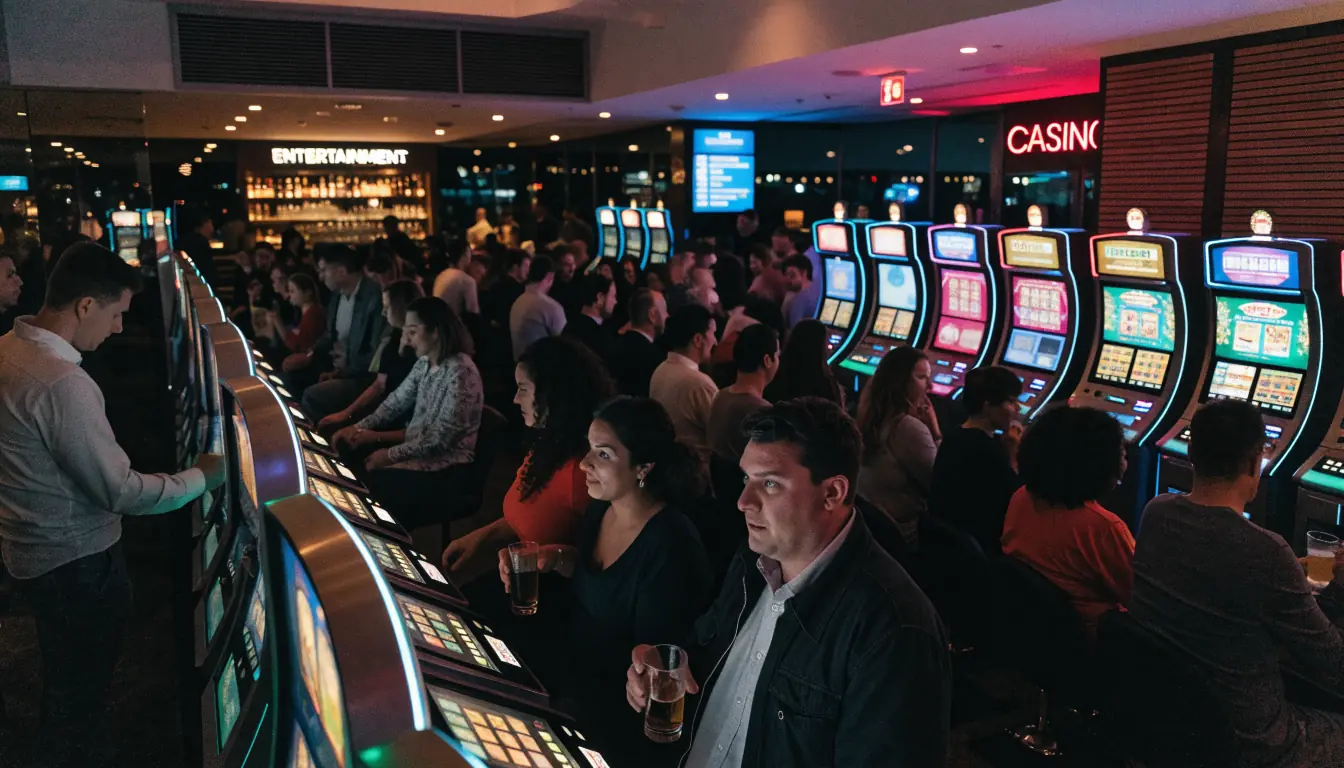
The casino. South Bank’s gaming floor is the one venue in Brisbane operating under a full casino licence rather than a hotel or club gaming licence. That licence type brings a broader mix of games — more machine variety, table games alongside the pokies — and different trading conditions to what a pub or club can offer. It’s also the venue most likely to run themed machines tied to recognisable entertainment properties; Australian pokies floors generally include machines built around well-known TV shows and films, and a casino-scale floor has the room to stock more of that variety than a suburban pub with a dozen machines against one wall.
None of these three categories are interchangeable in terms of what licence sits behind them, even though a player walking in the door mostly just sees "machines" and doesn’t clock which licensing category they’ve stepped into.
Hours: what "24 hour" actually means at ground level
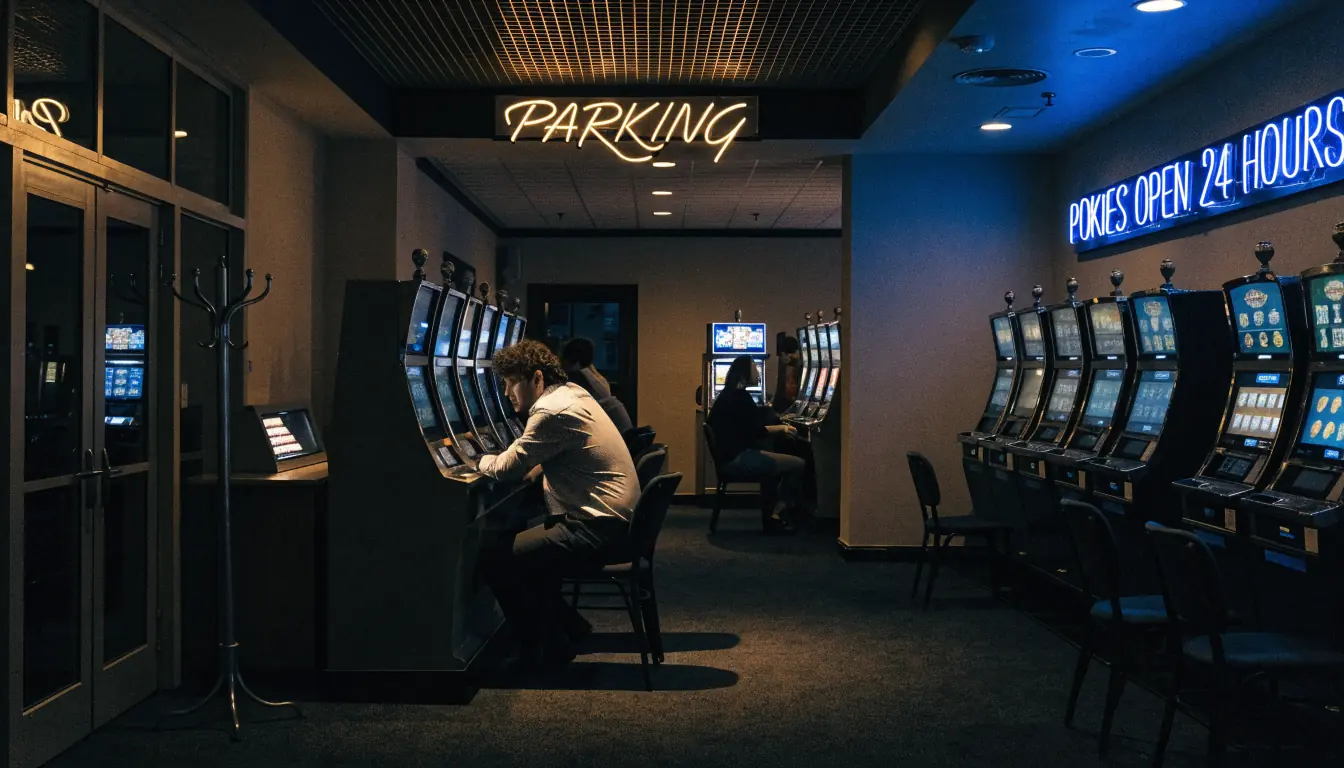
People ask about round-the-clock pokies in Brisbane a lot, and the honest answer is that trading hours are set at the venue and licence level, not as a blanket rule across the whole city. A casino floor’s licence conditions typically allow for extended hours that a suburban pub simply doesn’t have written into its own licence. That’s a structural difference, not a matter of one venue choosing to stay open later out of ambition.
Trading hours
A casino’s licence may allow 24‑hour operation, but most pubs and clubs must close when their liquor licence expires. Always check the venue’s specific hours before planning a late‑night session.
What that means practically: if you’re chasing a machine at 3am, your options narrow fast outside the casino precinct. A pub’s gaming room shuts when the pub’s licence says it shuts, and that’s set by conditions attached to a hotel licence, not by how busy the room might be on a given night. Clubs run on their own trading hours too, often tied to club constitution rules on top of the state licence conditions.
I’d be cautious about treating any specific hours as fixed and unchanging, because trading conditions attached to individual venue licences aren’t something that gets published in one central, easy-to-check place for the public, and they can shift with licence renewals or venue-specific approvals. What’s reliable is the structural point: the casino operates under different hour conditions to pubs and clubs by virtue of holding a different category of licence altogether, and that gap is where most of the "is this place open right now" confusion comes from.
Cashless play and the direction the floor is heading
Brisbane’s gaming rooms, like gaming rooms across the country, have been moving toward cashless play options on machines — cards or account-based systems instead of feeding notes into a hopper. This isn’t a Brisbane-specific quirk; it’s part of a broader shift in how state regulators think about tracking play and managing harm minimisation on the floor, since a cashless system leaves a cleaner record than cash ever did.
I won’t pretend to know the exact rollout timeline venue by venue, because that detail isn’t something publicly tracked in a single reliable source, and guessing at it would be worse than saying nothing. What I can say with confidence is that this shift sits entirely within state jurisdiction — it’s a land-based venue and machine question, decided and implemented at the state regulatory level, and it has nothing to do with the federal law that governs online gambling. Two completely different conversations that happen to share the word "cashless."
Age checks: the one rule that doesn’t bend anywhere
Every gaming room in Brisbane, regardless of whether it’s a pub, a club, or the casino floor, only allows entry to people 18 and over. This isn’t a house policy some venues choose to enforce more strictly than others — it’s the minimum legal gambling age across Australia, full stop, and it applies uniformly whether you’re walking into a suburban RSL on a Tuesday afternoon or the casino floor on a Saturday night.
ID gets checked at the door of the gaming room itself in most venues, on top of whatever’s checked at the front entrance of the pub or club. I’ve seen venues get this wrong exactly once and then never again — the compliance consequences for a venue that lets someone underage onto the floor are the kind of thing that ends careers, not just shifts. If a venue looks lax about checking ID at the gaming room door, that’s a genuine red flag about how seriously it takes its licence conditions more broadly, not just about age.
What doesn’t come with the machine
One thing worth saying plainly, because the marketing around gaming rooms tends to gloss over it: none of the structural detail above — which state regulator, which licence category, which trading hours — tells you anything about how a specific machine plays, what it pays out, or how volatile a session on it will feel. That’s a different question entirely, tied to the specific game and cabinet rather than to the venue’s licence type.
Venues also don’t typically publish return rates on a machine-by-machine basis in a way that’s easy for a walking-in punter to check before they sit down. If you’re after that kind of detail, it’s a fair thing to want, but it’s not something the physical venue side of this hands you on a plate — worth keeping in mind before assuming the venue’s reputation tells you anything about a specific machine’s behaviour.
Complaints and where they actually go
If something goes wrong on a land-based floor in Brisbane — a machine malfunction, a dispute over a payout, a concern about how staff handled an incident — the complaint pathway runs through the venue itself first, then up through Queensland’s own state gambling regulator and law enforcement structure if it isn’t resolved at venue level. This is a genuinely separate complaint pathway to anything involving an online operator, because the whole regulatory chain behind it is separate: state authority for the venue, not a federal body, and not an offshore licensing authority either.
Support services exist outside the venue too. Gambling Help Online operates independently of any specific venue or regulator and is available regardless of whether the issue happened on a casino floor, in a pub’s gaming room, or somewhere else entirely. Worth knowing that pathway exists before you need it, not after.
A quick word on what changes and what doesn’t
Venue mix in Brisbane shifts — pubs close, leases turn over, clubs merge, a machine bank gets refreshed. What stays constant is the two-tier structure underneath all of it: state regulation for everything physical, a completely different federal framework for anything online, and no overlap between the two systems in terms of who’s actually watching. That divide is the single most useful thing to carry with you walking into any gaming room in this city, more useful than knowing which suburb has the newer machines this year.
The next section moves to the online side of this — a different regulatory world entirely, and one where "which state licensed this" isn’t even the right question to ask.
Online Pokies Available to Brisbane Players
No Brisbane resident can hold an account with a domestically licensed online pokies operator, because that licence category doesn’t exist in Australia. What Brisbane players actually use are offshore-licensed sites, and understanding why that split exists matters more than any bonus headline.
There’s no single law or single regulator covering all of gambling here. Land-based venues answer to state agencies; online activity falls under a federal statute enforced by the Australian Communications and Media Authority (ACMA). Two different systems, two different rulebooks, and a Brisbane player sits at the intersection of both without necessarily realising it.
Australian residents cannot use a domestically licensed online pokies operator because no such licence exists. All online sites targeting Brisbane players are offshore and fall under the federal Interactive Gambling Act.
Where the games actually run
Offshore platforms build their pokies libraries on software from providers most Australians have never had reason to name until they started playing online. Multiple providers operate in this space — different math models, different reel counts, different bonus mechanics inside the games themselves. A "provider" here isn’t a brand you deposit with; it’s the studio that built the game engine behind whichever title loads on screen.
Compatibility across desktop and mobile is standard on these platforms. That much is consistent industry-wide — a pokie that only runs on one device type doesn’t survive in this market. What varies is everything downstream of that: which jurisdiction licensed the operator, how withdrawals are processed, what identity checks apply before money moves.
Bonus structures — read the actual terms, not the banner
"Welcome bonuses" and "no deposit bonus codes" are the two phrases every operator’s landing page leads with. Fair enough — that’s the language players search for, and it’s the language operators write in. What the banner doesn’t say is what the wagering requirement attached to that bonus actually costs you before you can withdraw anything, and by rule, that number has to be shown up front, not buried three clicks deep in a terms page.
One detail worth flagging: according to one industry review, some Australian-facing online operators run deposit bonus packages timed to major football competitions. That’s not a universal feature of the market — it’s one operator’s promotional calendar, observed by one source, and it changes with the sporting calendar itself. Don’t take it as something every site does year-round.
The regulatory gap that shapes everything else
Here’s the part operators don’t put in the footer. ACMA enforces the Interactive Gambling Act at the federal level, which bans offering online casino games — pokies included — to Australian residents. That law targets the operator, not the player. So a Brisbane resident spinning a pokie on an offshore site isn’t breaking the law personally, but the site offering that game to them, if it’s doing so from outside a legitimate framework, is operating in a grey zone the regulator actively polices.
That’s why you won’t find a licence number in the footer pointing to an Australian gambling authority — there isn’t one to display, because no such licence exists for this activity. Any site implying otherwise is misdescribing its own legal position.
Support channels on these platforms typically run through email, which is worth knowing before a withdrawal dispute happens rather than during one.
"Self-exclusion" tools exist on many of these platforms directly, separate from anything Brisbane’s land-based venues offer, and separate again from national services like BetStop. They don’t talk to each other. Excluding yourself from one doesn’t touch the others.
None of this is static. Enforcement priorities shift, platforms come and go, and what’s compatible or offered today isn’t guaranteed next year. Staying current on which services and practices actually apply — rather than relying on what a site claimed when it launched — is the only realistic approach here.
Know the split. Play accordingly.
Understanding Pokies Payout Percentages in Brisbane
Ask a venue how a payout percentage is set and you’ll get a shrug or a marketing line. That’s not an accident.
For land-based machines, figures come from the manufacturer and get checked against state rules — a process I’ve watched from the operator’s side, and it’s slower and more paper-heavy than anyone admits in a lobby brochure. For anything online, the picture changes completely. The Interactive Gambling Act 2001 governs online gambling federally in Australia, with harm minimisation as its stated purpose — not payout disclosure. It doesn’t mandate a published percentage for offshore slots, and no Brisbane-facing regulator audits those figures the way a state body might check a physical cabinet.
Software providers set their own numbers. NetEnt, for instance, operates under a UK licence, not an Australian one, so whatever percentage it publishes answers to a different regulator entirely.
Read that gap correctly: "verified" often means verified somewhere else.