
Best Low Volatility Slots in Australia for 2026

Table of Contents
- Understanding Low‑Volatility Slots – Definitions and Key Characteristics
- What Makes a Slot Machine Low‑Volatility? Mechanics and Gameplay
- Pragmatic Play’s Low‑Volatility Offerings
- Low‑Volatility Pokies in the Australian Market
- Highest‑RTP Low‑Volatility Slots Available to Australian Players
- Popular Low‑Volatility Slot Games to Play in 2026
- Regulatory Framework for Online Slots in Australia
Understanding Low‑Volatility Slots – Definitions and Key Characteristics
Volatility is the one word every pokies review throws around and almost nobody defines properly. It’s not RTP, it’s not "luck", and it’s not a marketing label some provider slapped on a game to make it sound safer. Volatility describes the shape of a slot’s payouts over time — how often it pays, and how big those payouts tend to be when they land. Get that distinction straight and the rest of this market stops looking like guesswork.
What "low-volatility" actually means
A low-volatility slot is built to release money back to the player often, in small amounts. You spin, you get a return — not a life-changing one, but enough that your balance doesn’t fall off a cliff after twenty spins. The wins are modest and the frequency is the whole point. Low-volatility slots pay out more frequently but with smaller rewards, and that single sentence is the entire mechanism behind why these games feel the way they do at the reels.
Since low volatility slots reward patience with steadier, smaller wins, it’s worth checking where you play them – things like payout speed, deposit minimums and how the welcome bonus is structured can make a real difference to your session.
License: international iGaming licence – jurisdiction not named in the source · Bonus: 100% up to A$1,000 + 100 free spins, 35x wagering · Payout speed: PayID 1-24 hours · Min. deposit: A$30 (PayID from A$10) Holds an international iGaming licence and offers a solid welcome package of 100% up to A$1,000 plus 100 free spins with 35x wagering. PayID withdrawals are processed within 1-24 hours, and the minimum deposit is A$30 (or A$10 via PayID).
License: Curacao – Antillephone N.V. (Versus Odds B.V.) · Bonus: up to EUR 2,000 across 5 deposits + 200 free spins · Min. deposit: EUR 20 Licensed in Curacao under Antillephone N.V., this operator spreads its bonus across five deposits for a total of up to EUR 2,000 plus 200 free spins, with a low EUR 20 minimum deposit.
License: Curacao eGaming OGL/2023/174/0082 (Dama N.V.) · Bonus: up to A$10,000 + 500 free spins across 4 deposits · Min. deposit: A$15 Operating under a Curacao eGaming licence via Dama N.V., it offers a large bonus of up to A$10,000 plus 500 free spins across four deposits, with a low A$15 minimum deposit.
Bonus: up to A$7,500 + 550 free spins across 10 deposits, 50x wagering · Payout speed: crypto under 1 hour, PayID 1-3 business days · Min. deposit: A$20 (A$30 to qualify for the bonus) A generous multi-deposit bonus of up to A$7,500 plus 550 free spins across ten deposits with 50x wagering. Crypto withdrawals land in under an hour, while PayID takes 1-3 business days; minimum deposit is A$20, or A$30 to qualify for the bonus.
Bonus: 100% up to A$750 + 200 free spins, 35x wagering · Payout speed: crypto 30-120 minutes, fiat 24-72 hours · Min. deposit: A$30 Offers a 100% match up to A$750 plus 200 free spins with 35x wagering. Crypto payouts are quick at 30-120 minutes, fiat withdrawals take 24-72 hours, and the minimum deposit is A$30.
License: Curacao Gaming Control Board OGL/2023/176/0095 (Hollycorn N.V.) · Bonus: up to A$11,000 + 300 free spins (code NEO100) Licensed by the Curacao Gaming Control Board through Hollycorn N.V., with a sizeable bonus offer of up to A$11,000 plus 300 free spins using a bonus code.
License: Curacao Gaming Control Board (TechSolutions Group N.V.) · Bonus: 100% up to A$250 + 100 free spins (1st deposit) Regulated by the Curacao Gaming Control Board under TechSolutions Group N.V., offering a straightforward first-deposit bonus of 100% up to A$250 plus 100 free spins.
License: Curacao Gaming Authority (Jumpman Gaming Ltd) · Bonus: up to A$6,600 + up to 250 free spins across 4 deposits Licensed under the Curacao Gaming Authority via Jumpman Gaming Ltd, offering a bonus of up to A$6,600 plus up to 250 free spins spread across four deposits.
License: Curacao OGL/2024/1335/0780 · Bonus: up to A$1,000 + 150 free spins, wager-free · Min. deposit: EUR 20 Holds a Curacao licence and stands out for a wager-free bonus of up to A$1,000 plus 150 free spins, with a EUR 20 minimum deposit.
License: Curacao eGaming (Hollycorn N.V., since 2017) · Bonus: 225% up to A$1,540 + 600 free spins across 4 deposits, 20x wagering · Min. deposit: A$20-30 (depends on the offer) Licensed by Curacao eGaming through Hollycorn N.V. since 2017, offering a substantial 225% bonus up to A$1,540 plus 600 free spins across four deposits with 20x wagering; minimum deposit varies between A$20-30 depending on the offer.
Contrast that with a high-volatility machine. High-volatility slots pay out infrequently but with larger wins — long dry stretches where nothing much happens, broken occasionally by a hit that actually moves the needle. Same starting bankroll, same number of spins, completely different emotional ride. One drips, one dams up and then floods.
Neither structure is "better" in some absolute sense. They’re built for different appetites and different sessions. What matters is knowing which one you’re sitting in front of before your balance tells you the hard way.
Reading the pay table like a technician, not a gambler
Here’s something the flashy demo reels never show you: the pay table is where volatility actually lives. Pay tables can indicate a slot’s volatility, and once you know how to read one, you stop needing anyone’s "top 10" list to guess at a game’s behaviour.
Look at the gap between the smallest paying combination and the largest. On a low-volatility machine, that gap is usually narrow — the jump from a three-symbol win to a five-symbol win on the same line won’t be dramatic. On a high-volatility title, that same jump can be enormous, sometimes by orders of magnitude, because the whole design is stacked toward rare, oversized outcomes rather than steady returns.
I used to sit with pay tables the way some people read contracts — because that’s basically what they are. A pay table is the terms of the deal, just presented in symbols instead of paragraphs. The provider isn’t hiding volatility from you. They’re publishing it, in the one place almost nobody bothers to look properly.

None of this means every low-paying symbol structure automatically signals low volatility, and no provider publishes a single "volatility number" you can compare across the board like RTP. But the pattern in the pay table — tight spread, frequent small wins signalled across multiple line values — is the closest thing to a fingerprint this mechanic leaves behind.
Why the frequency-versus-size trade-off exists at all
Slot design isn’t charity. Every game has to balance out mathematically over its lifetime, which means the math behind the reels distributes a fixed pool of return in one of two general directions: spread thin across many outcomes, or concentrated into rare ones.
A low-volatility slot spreads that pool thin. It’s built to keep giving small returns, spin after spin, so the player’s balance moves in gentle waves rather than sharp drops and spikes. A high-volatility slot concentrates that same pool into fewer, larger events — most spins return nothing or close to nothing, and the design banks everything on the payouts that do land being big enough to justify the wait.
This is why volatility and RTP are not the same conversation, even though beginners conflate them constantly. RTP tells you the theoretical percentage of wagered money a slot returns over a very long run. Volatility tells you how that return gets delivered — smoothly or in bursts. A slot can carry a strong RTP figure and still be brutally high-volatility, meaning the return is real over the long haul but the short-term ride to get there is rough. Equally, a low-volatility slot with the same RTP figure will feel completely different in an actual session, because the money comes back steadily instead of sitting on the sidelines waiting for one big strike.
Warning! Low‑volatility slots still carry the risk of losing money quickly if the bankroll is small, because even frequent small wins can be outweighed by continuous bets.
Where low volatility earns its keep: the session, not the spin
The single biggest reason low-volatility slots get recommended for longer play isn’t sentiment, it’s arithmetic. Low-volatility slots allow for longer playing sessions with reduced risk. Frequent small returns mean the bankroll depletes slower, spin after spin, because a chunk of what you’re staking keeps cycling back rather than disappearing into a drought waiting for a jackpot that may never show up in that sitting.
This matters more than it sounds like it should. Most players don’t sit down planning to hit one enormous win and walk. They sit down to spend an evening, or a lunch break, or however long the session actually runs — and what determines whether that time is enjoyable or short and frustrating is almost entirely down to volatility, not luck. A high-volatility slot can burn through a bankroll in a handful of minutes if the dry stretch happens to land early. A low-volatility slot, by design, resists that outcome. It’s not immune to bad runs — nothing in this business is — but the shape of a bad run on a low-volatility machine tends to be shallower and slower, giving the player more spins, more time, and more chances to be in the game when something decent finally lands.

There’s a rubber-stamp phrase from the operator side of this business that I’ve heard used to sell low-volatility games as the "safer" option, and it needs unpacking rather than repeating. "Safer" here doesn’t mean lower loss over time — it means a smoother distribution of that loss. Nothing about volatility changes the underlying odds baked into the machine; it changes how those odds get delivered to you across a session. That’s a real and useful distinction. It’s also not the same thing as "better value," and treating it as such is where a lot of players get misled by their own optimism.
The other side of the trade: what low volatility gives up
Every design choice costs something, and low-volatility slots are no exception. Players may experience smaller jackpots and payouts compared to higher volatility games. That’s not a footnote — it’s the direct, unavoidable consequence of spreading the payout pool thin instead of concentrating it.

If the appeal of slots, for a given player, is the chance of one outsized hit — the kind of win that changes the shape of the night — a low-volatility machine will almost never deliver that. It’s not built to. The structure that gives you frequent small returns is the same structure that caps how large any single return can realistically be. There’s no way to have both a smooth, gentle payout curve and the occasional monster hit; the math doesn’t allow the same pool to do both jobs at once.
This is worth sitting with for a second, because it’s exactly the kind of thing that gets glossed over in "top low-volatility slots" roundups that only talk about the upside. The honest version is this: you’re trading the possibility of a big number for the reliability of small ones. Some sessions, that trade feels great — you play longer, you see your balance move in your favour more often, the whole thing feels controlled. Other sessions, you’ll watch someone two seats over hit something on a high-volatility machine that your low-volatility game structurally could never produce, and there’s no strategy that changes that outcome. It’s not bad luck. It’s the design doing exactly what it was built to do.
How the two structures actually feel, spin to spin
Numbers explain the mechanism, but the lived experience is what actually decides whether a player sticks with a game type. Here’s the practical difference, side by side:
| Low-volatility slots | High-volatility slots | |
|---|---|---|
| Payout frequency | Frequent | Infrequent |
| Typical payout size | Small | Large |
| Bankroll movement | Gradual, gentler swings | Sharp drops, occasional spikes |
| Session length (same bankroll) | Generally longer | Generally shorter |
| Biggest possible win | Capped lower | Capped higher |
| Feel during a dry patch | Shallow, easier to sit through | Steep, can end the session fast |
Nothing in that table is a guarantee for any specific session — volatility describes a pattern across many spins, not a promise about the next one. A low-volatility machine can still go cold for a stretch, and a high-volatility machine can pay early. What the table describes is the tendency built into the math, which is the only thing volatility was ever meant to communicate in the first place.
Volatility isn’t a rumour, it’s engineered
One thing worth being blunt about: volatility isn’t some emergent mystery that shows up after enough people have played a game and compared notes. It’s a design parameter, decided before the game ever reaches a screen. Someone on a mathematics team chose how the payout pool would be distributed across symbol combinations, chose how often bonus features trigger, chose the shape of the pay table. Every "low-volatility" or "high-volatility" label that gets attached to a slot afterwards is just describing a decision that was already made at the drafting stage.

That’s not a criticism of the practice — every industry that runs on probability designs deliberately, from insurance to lending. What’s worth flagging is that volatility isn’t a personality trait a slot develops through use; it’s baked in from the pay table outward, which is exactly why reading that pay table tells you more than any anecdote about someone’s "hot" or "cold" session ever will.
Why this distinction matters more in Australia’s current landscape
For Australian players specifically, understanding volatility carries a bit more weight than it might elsewhere, simply because of how the local market is structured around access rather than domestic licensing. There’s no local regulator stamping approval on individual game titles the way there might be in markets with licensed online casino operators, which means the usual "check the certified RTP disclosure" advice doesn’t map onto this market the same way. Players are largely left to read the mechanics themselves — the pay table, the payout pattern, the way a session actually plays out — because that information is often the most concrete thing available to lean on.

That’s precisely why the definitions matter more than the marketing. A slot labelled "low-volatility slots Australia" in a banner ad is making a claim about how the game behaves, not a claim about safety, legality, or guaranteed value. The label is only useful if the player understands what it’s actually describing: frequency and size of payout, nothing more, nothing less. Everything else — whether a session feels "fun," whether a particular game is "worth it," whether smaller wins add up to something satisfying over an evening — is a personal calculation that sits on top of the volatility structure, not inside it.
Matching volatility to what you’re actually there for
None of this is really about picking a "correct" volatility. It’s about being honest with yourself about what a session is for. If the point of the sitting is entertainment stretched over time — more spins, steadier balance movement, less chance of the whole thing ending in the first few minutes — low-volatility slots are built for exactly that. If the point is chasing one outsized result and accepting that most of the session will produce very little on the way there, that’s a different game entirely, and no amount of strategy on a low-volatility machine will substitute for the structure a high-volatility one is built with.
I’ve watched people sit down at a low-volatility machine expecting the thrill of a high-volatility one, get bored by the modest returns, and walk off convinced the game was "bad." It wasn’t bad. It was doing precisely what its pay table said it would do — they just hadn’t read it. The inverse happens just as often: someone expecting steady, comfortable play sits at a high-volatility title, gets chewed through in the first few minutes of a dry run, and walks away thinking the whole category of slots is rigged against them. It isn’t rigged. It’s mismatched — the wrong structure for the session they actually wanted.

Volatility, in the end, isn’t a mystery variable or a marketing flourish. It’s the mechanical answer to a very specific question: does this game want to give you a little, often, or a lot, rarely? Everything else about how a slot plays — the mood of a session, how long a bankroll lasts, whether the night ends on a high note or a shrug — flows downstream from that one structural choice.
What Makes a Slot Machine Low‑Volatility? Mechanics and Gameplay
Volatility isn’t a marketing label a studio slaps on a game after it’s built. It’s baked into the math model before a single reel spins — the pay table, the hit frequency, the size of the jumps between winning combinations. Everything else is decoration.
The pay table does the talking
Open the pay table on any slot and you’re looking at a blueprint of how the developer decided to distribute risk. On a low-volatility machine, the gap between the smallest win and the biggest win is deliberately narrow. A five-symbol line might pay a modest multiple of the stake rather than something that dwarfs it. That compression is the whole trick: instead of saving up the payout pool for one rare jackpot, the designer spreads it across many smaller, more frequent hits.
I used to think this made these games "simpler." It doesn’t — it makes them more disciplined. Someone had to decide, symbol by symbol, that the top prize wasn’t going to be the headline. That’s a harder sell internally than it looks, because a modest top prize doesn’t photograph well on a promotional banner.
Compare that to a high-volatility pay table, where you’ll often see one or two symbols carrying payouts far above everything else, with long stretches of near-misses in between. Same reel count, same number of paylines sometimes — completely different personality, because the numbers behind the curtain are different.

Hit frequency: the part nobody advertises
The pay table sets the size of wins; hit frequency sets how often they land. Low-volatility slots are tuned for a high hit frequency — more spins end in some kind of return, even if it’s just enough to cover the next spin. This is the mechanic that actually produces the "longer session" effect. It’s not luck. It’s the return-to-player percentage being delivered in small, frequent instalments rather than rare, large ones.
Nobody puts "hit frequency" on the game’s loading screen. It’s not exciting copy. But it’s the single number that determines whether a session feels like a slow bleed or a series of small top-ups.
Paylines and bet sizing work together
This is where player behaviour actually intersects with machine design, and it’s worth being precise about it. On machines built around multiple paylines, the sensible approach is to place smaller bets across more lines rather than a larger bet on fewer lines. Spreading stake this way increases the chances of catching one of those frequent small wins the machine is designed to hand out — you’re working with the volatility profile instead of against it.
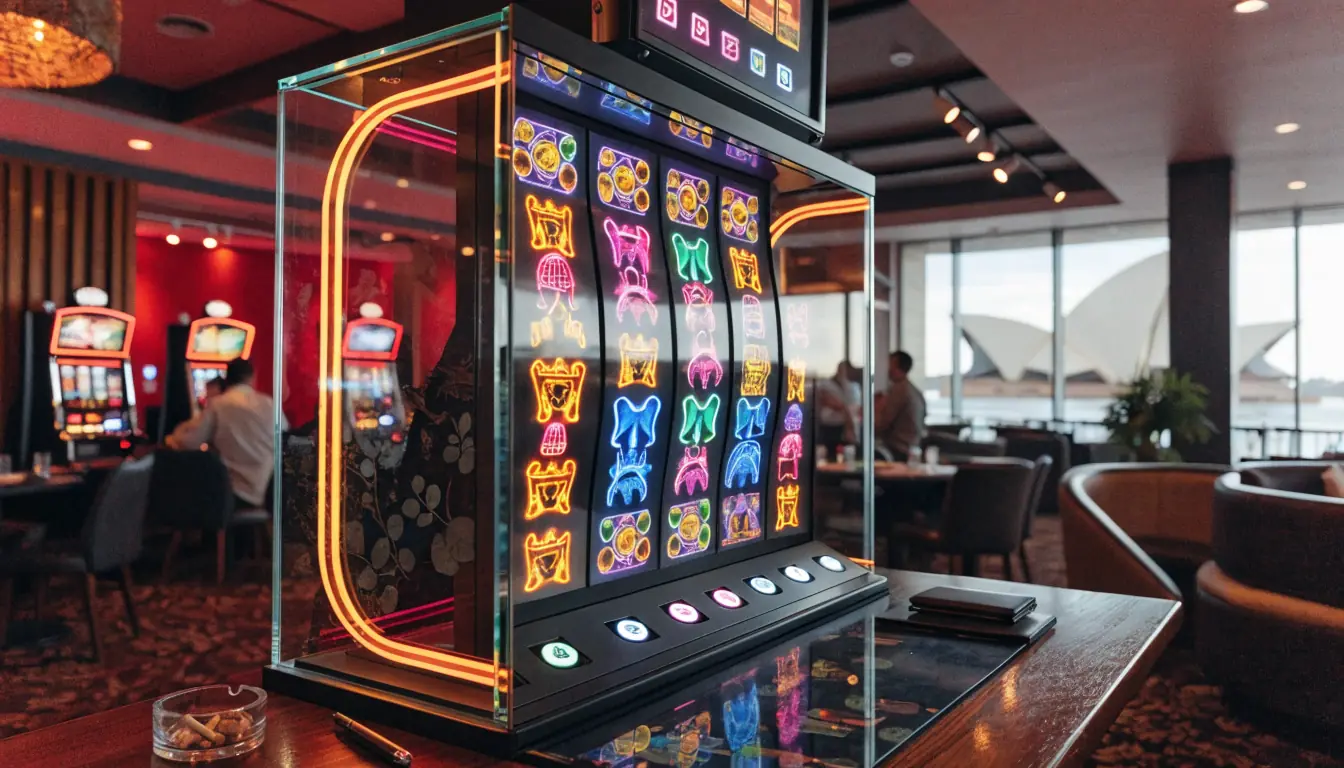
Put a large bet on a low-volatility, multi-payline game and you’ve effectively bought yourself the downside of a high-volatility game — bigger amounts lost per spin — without the corresponding upside, because the pay table was never built to produce big single wins in the first place. Mismatched bet sizing is one of the more common ways players end up frustrated with a game that, on paper, should have been forgiving.
Bonus features get toned down, not removed
Free spins, multipliers, expanding wilds — low-volatility slots still have these. What changes is scale. A bonus round on a low-volatility title tends to add modest value consistently, rather than occasionally exploding into something disproportionate. Multipliers cap lower. Free spin counts tend to be shorter but triggered more easily. The feature is there to keep the session lively, not to be the mechanism that delivers the one big result players are chasing.
This is a deliberate trade-off, not a lesser version of a "real" bonus feature. A high-volatility game might gate its biggest wins entirely behind a bonus round that triggers rarely. A low-volatility game distributes value more evenly across base gameplay and features alike, so no single moment carries outsized weight.
RTP delivery, not RTP size
It’s worth separating two things that get conflated constantly: the overall return-to-player figure, and how that figure gets delivered. Two slots can share a similar RTP and feel completely different to play, because one pays it out in a trickle of small, frequent wins and the other saves it for occasional large ones. Volatility describes the shape of the payout curve, not the total area underneath it.
That distinction matters when judging a machine. A low-volatility slot isn’t necessarily "worse value" — it’s the same value delivered on a different schedule. Whether that schedule suits a session depends entirely on what someone wants from the time spent playing, not on which model is objectively superior.
Reading it before you play
A few practical tells, gathered from actually sitting with pay tables rather than taking a game’s reputation at face value:
- Check the spread between top and bottom pay-table entries. A tight spread signals low volatility; a wide one signals the opposite.
- Look at how many symbols pay out at all. More paying combinations usually means more frequent, smaller returns.
- Note how bonus multipliers are capped. Modest caps point to a steadier, low-volatility design.
- Match bet size to the number of paylines. Smaller bets across more lines suit the low-volatility structure; it doesn’t suit throwing large stakes at a game built for frequent small returns.
None of this requires special access — it’s all sitting in the game’s own information screen, usually ignored because "how to play" pop-ups rarely get read past the first tap of "close."
Pragmatic Play’s Low‑Volatility Offerings
Pragmatic Play built its catalogue on volume rather than restraint — hundreds of titles, most of them leaning toward mid or high volatility, built for the kind of drama that gets clipped and shared. But scattered through that catalogue are a handful of low-volatility slots, and they tend to get overlooked precisely because "Pragmatic" has become shorthand for big-swing bonus rounds.
Wild Wild Chest sits in this quieter corner of the studio’s output. It’s built around steady, frequent returns rather than a single chase toward a jackpot feature, which puts it closer to the low-volatility category described elsewhere in this piece — smaller wins landing often enough to keep a session going rather than testing a player’s patience for one big spike.
That structure happens to suit how a lot of Australian players actually approach pokies-style games: shorter sessions, smaller bets spread across more paylines, less tolerance for long dry spells between wins. A provider producing even a small slice of low-volatility titles gives that audience something to reach for without wading through a catalogue built mostly for risk-tolerant play.
Worth saying plainly: Pragmatic Play doesn’t market itself around volatility tiers the way some studios do, and it doesn’t publish a running list of which titles sit where on that spectrum. Players work it out from pay tables and session experience, the same way they would with any provider that doesn’t advertise the split.

None of this makes Pragmatic Play a "low-volatility specialist" — that’s not the studio’s identity, and pretending otherwise would misread its catalogue. It’s more accurate to say the low-volatility titles exist within a much larger body of work built for different tastes, and Australian players hunting for steadier pay patterns need to know which few titles to look for rather than assuming the whole studio plays that way.
Low‑Volatility Pokies in the Australian Market
"Pokies" is just the local word for slot machines, and it carries the same weight whether the game sits on a pub floor in Queensland or on an offshore casino site accessed from a phone in Melbourne. Strip away the accent and low-volatility pokies are the same machines described elsewhere in this piece — reels built to pay out more frequently, with smaller rewards each time, rather than holding back for one big hit.
That word choice matters more than it looks. "Pokies" isn’t a marketing label — it’s how the game gets talked about at the pub, in the family room, on the tram. It’s a cultural default, not a product category dreamed up by a game studio. Which is exactly why low-volatility machines fit so naturally into that world.
Australians who play pokies socially — a session between errands, a distraction while something else is on — aren’t chasing a jackpot story to tell later. They want the reels to keep turning without the bankroll disappearing in ten spins. Low-volatility machines deliver that: steady, smaller returns that stretch a session out. Reduced risk, in plain terms.
That’s the whole appeal, and it doesn’t need dressing up. A pokie that pays small and often lets someone sit with a drink and a phone for twenty minutes without sweating the balance. A pokie built for rare, large hits does the opposite — it asks for patience most casual sessions were never designed to give.

None of this changes what the machine actually is underneath the word. Pull up the paytable on a "pokie" advertised as low-volatility and it reads exactly like the paytable on a "slot" carrying the same label anywhere else. Same math. Local name.
Highest‑RTP Low‑Volatility Slots Available to Australian Players
Everyone wants the highest RTP low-volatility slot in the room, and here’s the honest answer: there aren’t published, verified RTP figures I can hand over without making them up. What’s actually available to check is the pay table.
Open it before spinning. The pay table shows how prizes are distributed across the reels, and that distribution is what tells you a title runs low-volatility in the first place — smaller wins, spread across more spins, rather than the reverse.
That’s the tool players actually have, not a leaderboard someone assembled from thin air. RTP claims that appear without a pay table to back them belong in the marketing folder, not the strategy one.
Read the table first. Bet second.
Skip anything that won’t show you the numbers.
Popular Low‑Volatility Slot Games to Play in 2026
A few titles keep coming up whenever the conversation turns to low-volatility slot games, and there’s a reason for that: they’ve been around long enough for players to know exactly what to expect from them.
- Starburst — NetEnt’s staple, still one of the most-cited names for frequent, small wins.
- Dead or Alive — despite its western theme, this one favours steady payouts over drought-and-flood swings.
- Gemix — a match-style title built for the kind of pace that suits longer sessions.
- Gonzo’s Quest — the Avalanche mechanic keeps small rewards landing often enough to hold attention.
- Thunderstruck II — Microgaming’s long-runner, known for reduced risk rather than big spikes.
- Wild Wild Chest — a newer addition that follows the same logic: smaller rewards, more of them.
None of these promise size. What they offer is rhythm — money moving back and forth in smaller amounts, session after session, without the long dry stretches high-volatility machines are built around.
Regulatory Framework for Online Slots in Australia
There’s no single rulebook here, and no single office you can call to sort out a complaint. Regulation splits between federal and state/territory levels, each covering a different slice of the picture — which is exactly why so many players end up confused about who’s actually in charge.
At the federal level, the Australian Communications and Media Authority (ACMA) enforces the Interactive Gambling Act 2001. That’s its job: enforcement of a national law, not licensing of casino operators, because no domestic licence for online casino games exists to grant.
States and territories run their own separate regulators on top of that, handling wagering and land-based gambling within their borders. Nobody sits above the whole system tying it together.
Worth saying plainly: no operator can point to an Australian online casino licence, because that licence doesn’t exist. Any claim otherwise isn’t caution — it’s just wrong.