Casinos That Accept CashtoCode in Australia
 Available in AU
Table of Contents
- Regulatory Landscape for CashtoCode and Online Gambling in Australia
- How to Make a CashtoCode Deposit
- Online Pokies Accepting CashtoCode in Australia
- Using CashtoCode for Slot Games
- Australian Online Casinos That Accept CashtoCode (2026)
- CashtoCode‑Accepted Casino Sites – What to Look For
- Why CashtoCode Can’t Be Used for Instant Withdrawals
- Withdrawal Options When You Deposit with CashtoCode
- Deposit Bonuses and Limits with CashtoCode
- Paying at Australian Casinos with CashtoCode
Regulatory Landscape for CashtoCode and Online Gambling in Australia
Nobody who has worked payments in this industry will tell you Australia has one gambling regulator, because it doesn’t. What exists instead is a patchwork: federal law sets the outer boundary, and each state and territory runs its own licensing body on top of that. There’s no single office you can call to ask whether a given operator is "legal" in the way that question implies.
The Interactive Gambling Act sits at the federal level, enforced by the ACMA, and it deals with what operators can offer — not with what payment rails like CashtoCode are allowed to move money for. That’s a separate question, decided state by state.
In practice, the Northern Territory Racing Commission ends up doing most of the licensing work that matters commercially, because it licenses the majority of national online bookmakers chasing its lower tax rate. Convenient for operators. Less convenient for anyone trying to find a tidy rulebook.
How to Make a CashtoCode Deposit
CashtoCode isn’t a wallet you top up and keep a balance in. It’s a voucher — a code printed on a slip of paper, tied to a fixed amount you paid in cash. Once it’s spent, it’s gone. That distinction matters for how the whole process works, so it’s worth getting straight before walking through the steps.
If you’re looking to fund your account with CashtoCode in 2026, it helps to check licensing, bonus terms and payout speed before picking a casino, since these details vary widely between operators.
License: international iGaming licence – jurisdiction not named in the source · Bonus: 100% up to A$1,000 + 100 free spins, 35x wagering · Payout speed: PayID 1-24 hours · Min. deposit: A$30 (PayID from A$10) Operates under an international iGaming licence and offers a generous welcome package with free spins, backed by fast PayID withdrawals and a low minimum deposit option.
License: Curacao – Antillephone N.V. (Versus Odds B.V.) · Bonus: up to EUR 2,000 across 5 deposits + 200 free spins · Min. deposit: EUR 20 Licensed in Curacao under Antillephone N.V., this casino spreads a sizeable welcome bonus with free spins across multiple deposits, with an accessible entry deposit.
License: Curacao eGaming OGL/2023/174/0082 (Dama N.V.) · Bonus: up to A$10,000 + 500 free spins across 4 deposits · Min. deposit: A$15 Holding a Curacao eGaming licence via Dama N.V., it stands out for a large multi-deposit welcome bonus including free spins and a low minimum deposit requirement.
Bonus: up to A$7,500 + 550 free spins across 10 deposits, 50x wagering · Payout speed: crypto under 1 hour, PayID 1-3 business days · Min. deposit: A$20 (A$30 to qualify for the bonus) Offers an extensive welcome bonus spread over ten deposits with free spins, plus notably quick crypto payouts and reasonably fast PayID processing.
Bonus: 100% up to A$750 + 200 free spins, 35x wagering · Payout speed: crypto 30-120 minutes, fiat 24-72 hours · Min. deposit: A$30 Provides a solid welcome bonus with free spins and fast crypto payout times, complemented by quick fiat withdrawal processing.
License: Curacao Gaming Control Board OGL/2023/176/0095 (Hollycorn N.V.) · Bonus: up to A$11,000 + 300 free spins (code NEO100) Licensed by the Curacao Gaming Control Board through Hollycorn N.V., it features a large bonus offer with free spins activated via a bonus code.
License: Curacao Gaming Control Board (TechSolutions Group N.V.) · Bonus: 100% up to A$250 + 100 free spins (1st deposit) Regulated by the Curacao Gaming Control Board under TechSolutions Group N.V., offering a straightforward first-deposit bonus with free spins.
License: Curacao Gaming Authority (Jumpman Gaming Ltd) · Bonus: up to A$6,600 + up to 250 free spins across 4 deposits Licensed under the Curacao Gaming Authority via Jumpman Gaming Ltd, this casino offers a substantial multi-deposit bonus package including free spins.
License: Curacao OGL/2024/1335/0780 · Bonus: up to A$1,000 + 150 free spins, wager-free · Min. deposit: EUR 20 Licensed in Curacao, it offers a wager-free bonus with free spins, making it appealing for players seeking fewer restrictions, alongside an accessible minimum deposit.
License: Curacao eGaming (Hollycorn N.V., since 2017) · Bonus: 225% up to A$1,540 + 600 free spins across 4 deposits, 20x wagering · Min. deposit: A$20-30 (depends on the offer) An established Curacao-licensed operator (Hollycorn N.V., since 2017) offering a large multi-deposit bonus with free spins and moderate wagering requirements.
Buying the voucher
The voucher gets generated either at a participating retail counter or through one of the authorised resellers that sell CashtoCode codes online. Either way, the sequence is the same: decide how much you want to load, hand over cash (or pay the reseller by another method), and receive a code — a string of numbers, sometimes with a barcode attached.
There’s no account to set up on CashtoCode’s side. No email, no login, no personal details tied to the code itself. That’s part of why it gets described, in at least one industry roundup, as popular with players who’d rather not hand a casino their card details — though "popular" here reflects one source’s read on player behaviour, not a market-wide count.
Loading the amount
This is where the two numbers I’ve seen quoted start to matter. One figure puts the ceiling on a single voucher at $400. A separate figure, from another source, gives $25 as the minimum. I can’t reconcile these into one clean "$25 to $400" range with confidence — the sources describe different things (one a cap, one a floor) and I’d rather flag the gap than paper over it. What’s consistent across both is that the voucher is bought in a fixed amount up front. You can’t top up an existing code or split a deposit across two smaller purchases from the same one.
Making the deposit
At the casino cashier:
- Select CashtoCode from the deposit methods list.
- Enter the voucher code exactly as printed — no spaces added, no digits dropped.
- Confirm the amount and submit.
That’s the whole transaction. No redirect to a banking portal, no two-factor prompt from a card issuer, no waiting for a payment gateway to "process." The code is verified against CashtoCode’s system and the casino either accepts it or rejects it — usually in seconds.
Funds land in the casino account within minutes. That’s not a rough estimate; it’s how the network is built. There’s no clearing period the way there is with a bank transfer, because nothing needs to clear — the value already exists on a voucher that’s been paid for in cash. The casino just draws it down.
What it costs
Nothing, at the deposit end. CashtoCode deposits carry no fee at Australian-facing casinos I’ve checked this against. Where a cost can turn up is upstream, at the point of purchase — a reseller might build a margin into the exchange rate if you’re buying online rather than at a retail counter with cash. That’s a reseller decision, not a CashtoCode one, and it’s worth checking before buying rather than after.
A few things I’d check before starting
- The code is single-use. Once it’s redeemed, whatever’s left — if anything — typically isn’t recoverable as a fresh voucher. Treat the full amount as spent the moment you enter it.
- There’s no partial redemption trick. You can’t feed a $400 voucher into a casino in smaller instalments across sessions; once it’s applied, it’s applied.
- Support hours are limited. If a code doesn’t redeem and you need help from CashtoCode directly, their line runs 06:00 to 22:00, seven days a week. Outside that window, you’re waiting.
- Confirm before you buy. Not every casino that lists “e-vouchers” as a category actually runs CashtoCode specifically — worth checking the cashier page before you’re standing at a counter with cash in hand.
None of this makes the deposit complicated. It’s a code, typed once, converted to balance almost immediately. The friction, when there is any, tends to happen before the deposit — at the point of buying the voucher — rather than during it.
Online Pokies Accepting CashtoCode in Australia
Every pokie funded through CashtoCode sits behind an offshore licence, not an Australian one. Worth saying plainly before anything else, because the word "Australian" gets attached to these games loosely in marketing copy, and it isn’t accurate. There is no domestically licensed real-money online casino operating in this country, and there’s no local regulator issuing permits for slot machines that spin on a screen instead of a pub floor. What exists instead is a population of offshore platforms — licensed in places like Malta or Curaçao — that accept Australian players and, in a shrinking number of cases, accept CashtoCode as a way to fund the account.
Legal nuance
While depositing with CashtoCode is legal for Australian players, the casinos that accept it are offshore and operate under foreign licences. This means the regulatory protection you would get from a domestic operator does not apply.
That distinction matters more here than in most payment write-ups, because pokies are the product this method actually touches. CashtoCode doesn’t fund sports bets domestically the way a bank transfer might for a licensed bookmaker. It funds slot balances at offshore casinos. That’s the whole use case for an Australian player, and it’s worth being clear-eyed about what that means legally: playing at one of these sites isn’t illegal for the individual. The law targets the operators offering the games, not the person spinning the reels. Nobody’s coming after a player for depositing a voucher and loading up a pokie. But nobody’s insuring that deposit either, because there’s no local licence standing behind it.
What "pokie" means once CashtoCode is in the picture
The term covers a wide range of games once you’re inside an offshore lobby — video slots with five reels and dozens of paylines, classic three-reel machines styled after physical fruit machines, progressive jackpot slots pooling stakes across a network, and branded titles built around film or TV properties. CashtoCode doesn’t discriminate between these categories. Once the voucher code is entered and the balance lands in the casino account, that money behaves like any other deposit — it can be pushed into whichever slot the player picks, low volatility or high, three reels or five, it makes no difference to the payment method itself.
The voucher is converted to casino balance within minutes, giving players immediate playtime.
CashtoCode deposits do not carry any surcharge at the casino end.
Each code represents a single, pre‑paid amount (typically $25‑$400) that cannot be topped up.
Once the code is redeemed it cannot be reused or partially refunded.
What does make a difference is which casino accepts the voucher in the first place, and that’s a shorter list than most comparison pages let on. CashtoCode isn’t widely accepted by Australian-facing online casinos. It’s a niche method, popular in Europe first, and its footprint here is patchy. A pokie lobby advertising "over a thousand games" doesn’t mean CashtoCode unlocks all of them — it means the casino accepts the voucher as one deposit option, and whatever’s in that lobby becomes available once the balance clears. The voucher funds the account, not a specific game.
The deposit-only wall
This is the point where a lot of comparison sites get sloppy, so it’s worth stating without softening: CashtoCode puts money into a pokie balance and does nothing else. It cannot pull money back out. A player who wins on a slot funded by CashtoCode will not see those winnings returned to a CashtoCode voucher — that mechanism doesn’t exist. Withdrawals run through separate channels entirely, usually bank transfer or another method the casino supports, and that’s a subject for later in this guide rather than here. What belongs here is the practical consequence for anyone picking pokies to play: the voucher is a funding tool, full stop. Think of it as buying credit rather than opening an account with a balance that flows both ways.

That one-way nature is also why CashtoCode suits pokies specifically rather than, say, a live dealer table where a player might want to cash out mid-session. Slots are typically played in a single sitting against a fixed deposit — load the balance, spin until it’s gone or grows, then either keep playing or stop. The voucher model fits that rhythm. It doesn’t fit anything that expects ongoing account management, because there isn’t an account. CashtoCode doesn’t require one. The voucher is bought for cash, the code is entered, the balance appears, and CashtoCode’s involvement ends there.
No account, no trail — and what that means for choosing a pokie
Because CashtoCode doesn’t require registration with the payment provider itself, there’s a layer of separation between the player’s identity and the deposit that other methods don’t offer. A card payment carries a name and a bank. A voucher bought with cash at a retail counter doesn’t. That’s part of why the method has a following among players who’d rather their gambling activity not show up on a bank statement — one industry review framed CashtoCode’s appeal around exactly that: discretion, convenience, and security, in that order. I’d put convenience first myself, having bought and used these vouchers — the discretion angle is real but secondary to just not needing a wallet integration or a KYC form before the money moves.
The catch, and it’s a real one for pokie players specifically, is that this same anonymity at the deposit stage doesn’t carry through to the rest of the relationship with the casino. Withdrawals still require identity verification. So a player depositing anonymously via voucher will, at some point, need to hand over ID if they want winnings out. The voucher buys privacy for the deposit, not for the account.
Redemption risk
If a voucher is entered incorrectly or not fully used, the remaining value is lost forever – the code cannot be reissued or refunded.
Value limits and what they mean for pokie sessions
The maximum load on a CashtoCode e-voucher deposit sits at $400 — worth flagging clearly for anyone planning a pokie session around a specific bankroll, because it caps how much can go in through a single voucher transaction. One source also lists a minimum of AUD 25 for e-voucher deposits, which conflicts with the idea of using CashtoCode for small, subdivided amounts — the two figures don’t sit comfortably together, and I haven’t found a way to reconcile them cleanly, so it’s worth naming the discrepancy rather than picking one and presenting it as settled. What’s not in dispute is that vouchers aren’t meant to be split into a string of tiny top-ups; the method is built around a single, defined value entered once.
For pokie players this matters because slot bankroll management usually works in smaller increments — set aside a fixed amount, spin it down, reassess. A $400 ceiling per voucher accommodates that reasonably well for a single session. It’s not built for high-stakes play beyond that ceiling in one transaction, and it’s not built for stretching five dollars into five separate deposits either.

Buying the voucher before touching a pokie
The vouchers themselves are bought for cash at retail counters — one industry count puts the number of participating stores across Australia above 30,000, though that figure comes from a single affiliate review rather than an official CashtoCode disclosure, so it’s worth treating as an indicative scale rather than a fixed number anyone’s verified independently. Beyond physical retail, resellers including Dundle, Reload Hero and Coinsbee sell the vouchers online, which suits anyone who’d rather not leave the house before a pokie session. Either way, the voucher carries a code, that code goes into the casino’s deposit field, and — per the method’s own design — the funds land in the account within minutes. No bank processing delay, no card authorisation step.
One detail that’s easy to overlook: the voucher is valid for up to twelve months after purchase. Buy it now, play the pokie whenever, so long as it’s within the year. That’s more shelf life than most people assume a "cash voucher" would have, and it means there’s no pressure to spend it the day it’s bought.
Where this actually leaves a pokie player
Deposits are free of charge — no percentage skimmed off for using the voucher instead of a card. That’s a real advantage over some alternatives. But the trade-off, again, is the deposit-only ceiling: CashtoCode gets money into a pokie balance cleanly and cheaply, and then steps out of the picture entirely. Everything after that — the spin outcomes, the balance growth or decline, and eventually the withdrawal — happens on rails that have nothing to do with the voucher that started it.
That’s really the shape of the whole relationship between CashtoCode and Australian pokies: a fast, anonymous, fee-free way in, attached to games sitting on licences this country doesn’t issue and doesn’t oversee. Useful. Limited. Not the full picture on its own.
A CashtoCode voucher remains valid for up to twelve months after purchase, giving players ample time to use it for a gaming session.
Using CashtoCode for Slot Games
Slots are where CashtoCode gets used most, and the mechanics don’t change from one game to the next. Buy the voucher, punch in the code at the cashier, watch the balance update. No card details sitting in a database, no bank statement line item that says which casino you were on. That’s the whole pitch, and for the most part it holds up.
What I’ve found is that the "instant" part is the one people underestimate until they’ve sat through a bank transfer that takes days to clear. CashtoCode deposits land in the casino account within minutes, which for slots specifically matters more than it does for, say, a table game session you were planning anyway. You want to catch a session, buy the code, and be spinning before the moment passes. Waiting kills that.
Why slots suit this payment method
Slot funding has no ongoing obligation attached to it. You load the voucher once, the balance is yours to use across the games on offer, and there’s no second step where the payment provider needs to authorise anything further. That’s different from methods where every spin technically pings a bank or card network in the background. With CashtoCode, the money’s already there — the casino’s system, not the payment rail, is doing the work from that point on.
The fee side is worth being blunt about too: CashtoCode deposits don’t cost anything extra for the player. No surcharge tacked onto the voucher value, no percentage skimmed off on the way in. What you buy is what lands in the account.
Security, without the sales pitch
"Secure" gets printed on every payment page in the industry, and most of the time it means nothing more than a padlock icon. With CashtoCode the security claim is more literal than usual — there’s no card number to intercept because there isn’t one, no login credentials tied to the voucher itself. According to one industry review of the method, its appeal to Australian players rests on exactly that combination: discretion, convenience, and the fact that there’s less to steal in the first place. I’d treat that as one outlet’s read on why it’s popular, not a verified market-wide statistic, but it lines up with what the mechanism itself makes possible.
Where the convenience ends
None of this makes CashtoCode a universal fit. It’s a deposit tool, not a way to manage a session once you’re playing. You can’t top up with smaller amounts mid-game to chase a specific balance, and there’s no way to draw winnings back out through the same voucher. It funds the play. Everything else — cashing out, adjusting a deposit down to the exact figure you want — sits outside what the method was built to do.

For slots specifically, that’s rarely a problem. You load once, you play, you settle the rest through whatever withdrawal method the casino actually supports.
Australian Online Casinos That Accept CashtoCode (2026)
There’s no register anyone can check for this. No government body in Australia keeps a public list of which offshore operators support which payment methods — because there’s no domestic licensing regime for online casinos in the first place. So when someone asks which sites take CashtoCode, the honest answer starts with what doesn’t exist rather than what does.
Australia doesn’t have a single gambling authority. The ACMA enforces the Interactive Gambling Act 2001 at the federal level, but the states and territories run their own regulators on top of that, each with a different remit. None of them license real-money online casino games. That’s the backdrop against which any "2026 list of casinos" has to be read — every operator taking Australian players is doing so from outside the country, under whatever licence it holds elsewhere, and CashtoCode support is a decision made by that operator’s payment provider, not by any Australian body.
Which brings up the actual problem: CashtoCode isn’t widely supported. It’s one voucher scheme among several, and plenty of operators that market heavily to Australians don’t integrate it at all. I’ve gone through cashier pages expecting to see it sitting next to the usual card and e-wallet options and found nothing — no CashtoCode logo, no mention of it in the FAQ, nothing. It happens more often than the marketing around "instant e-voucher deposits" would suggest.
What actually tells you a site supports it
Since there’s no directory to consult, you’re checking the operator directly. A few things are worth looking at before assuming CashtoCode will work:
- The cashier page itself, not the homepage. Payment logos on a landing page get stale — operators add and drop providers without updating marketing pages. The deposit screen inside the cashier, after you’ve started the process, is the only place that reflects the current integration.
- Whether the voucher option is named specifically. Some cashiers group “e-vouchers” or “cash vouchers” under one icon that covers several brands at once. That’s not the same as confirmed CashtoCode support — you won’t know until you select it and see whether CashtoCode’s own redemption screen loads.
- Support’s actual answer, not a general FAQ. A live chat question — “does this site take CashtoCode e-vouchers” — gets a different answer than a help article written for search engines. I’ve had support confirm it when the FAQ said nothing, and I’ve had the FAQ list it when support said it had been dropped months earlier.
- The deposit limit shown on-screen. If CashtoCode is genuinely integrated, the deposit screen will reflect its own limits rather than the operator’s generic minimum and maximum. A mismatch is usually a sign the integration is outdated or misdescribed.
None of this replaces checking at the point of deposit. A payment method advertised somewhere on a casino’s site is not a payment method confirmed to work — that only happens once the voucher code is entered and accepted.
Why the pool is small
Payment providers negotiate integrations market by market, and Australia isn’t treated the same way as, say, parts of Europe where CashtoCode has deeper retail infrastructure behind it. Operators serving Australian players often run a smaller stack of payment options overall, partly because the legal ambiguity around offshore casino operators makes some payment processors cautious about which regions they’ll support. CashtoCode being deposit-only and voucher-based also means it competes against options that already dominate the cashier — cards, e-wallets, occasionally crypto where it’s still accepted. It’s not the default. It’s the option you go looking for.
That’s the realistic picture for 2026: a limited number of operators support it, the list isn’t fixed anywhere official, and the only way to know for certain is checking the cashier of the specific site in question. Anyone claiming a definitive, exhaustive list is working from the same guesswork available to everyone else.
How to confirm CashtoCode support
- Open the casino’s cashier page and navigate to the deposit section.
- Look for the CashtoCode logo or the exact wording “CashtoCode”.
- Select it and observe the limit fields – they should match the $25‑$400 range.
- If unsure, use live‑chat to ask “Do you accept CashtoCode vouchers?” and note the response.
Worth remembering too — none of this changes what CashtoCode actually does once it’s confirmed to work. It moves money in. Getting it back out is a different mechanism entirely, covered separately.
CashtoCode‑Accepted Casino Sites – What to Look For
Finding a site that actually lists CashtoCode among its payment options takes longer than checking the usual suspects — Visa, PayID, Skrill. The voucher method sits further down the page, if it’s there at all, and that placement tells you something: it’s not a priority integration for most operators.
The first check is simple and non‑negotiable: open the cashier page and confirm CashtoCode appears as a deposit method before doing anything else. Not "similar voucher systems," not "prepaid cards accepted." The exact name. Casinos sometimes group unrelated e‑voucher brands under one icon, and that’s where people get caught out trying to redeem a code the cashier doesn’t recognise.
Second, cross-check retail access. A payment method purchased at a kiosk is only as useful as the number of kiosks that sell it. By one industry count, over 30,000 retail locations across Australia offer CashtoCode vouchers — worth confirming against the current retailer list rather than assuming your local corner store is one of them.
Third, read what happens after the deposit clears. Some cashiers accept CashtoCode for funding but route every withdrawal through a completely different method — worth knowing before you deposit, not after.
Common pitfalls
- Assuming a “voucher-friendly” casino means CashtoCode specifically
- Trusting outdated “accepted methods” lists on comparison sites
- Skipping the fine print on minimum and maximum voucher values
None of this is complicated. It’s just easy to skip when you’re in a hurry to deposit.
Why CashtoCode Can’t Be Used for Instant Withdrawals
Every so often I still get asked why a deposit method that works so smoothly can’t just send the winnings back the same way. The honest answer is structural, not a policy choice a casino made to be difficult: CashtoCode is a voucher system, not an account. It has no bank details, no wallet balance, no destination to push money into. A voucher is redeemed once, at the point of deposit, and that’s the end of its life. There’s nothing on the other end waiting to receive a payout.
Compare it to a prepaid gift card bought at a shop. You can load its value onto something else, but the card itself can’t accept a refund back onto the card. CashtoCode works the same way. The casino credits your account balance instantly when the voucher is redeemed — that part genuinely is fast — but the voucher itself disappears from the transaction the moment it’s used. There’s no "instant CashtoCode withdrawal" waiting somewhere in the settings menu. It doesn’t exist as a product, at any casino, in any market.
Withdrawal limitation
CashtoCode vouchers are deposit‑only; winnings cannot be withdrawn back to a voucher and must be sent through a separate method such as bank transfer or e‑wallet.
This isn’t unique to how Australian sites handle it, and it isn’t something ACMA or any state regulator mandates either. Australia doesn’t have one overarching gambling authority — regulation is split between the Commonwealth, which enforces the Interactive Gambling Act 2001 through the ACMA, and separate state and territory bodies. None of them dictate payment rails for individual providers. The withdrawal gap here is simply the payment method’s own architecture, decided by CashtoCode and Funanga, not by anyone policing the Australian market specifically.
What this means in practice
Because CashtoCode isn’t widely offered by Australian-facing casinos to begin with, players who do find a site supporting it are already choosing from a smaller pool. Depositing with the voucher and then expecting the same channel to return funds simply won’t work — the casino’s cashier will grey out CashtoCode as an option the moment you switch from "deposit" to "withdraw."
What actually happens instead: the casino asks for a separate withdrawal method entirely. That could be a bank transfer, an e-wallet, or another channel the operator supports, and it’s usually set up during account verification rather than at the moment you want your money out — which is the part worth sorting early, not after a win.
None of this makes CashtoCode a poor deposit choice. It does what it’s built for — funding an account without a bank trail — quickly and without fees. It just isn’t, and was never designed to be, a two-way road.
One direction only.
Withdrawal Options When You Deposit with CashtoCode
Depositing with CashtoCode doesn’t lock the account into any particular withdrawal method. It just means the voucher itself drops out of the picture the moment funds land in the casino balance. What comes back out has to travel through a different channel entirely — bank transfer, e-wallet, sometimes a card, depending on what the operator supports.
I’ve seen players assume that because they paid in with a code, they’ll get paid out the same way. Not how it works. CashtoCode is a one-way door. Once the cash-in-hand becomes casino credit, the voucher is spent and gone. The withdrawal request goes into a completely separate queue, governed by completely separate rules — usually the same ones that apply to every other player at that casino, regardless of how they funded the account.
That separation has a practical upside: it forces a level of process onto the withdrawal that a purely voucher-based system doesn’t have. Bank transfers and e-wallets carry account details, which means there’s a paper trail, which means identity checks are unavoidable before money moves. Expect to submit ID before any payout clears — that’s standard across the board, not a CashtoCode quirk.
Withdrawals from casinos that accepted a CashtoCode deposit usually take several business days, as they follow the standard banking or e‑wallet processing timelines.
Processing times on the way out won’t match the speed of the deposit. Getting money into an account via CashtoCode takes minutes. Getting it back out through a bank or e-wallet takes longer, because verification and processing on the operator’s side aren’t instant the way a voucher scan is.
Support timing matters here too, if a withdrawal stalls. CashtoCode’s own customer service operates from 06:00 to 22:00, seven days a week — but that’s for voucher and deposit issues, not withdrawal disputes, which sit with the casino’s support desk instead.
Deposit limits don’t carry over to withdrawal limits either. The $400 cap tied to CashtoCode vouchers — though some sources list a $25 minimum rather than a maximum, and the two figures don’t reconcile cleanly — has nothing to do with how much can be withdrawn later. Withdrawal ceilings are set by the casino, on its own separate terms.
Different transaction. Different rules.
Deposit Bonuses and Limits with CashtoCode
Casinos market welcome offers around every payment method they support, and CashtoCode is no exception. The mechanics look the same as anywhere else: deposit, get a match, clear the terms. Nothing about the voucher itself changes how a bonus works — it’s just the thing that gets money into the account before the promotion kicks in.
What does change things is the ceiling. A single CashtoCode e-voucher tops out at $400. Anyone wanting to fund an account beyond that has to buy and redeem multiple vouchers separately, which means multiple retail trips or multiple purchases through a reseller. There’s a gap worth flagging here: one figure circulating alongside this is a minimum of AUD 25 per voucher — the two numbers come from different places and I haven’t seen anything that reconciles them. Treat the $400 cap as the one to plan around; treat the minimum as unconfirmed.

The non-refundable part matters more than the bonus terms do. Once a voucher is redeemed at the cashier, that value is committed. There’s no "change your mind" window, no partial reversal, no way to claw back unused balance if a deposit turns out bigger than intended. Buy exactly what you plan to stake, not a round number that feels convenient at the counter.
Bonus size and voucher limit are two different ceilings that don’t talk to each other. A casino can advertise a generous match percentage while the payment method itself caps what you can push through in one go. Read the promotion terms and the payment limit separately — assuming one implies the other is how players end up short of what they expected to deposit.
Paying at Australian Casinos with CashtoCode
Every payment method sold to Australian players gets called "seamless." Most aren’t. CashtoCode actually is, in the narrow sense that matters: you buy a voucher, you type in a code, the balance shows up. There’s no login screen asking for a password you forgot, no linked bank details sitting on a server somewhere.
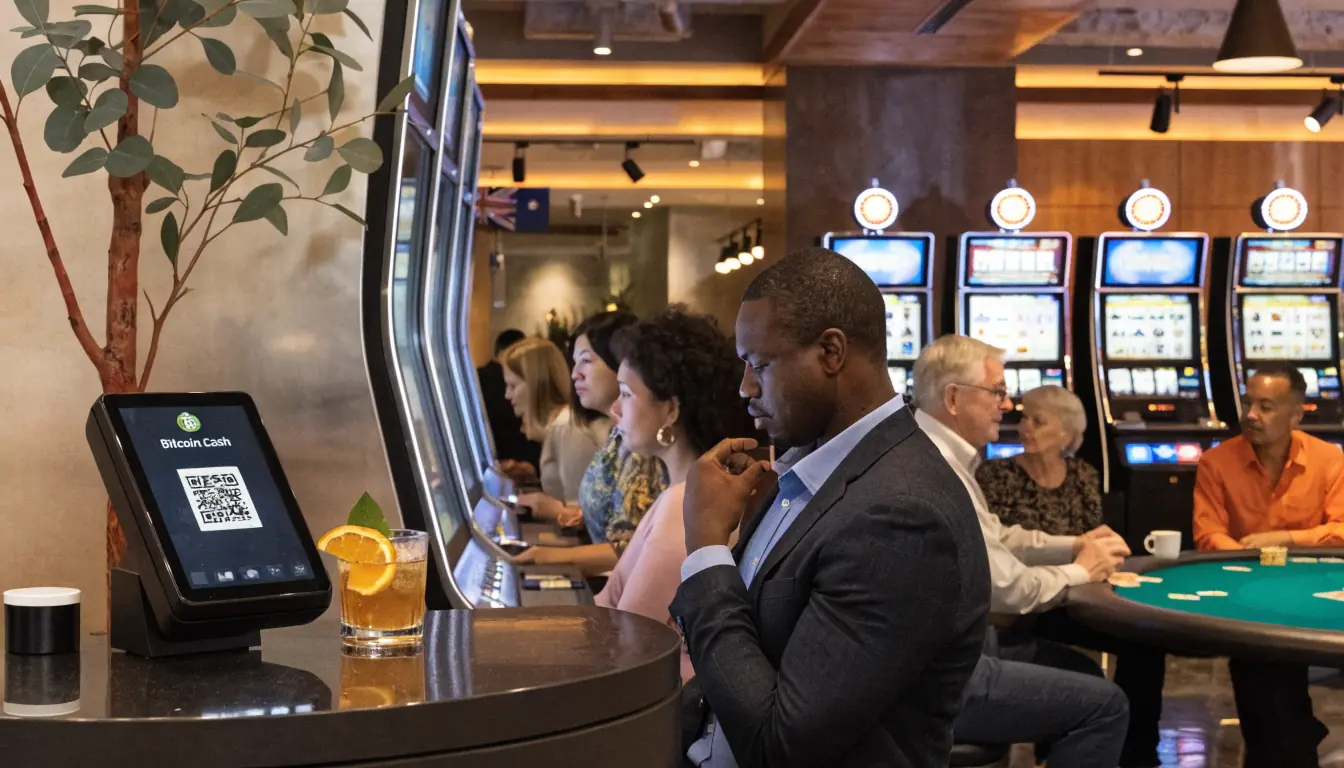
That’s the trade-off worth understanding. CashtoCode isn’t an e-wallet. It doesn’t hold a running balance, track your history, or sit between you and the casino the way PayPal-style services do. It’s a voucher — a code with a face value, bought once, spent once. Compare it to a card payment and the difference is structural, not cosmetic: a card connects to an account that keeps existing after the transaction; a voucher doesn’t.
The other thing worth saying plainly, because it shapes how the whole payment fits into a session: CashtoCode only moves money one way. In. Deposits only.
That single fact explains most of what feels unusual about it — why there’s no "cash out to CashtoCode" button, why the experience feels closer to a prepaid card than a bank transfer. It’s built for putting money in cleanly, not for managing money on the way out.
Prepared by the Casino Cities Guide editorial staff.