Safe Online Casino Australia: What Actually Makes One Safe
 Available in AU
Table of Contents
- Why 2026 Marks a New Era for Safe Australian Online Casinos
- What Defines a Safe Casino for Australian Players
- Identifying the Best Safe Online Casinos
- PayID and Other Secure Deposit Options
- Playing for Real Money Safely
- Trusted Australian Casino Sites and How They Operate
- Safe Payment and Play Practices
- Mobile Gambling Safety Essentials
- Core Safety Features Required by Australian Regulations
- Game Variety, Bonuses and Fairness in Safe Casinos
Why 2026 Marks a New Era for Safe Australian Online Casinos
Nothing in the law changed overnight. The Interactive Gambling Act 2001 still says what it said before: a company based in Australia cannot offer online casino-style gambling to someone physically sitting in Australia. No new licence category appeared, no local regulator started stamping approvals for slots or roulette. What changed is quieter than legislation — it’s how much scrutiny offshore operators are under, and how much less patience players have for finding out the hard way that a site was never going to pay them.
I spent years watching operators structure themselves around exactly this gap. The law bans unlicensed operators from running casino games domestically, so the entire real-money casino market available to Australians sits offshore by design, not by accident. That’s not a loophole anyone is quietly exploiting — it’s the only shape the market is allowed to take. What’s shifted going into 2026 is that this offshore structure has stopped being a footnote reviewers skip past and become the first question worth asking about any site.
The gap between "licensed" and "safe"
For a long time, "licensed" did a lot of unearned work in casino marketing. A licence badge in the footer was treated as proof of safety, full stop. That framing doesn’t hold up once you’ve seen how many jurisdictions hand out licences with minimal ongoing oversight. A safe online casino requires proper and valid licensing and regulation — but valid is the word doing the real work there, not licensed on its own.
This is where the ground has actually moved. Reviewers who take the job seriously have started drawing a line between a licence that exists on paper and one issued by a regulator with teeth. One industry review I looked at explicitly favours casinos holding Tier-1 licences — bodies like the MGA or the UKGC — or, where relevant, Australian territory-based authorities such as NT Racing & Wagering. That’s a narrower bar than "has a licence somewhere," and it’s the bar that’s becoming the default expectation rather than the exception.


What this means before the safety checklist
The chapters that follow this one walk through what actually makes a casino safe — the pillars, the criteria, the specific mechanics of deposits and withdrawals. None of that matters if the starting premise is wrong. And the starting premise, going into 2026, is this: there is no domestic safe option to compare offshore casinos against. The choice was never "local versus offshore." It’s offshore, evaluated properly, versus offshore, taken on faith.
That’s the shift 2026 represents. Not a new law. Not a new licence type. A market where players increasingly know the operator sits outside Australian jurisdiction no matter what, and where the only meaningful question left is which regulator is actually watching that operator — and whether anyone checked before signing up.
Everything from here is about answering that question properly.
What Defines a Safe Casino for Australian Players
No operator based in Australia can legally offer online casino games — slots, roulette, live tables — to someone sitting in Sydney or Perth. The Interactive Gambling Act 2001 settled that question for companies domiciled here, and nothing about 2026 changes it. What it doesn’t do, and never claimed to do, is stop Australians from playing at operators licensed somewhere else. That gap is the entire market. Every real-money casino an Australian player will actually sign up with sits offshore, licensed under a foreign regulator, operating in a legal space the Act simply doesn’t reach.
That distinction matters more than most sign-up pages let on. "Safe" doesn’t mean "local." It can’t, because local doesn’t exist here. So the word has to carry a different weight — not where a casino is based, but whether it can be trusted to hold your money, pay it back, and not quietly change the rules once you’ve deposited.
Illegal Offerings
Australian players must not sign up with any casino that claims to be licensed locally, because no Australian authority issues licences for online casino games.
The licence comes first, and it’s not negotiable
I’ve seen operators treat their licence as a badge — something to put in the footer next to a padlock icon and move on. It’s not decoration. It’s the only thing standing between a player and an operator that can vanish with a balance overnight. A licence means there’s a regulator somewhere that received an application, checked who’s behind the company, and put its name against the answer. Take that away and everything else — the bonus terms, the game list, the "24/7 support" banner — is just marketing copy with no one accountable for it.
Because no Australian licence for this activity exists, every legitimate option is going to show a foreign one. That’s not a red flag by itself. It’s the baseline. The red flag is a licence number that doesn’t resolve, or a company name in the terms that doesn’t match who actually holds it. Ambiguous wording around licensing — "fully licensed and regulated" without saying by whom — is the tell of an operator hoping nobody checks.


Not all licences carry equal weight, either. One industry review I looked through builds its rankings around a clear hierarchy, favouring operators under Tier-1 regulators — the Malta Gaming Authority or the UK Gambling Commission — and, where relevant, Australian territory-based licensing bodies like NT Racing & Wagering. That’s one reviewer’s framework, not an official grading system, but the logic behind it holds up: a regulator with a long track record of enforcement means more than one that mostly rubber-stamps applications.
Encryption is table stakes, not a selling point
"Bank-level security" is the kind of phrase that means nothing until someone says what it actually refers to. On the technical side, what should be sitting behind that phrase is 256-bit SSL encryption across every page that touches money or personal details — deposit forms, withdrawal requests, the account page where your ID sits. One operator’s own terms describe applying this across all payment and account pages. Another site reviewed separately makes the same claim, describing it as "enhanced" encryption protecting user data. Neither claim tells you anything about the wider market — they’re each one operator describing their own setup, and encryption standards like this are something any serious platform should have in place by now, not proof of exceptional care.
What’s harder to verify from outside is whether that encryption is backed by anything else — segregated player funds, independent audits, a support team that actually answers. A padlock in the browser bar confirms a connection is encrypted. It confirms nothing about whether the company behind it pays out.
All safe operators use 256‑bit SSL encryption on every page that handles money or personal data, which is a baseline requirement rather than a premium feature.
Offshore isn’t the exception — it’s the whole market
Worth sitting with for a second: when every option is offshore, "offshore" stops being useful as a warning. The real question shifts to which offshore jurisdiction, and what that regulator actually requires before issuing a licence and after, if a player complains. A licence from a jurisdiction with strict capital requirements and dispute resolution is a different thing entirely from one that mostly checks a company has paid its fee.
One review of ten sites claims all ten hold active international licences and apply 256-bit SSL encryption as standard. Read that as a description of what one reviewer found on those ten specific platforms — not as evidence that the wider offshore market behaves the same way. Plenty of operators outside that list don’t clear the same bar.
What actually separates safe from unsafe
Strip away the marketing language and three things remain:
- A licence that traces back to a real regulator, under the name the operator actually trades under — not a shell, not a sister brand borrowing legitimacy.
- Encryption applied consistently, not just on the homepage where it’s visible, but on every page handling money or identity.
- Terms that don’t move after you’ve already committed money.
That third one doesn’t show up in a footer badge. It shows up months in, when a withdrawal gets stuck or a bonus condition suddenly reads differently than it did at sign-up. No amount of SSL fixes that. It’s a separate kind of trust, and it’s the one operators talk about least — because it’s the one that costs them something to keep.
Identifying the Best Safe Online Casinos
Before you sign up anywhere, it pays to check what’s actually behind the welcome offer — licensing, withdrawal times and minimum deposits all shape whether an online casino is worth your trust in 2026.
License: international iGaming licence – jurisdiction not named in the source · Bonus: 100% up to A$1,000 + 100 free spins, 35x wagering · Payout speed: PayID 1-24 hours · Min. deposit: A$30 (PayID from A$10) Holds an international iGaming licence and pairs a sizeable welcome bonus with notably fast PayID withdrawals, plus a low minimum deposit for PayID users.
License: Curacao – Antillephone N.V. (Versus Odds B.V.) · Bonus: up to EUR 2,000 across 5 deposits + 200 free spins · Min. deposit: EUR 20 Licensed in Curacao under Antillephone, this casino spreads a generous multi-deposit bonus package across five deposits with a low entry deposit requirement.
License: Curacao eGaming OGL/2023/174/0082 (Dama N.V.) · Bonus: up to A$10,000 + 500 free spins across 4 deposits · Min. deposit: A$15 Operating under a Curacao eGaming licence via Dama N.V., it offers a large welcome package spread over four deposits with an accessible minimum deposit.
Bonus: up to A$7,500 + 550 free spins across 10 deposits, 50x wagering · Payout speed: crypto under 1 hour, PayID 1-3 business days · Min. deposit: A$20 (A$30 to qualify for the bonus) A sizeable ten-deposit bonus structure is backed by quick crypto payouts, though PayID withdrawals take longer and a slightly higher deposit is needed to unlock the offer.
Bonus: 100% up to A$750 + 200 free spins, 35x wagering · Payout speed: crypto 30-120 minutes, fiat 24-72 hours · Min. deposit: A$30 Offers a solid welcome bonus with reasonable wagering requirements and fast crypto payout speeds, alongside standard fiat processing times.
License: Curacao Gaming Control Board OGL/2023/176/0095 (Hollycorn N.V.) · Bonus: up to A$11,000 + 300 free spins (code NEO100) Licensed by the Curacao Gaming Control Board under Hollycorn N.V., it stands out for a large bonus ceiling combined with free spins via a specific promo code.
License: Curacao Gaming Control Board (TechSolutions Group N.V.) · Bonus: 100% up to A$250 + 100 free spins (1st deposit) Licensed through the Curacao Gaming Control Board via TechSolutions Group, this casino keeps things simple with a straightforward first-deposit match bonus.
License: Curacao Gaming Authority (Jumpman Gaming Ltd) · Bonus: up to A$6,600 + up to 250 free spins across 4 deposits Operating under a Curacao Gaming Authority licence via Jumpman Gaming, it provides a substantial bonus spread across multiple deposits with a solid free spins allowance.
License: Curacao OGL/2024/1335/0780 · Bonus: up to A$1,000 + 150 free spins, wager-free · Min. deposit: EUR 20 Licensed under Curacao’s OGL framework, it offers a wager-free bonus structure, which is a distinctive feature for players wary of high playthrough requirements.
License: Curacao eGaming (Hollycorn N.V., since 2017) · Bonus: 225% up to A$1,540 + 600 free spins across 4 deposits, 20x wagering · Min. deposit: A$20-30 (depends on the offer) An established Curacao-licensed operator under Hollycorn N.V. since 2017, offering a large percentage-based bonus across four deposits with comparatively low wagering requirements.
Ranking casinos by "safety" sounds subjective until you break it into what’s actually checkable. It isn’t a feeling. It’s a licence number, a corporate name, a pattern of complaints — things that either exist or don’t.
The starting filter is the licence itself, and not just its presence. One industry review I’ve looked at ranks operators by tier, giving preference to those holding Tier‑1 regulator approval — Malta Gaming Authority, the UK Gambling Commission, or an Australian territory regulator such as NT Racing & Wagering. That’s one reviewer’s weighting, not a market-wide rule, but the logic behind it holds regardless of who’s applying it: a Tier‑1 regulator runs ongoing audits, holds player funds requirements, and has a disciplinary process that actually bites. A licence from a lighter-touch jurisdiction still counts as a licence, but the oversight behind it is thinner. Grading casinos by regulator tier isn’t snobbery — it’s asking who’s actually checking the operator’s homework, and how often.
That’s the piece worth separating from what came before: knowing what a licence is matters, but knowing which licences carry weight is a different skill, and it’s the one that actually changes a ranking.
Malta Gaming Authority or UK Gambling Commission – strong enforcement, regular audits, player‑fund protection.
Curaçao eGaming – widely used but lighter oversight, still requires a valid licence.
NT Racing & Wagering – limited to specific gambling activities, useful for Australian‑focused sites.
What separates a top-tier listing from a merely licensed one
A valid licence is the first non‑negotiable. No amount of slick design or bonus size compensates for its absence — a site without one isn’t a casino with a flaw, it’s not a safe casino at all. But once that box is ticked, the ranking work really starts, and it runs through a short list of non-negotiables that don’t get traded off against each other:
- Company transparency. The entity named on the licence should match the entity running the site, with a traceable corporate background and a reputation that holds up under scrutiny — not just a logo and a support email.
- Player feedback over time. Reputation isn’t a marketing page. It’s the pattern of what players report after they’ve tried to withdraw, not what the operator says about itself.
- Applied security measures. Encryption in place, account protections that function, not just claimed on a compliance page.
- Proven game fairness. Not promised — proven, through independent testing that a player could look up if they wanted to.
None of these four get weighed against the others to produce an average score. A casino can have a decent licence and still fail on transparency if the ownership structure is murky or the support team goes quiet after a big win. That’s a genuine safety problem, not a minor deduction.
Why the ranking isn’t just "licensed vs unlicensed"
Two operators can both hold valid, checkable licences and still land in very different places on a safety ranking. The gap is usually in the second half of the list above — reputation and disclosed security practices — rather than in the licence field itself. This is the part rarely stated openly: an operator can meet the legal minimum and still be a worse bet than a competitor with the same licence type, because "licensed" only confirms the paperwork exists. It says nothing about how the company behaves when a player wins big or asks an awkward question.
That gap is exactly what separates a casino that’s merely permitted to operate from one that’s actually worth trusting with a deposit. The criteria above are how that distinction gets made — not by taking the operator’s word for it, but by checking the regulator, the corporate name, and what other players actually experienced.
Worth remembering.
No Australian licence exists for online casinos — here's why offshore operators from Curaçao, Malta…


PayID and Other Secure Deposit Options
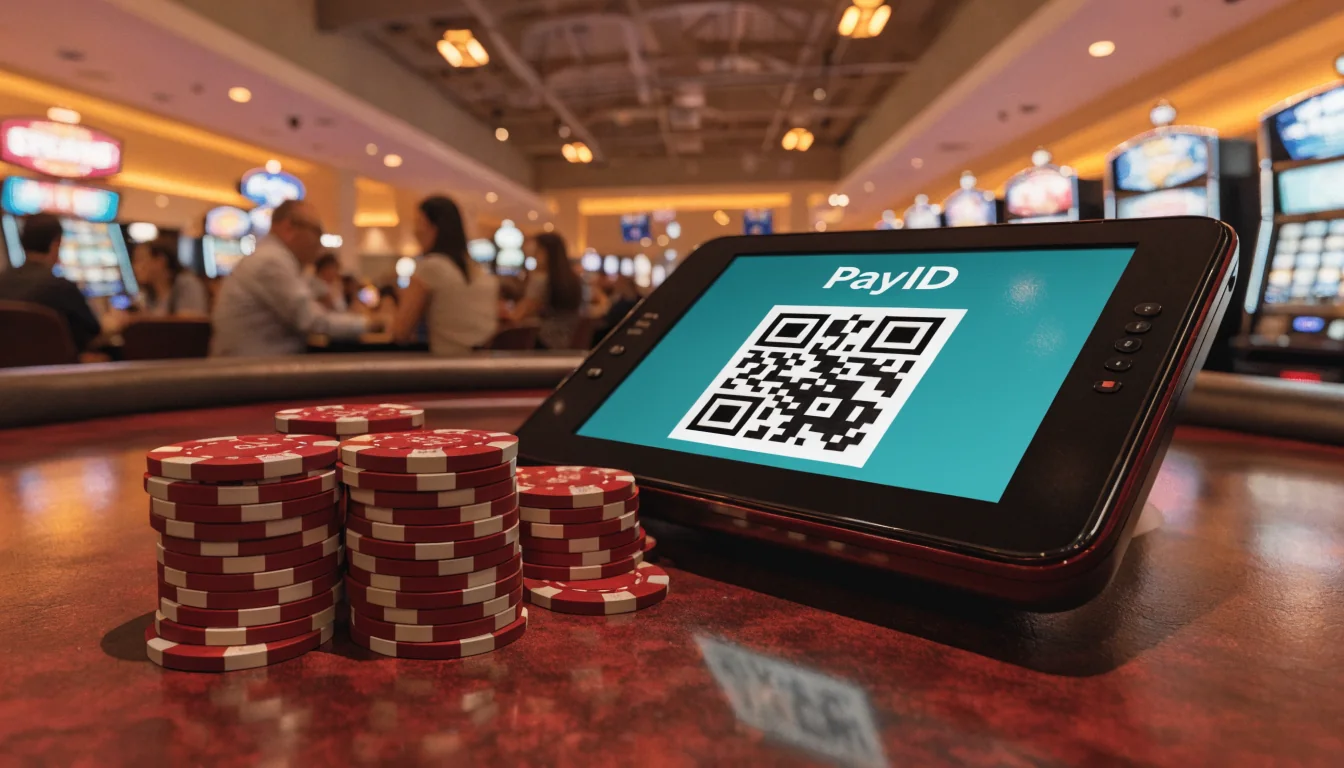
PayID gets asked about more than any other payment method, mostly because it’s new enough that people don’t trust it yet and old enough that it’s now everywhere. The mechanism is simple: instead of typing in a BSB and account number, the deposit gets tied to something already familiar — a phone number or email — and the bank matches it on its end. Nothing about that routes through the casino’s servers. The casino never sees banking credentials, only confirmation that a payment landed.
That’s the part worth sitting with. A deposit made through PayID doesn’t expose more data than a regular bank transfer — it exposes less, because the casino only receives a payment reference, not account details. Whether that data is later handled responsibly is a separate question, and one that has nothing to do with PayID itself. The rails are secure. What happens after the money arrives depends entirely on the operator.
Withdrawals are where the real signal sits, not deposits. Anyone can take money in instantly. What matters is what comes back out. PayID withdrawals take 1 to 3 business days to process — that’s a fixed window, not a best-case estimate, and any casino claiming otherwise for PayID specifically is describing something else. If a site promises same-day PayID withdrawals as a headline feature, either it’s rounding "1 day" up to a marketing line, or the claim doesn’t match how the rail actually works.
Withdrawal Risk
If a casino advertises same‑day PayID withdrawals but consistently delays payouts, the risk of not receiving your winnings is high.
Where crypto fits differently
Cryptocurrency withdrawals sit at the other end of the spectrum — typically completed within hours, sometimes within minutes, rarely stretching past a day. That speed is a function of the blockchain, not the casino’s generosity. No manual approval queue, no banking cutoff times. It’s also why a casino offering both PayID and crypto tends to reveal something about its internal processing: if crypto payouts are fast but PayID payouts drag well past the standard window, the delay isn’t the payment rail’s fault. It’s the casino sitting on the request.
Other methods worth understanding before depositing
- Bank transfer — the traditional route, slower on both ends, still available mainly for players who prefer a paper trail through their own bank rather than a third-party rail.
- E-wallets — fast on deposit, and withdrawal speed varies by provider, though none change the underlying truth that the casino still controls when a payout request gets actioned.
- Cryptocurrency wallets — require the player to hold and manage a wallet independently, which shifts some responsibility for security onto the player rather than the operator.
None of these methods make a casino safe by themselves. A payment rail is a pipe. It moves money reliably or it doesn’t, and PayID moves it reliably in both directions — the deposit is close to instant, the withdrawal sits inside a known window. What a payment method can’t do is guarantee the casino on the other end treats a withdrawal request the way it treated the deposit.
That’s a separate check, and it’s an account-level one. Some operators build deposit limits and self-exclusion tools directly into the account dashboard — by one industry review’s account, at least one operator does this as standard, letting a player cap deposits or lock themselves out without contacting support. That’s a feature of the platform’s account settings, not of PayID or crypto or any specific rail. It sits alongside things like how quickly support responds when a withdrawal stalls, and whether bonus terms attached to a deposit are written in plain language or buried in a way that only becomes clear after a win.
None of that is a payment problem. It’s an operator problem that happens to surface at the exact moment a player tries to move money — which is why "is this payment method safe" is usually the wrong question. PayID is safe. Crypto rails are safe. The open question is always the same one:
Does the casino pay out what the payment method makes possible.
That question doesn’t get answered by reading a list of supported deposit options. It gets answered by watching what happens on the way out — the timeline, the communication, whether "processing" ever turns into an actual transfer. Fast deposits are the easy part. Every operator gets that right, because it’s in their interest to get it right.
Playing for Real Money Safely
Real money changes the calculation. When it’s your own funds sitting in an account balance, the questions stop being theoretical: will the withdrawal actually process, and what happens the first time you ask for a payout instead of making a deposit.
Completing KYC before you win ensures withdrawals are processed quickly and reduces the chance of unexpected verification requests.
That second moment is where a lot of operators show their real face. Deposits are frictionless everywhere — that part is never the problem. The test is what happens after a win, when the casino has every incentive to slow things down or find a reason to delay.
Identity checks come before the money, not after
Every legitimate real-money casino asks for identity verification — KYC — before releasing a payout. This isn’t a formality invented to annoy players. It’s how an offshore-licensed operator meets its own regulator’s anti-fraud obligations, and it’s the mechanism that stops someone else’s stolen card or someone else’s identity from cashing out through an account that isn’t theirs.
The documents requested are consistent across the industry: a photo ID and a recent proof of address. Nothing more exotic than that. If a site is asking for anything beyond those two categories once a withdrawal is requested, or asking for them repeatedly for no stated reason, that’s a signal worth paying attention to rather than dismissing as bureaucracy.
The practical lesson: get verification done early, before there’s a balance worth withdrawing. Submitting a photo ID and address proof at registration, rather than waiting for the first cashout request, removes the single most common reason withdrawals stall. Casinos that make this step optional at sign-up but mandatory at payout are not doing anything wrong — they’re just moving the friction to the moment it’s hardest to plan for.

The licence is what makes any of this enforceable
None of the verification process means anything if the operator sits outside a licensing framework. Proper and valid licensing and regulation is the baseline that makes KYC, payout timelines, and dispute handling something other than a promise on a webpage. A licensed operator answers to somebody. An unlicensed one answers to nobody, and "trust us" is not a safeguard.
Withdrawals are the real test, not deposits
Secure payment methods matter on the way in. They matter more on the way out. A safe real-money casino is one where withdrawals are consistent — not fast in marketing copy and slow in practice, not "processing" indefinitely with no explanation.
This is the second non-negotiable, right behind the licence itself. A casino can have a polished interface, a wide game library, and generous-sounding terms, and still fail the only test that counts: paying out what it owes, on a timeline it actually honours.
Short version.
Before wagering real money, the checklist is small but strict:
- Confirm the licence exists and is named clearly — not implied, not vague.
- Complete identity verification before you need to, not after you’ve won.
- Have a photo ID and proof of address ready in the format the casino accepts.
- Treat the withdrawal process, not the deposit process, as the real indicator of whether the site is safe.
Everything else — game selection, bonus size, design — sits downstream of these four points. Get them wrong, and no amount of polish upstream matters.
Trusted Australian Casino Sites and How They Operate
There’s no such thing as an "Australian-licensed" online casino. No domestic authority issues licences for slots, roulette or live tables here — the Interactive Gambling Act makes sure of that. So when a site markets itself as "Australian-focused," what it actually means is: built for this market, priced in AUD, support staffed for local hours, but licensed somewhere else entirely.
That somewhere else matters more than the marketing copy around it.
Where the licences actually come from
Two operators commonly pitched to Australian players — Ricky Casino and Fair Go — both hold licences issued in Curaçao. That’s not a red flag by itself; Curaçao eGaming is one of the standard jurisdictions offshore casinos use to operate legally outside their own borders. But it sits in a different tier than regulators like the Malta Gaming Authority or the UK Gambling Commission, and one industry review I’ve seen explicitly builds its rankings around that distinction — giving preference to operators licensed by Tier‑1 bodies such as the MGA or UKGC, or by Australian territories that do license wagering, like NT Racing & Wagering. Curaçao-licensed sites still made the list. They just didn’t top it.
Even Curaçao‑licensed operators can be safe if they combine a valid licence with strong encryption and transparent company details.
Worth knowing, not worth panicking over.
What "operates safely" means in practice
A licence is the entry ticket, not the whole show. The same review that ranked those ten sites noted every one of them carried an active international licence paired with 256‑bit SSL encryption across account and payment areas. That’s a single source describing its own selection criteria, not an industry-wide guarantee — plenty of unlicensed or poorly-regulated sites exist without either. But it does show what the baseline looks like among operators that bother to compete for Australian traffic seriously.
Encryption protects what happens between the player’s browser and the casino’s server — login credentials, card details, withdrawal requests. It says nothing about whether the games are fair, whether support answers on day three of a dispute, or whether the withdrawal actually lands. Those are separate checks, and no single padlock icon covers them.
The operational gap versus offshore-only sites
Sites built specifically for the Australian market tend to differ from generic offshore operators in a few visible ways: AUD as the default currency, payment rails that Australian banks recognise, support hours that overlap with local time zones. None of that changes the legal picture — the operator is still offshore, still outside any Australian regulator’s reach, and still relying entirely on its home jurisdiction’s licence for enforcement if something goes wrong.
"Built for Australia" describes the storefront. The licence describes who actually answers if the storefront fails.
Safe Payment and Play Practices
Choosing a payment method is only half the job. What happens after the deposit clears matters more — whether the account gives some control over how much gets spent, and whether the casino behaves the same way after a win as it did before one.
Deposit limits and self-exclusion tools are the clearest sign that an operator takes this seriously. According to one operator’s own account settings, players can set deposit caps and activate self-exclusion directly from the account page, without going through support or submitting a request. That distinction is worth noticing — a limit buried three menus deep, requiring an email to customer service, is a limit that exists mostly on paper.
- Set deposit limits in the account dashboard.
- Use operators that publish clear licence information.
- Verify SSL encryption on payment pages.
- Ignore hidden bonus terms that appear after you win.
- Trust a site that hides its regulator behind vague wording.
- Rely on a casino that only offers slow, unsupported withdrawal methods.
"Responsible gambling tools" is the phrase every operator puts on a footer. What it should mean in practice: the setting is visible, it applies immediately, and it isn’t quietly reset the next time the account logs in.
What good support actually looks like
Fast and efficient customer support isn’t a nice extra — it’s a safety feature, on the same list as licensing and encryption. A support desk that answers quickly when something goes wrong with a withdrawal is doing exactly what it’s meant to do. A support desk that goes quiet the moment a big win needs paying out is telling you something else entirely.
The real test comes after a win
Plenty of casinos treat players well while they’re losing. Good player treatment after a win is the harder standard, and the one that separates an operator worth trusting from one that isn’t. That means no sudden requests for extra verification that weren’t mentioned at sign-up, no new terms appearing out of nowhere, no support tickets that go unanswered once the payout request is in.
None of this replaces checking a licence or reading the withdrawal terms before depositing. It sits alongside those checks — a second layer, tested not before signing up but after the money starts moving in the other direction.
Mobile Gambling Safety Essentials
A phone app hides more than it shows. On desktop, a padlock icon and a URL bar give at least a glance of what’s happening underneath. On mobile, the browser chrome shrinks or disappears, the app takes over the whole screen, and there’s nowhere obvious to check what you’re actually connected to. I’ve had operators tell me, in effect, that this works in their favour — fewer places for a suspicious player to look.
That doesn’t mean mobile play is inherently less safe. It means the checks that matter happen earlier, before you ever open the app or the mobile site.
Mobile Risks
Installing casino apps from unofficial sources or using public Wi‑Fi can expose your credentials to theft; always use trusted app stores and secure networks.
The same non-negotiables from desktop still apply, just harder to verify in the moment: applied security measures and proven game fairness don’t change because the screen got smaller. Neither does the need for the games themselves to come from reputable software providers rather than an unnamed in-house studio nobody can audit. If a casino won’t say who built the slot you’re spinning, that’s a problem on a phone exactly as much as it is on a laptop — it’s just easier to skip past when you’re tapping through a small screen and want to get to the game.
Payments carry the same logic. Whatever method you use — card, e-wallet, PayID, crypto — the mobile version has to move money with the same reliability as the desktop one. A withdrawal that processes fine from a browser but stalls from the app isn’t a "mobile issue," it’s a payment issue that happens to show up on mobile first.
What’s actually different on mobile
- App source. Installing outside an official app store removes a layer of vetting that exists for a reason.
- Session handling. Auto-login and saved credentials on a shared or lost device turn a convenience into an access problem.
- Network. Public Wi-Fi at a pub or airport is not the place to submit KYC documents or enter payment details.
None of this is exotic. It’s the same caution anyone applies to mobile banking, just rarely applied here with the same seriousness. Casinos that get taken seriously don’t ask you to trust the app more than you’d trust the site behind it — they make the two indistinguishable in what they protect and how.
Core Safety Features Required by Australian Regulations
No Australian authority issues a licence for online casino games. That’s not a gap in the rules — it’s the rule. The Interactive Gambling Act makes domestic operation illegal, which means every safe AU casino a local player finds is licensed somewhere else. There’s no local register to check, no domestic regulator to complain to. The safety burden shifts entirely onto the offshore licence and how that operator chooses to run things.
That’s why the licence isn’t one item on a checklist — it’s the first non-negotiable. Everything else a casino advertises sits downstream of it. A slick app or a generous welcome offer means nothing if the entity behind it isn’t accountable to anyone. The safest operators serving Australian players tend to hold licences from bodies like the Malta Gaming Authority or Curaçao eGaming — regulators with actual dispute processes, actual audits, actual consequences for breaking their own terms.
The second requirement follows straight from the first: reliable withdrawals. A licence without enforcement is a certificate on a wall. What matters in practice is whether the money that’s owed to a player actually leaves the casino’s account and lands in theirs, on the terms stated when they signed up. No safe casino app or safe wallet casino AU operator worth using treats this as negotiable after the fact.
Put together, these two standards are the floor, not the ceiling:
- A genuine, checkable licence from a body that actually regulates the operator — not a logo in a footer.
- Withdrawals that behave the same after a win as before it — same limits, same timeframes, same rules.
Anything marketed as a bonus feature, a loyalty perk, or a game selection sits on top of this floor. If the floor isn’t there, none of it holds weight.
Game Variety, Bonuses and Fairness in Safe Casinos
A library matters less for its size than for what sits inside it. One industry review found an operator listing over 5,000 games alongside a welcome offer worth up to A$15,000 plus 300 free spins — numbers that look generous on a landing page, but they say nothing about who built the games or how payouts behave over time. That’s the gap "generous" is built to hide.
Bonus terms deserve the same scrutiny as licensing. A offer is only as good as the conditions attached to it, and those conditions are usually written by people who’ve done the maths on how few players will actually clear them.
Fairness isn’t a marketing claim either — it’s supposed to be verifiable. Without published RTP figures or an independent audit trail, a casino’s claim of fair games is just that: a claim. I won’t quote numbers that aren’t on record anywhere, because a made-up percentage is worse than none at all.
Payment variety is a smaller but real signal of maturity. One operator reviewed offered close to twenty cryptocurrency options plus five major e-wallets — range that suggests investment in infrastructure, not just marketing spend.
Game count, bonus size, payment options — none of it replaces a licence. It just tells you whether the operator behind that licence bothered to build something worth using.
What are the best online casinos in Australia for 2026?
Top picks include Golden Crown (5,000+ games, 100% bonus up to A$15,000 plus 300 free spins), Ricky Casino, Fair Go, BeonBet and Vipluck. All listed sites hold active international licences and use 256-bit SSL encryption, with the safest options holding licences from authorities such as the Malta Gaming Authority or Curaçao eGaming.
What are the common responsible-gaming utilities offered by reputable online casinos?
Deposit limits and self-exclusion features accessible directly from the account page — for example, Betninja provides both. These tools let players control spending and take breaks without contacting support.
Can I play on an Australian online casino on mobile?
Yes — all the recommended offshore-licensed casinos serve Australian players, and modern operators are built for mobile play. Since no domestic Australian online casino licence exists, mobile play happens through these internationally licensed sites.
Published by the Casino Cities Guide team.